Sustainable Liquid Packaging: Benefits of Spouted Flexible Pouches
The modern retail market moves at an unprecedented pace, and brands must constantly innovate to capture consumer attention while maintaining operational efficiency. Traditional rigid containers like glass bottles and heavy plastic jugs are rapidly losing ground to more agile, sustainable, and consumer-friendly alternatives. In this evolving landscape, a flexible packaging solutions provider plays a critical role in helping companies transition to smarter alternatives. Among these innovations, the specialized flexible bag equipped with a dispensing component has emerged as a revolutionary force across multiple industries. Choosing a high-quality customized liquid pouch with spout allows businesses to completely reimaging how their products are shipped, stored, displayed, and consumed. This comprehensive guide explores how modern liquid packaging transforms brands, improves supply chain economics, and meets the ever-changing demands of the contemporary global marketplace.
Understanding the shift toward flexible alternatives requires looking closely at how consumer behavior has evolved over the last decade. Today's shoppers prioritize convenience, portability, and sustainability above almost all else. They want products that fit seamlessly into their busy lifestyles, minimize waste, and are easy to use on the go. Rigid packaging often fails to meet these criteria, as it is heavy, bulky, and frequently leaves a significant amount of product trapped inside. By contrast, specialized flexible structures are incredibly lightweight and can be compressed as the content is emptied, ensuring that consumers get every last drop of what they paid for. This practical utility creates a powerful and positive connection between the consumer and the brand, fostering long-term loyalty in an increasingly competitive marketplace.
For decades, the liquid packaging industry relied almost exclusively on heavy, rigid materials that required massive amounts of energy to manufacture and transport. The introduction of multi-layered flexible films changed everything by offering a lightweight yet incredibly durable alternative. By combining different materials, manufacturers can now engineer films that provide exceptional barrier properties, protecting sensitive liquids from oxygen, light, and moisture. The addition of a secure, resealable spout transformed these flexible bags from simple refill packs into standalone, premium primary packaging. This evolution has allowed brands in sectors as diverse as food and beverage, cosmetics, agriculture, and automotive care to reconsider their entire product delivery strategy and adopt more efficient practices.
When evaluating the shift toward these innovative formats, it is essential to consider the role of advanced manufacturing. Partnering with an experienced custom spout pouch manufacturer ensures that every aspect of the bag, from the precise dimensions to the material composition, is tailored to the specific requirements of the liquid inside. Different products require different barrier levels; for instance, high-acid juices or volatile chemical cleaners demand specialized inner linings that will not degrade or react with the contents. Modern manufacturing facilities utilize sophisticated co-extrusion and lamination processes to create robust structures capable of withstanding rigorous shipping conditions, accidental drops, and extreme temperature variations without leaking or puncturing.
The exceptional performance of modern spouted pouches is a direct result of sophisticated materials science and precise engineering. These containers are typically constructed from multiple layers of specialized films laminated together to form a single, high-strength sheet. Common layers include polyethylene for sealability and strength, polyester for durability and print quality, and specialized barrier films like aluminum foil or ethylene vinyl alcohol to block external elements. The spout itself is securely welded into the top or corner of the bag using advanced heat-sealing technology. This creates a completely hermetic seal that prevents leakage and maintains product freshness throughout its entire shelf life, providing peace of mind for both brands and consumers.
In a crowded retail environment, visual appeal is just as important as structural integrity. Brands must leverage every available square inch of their packaging to communicate their value proposition and stand out on the shelves. This is where personalized spout bag printing becomes a critical component of a company's marketing and brand strategy. Utilizing advanced rotogravure or digital printing techniques allows businesses to cover the entire surface of the pouch with vibrant, high-definition graphics, rich colors, and intricate designs. Unlike traditional rigid bottles that require separate paper or plastic labels that can peel, wrinkle, or fade, the artwork on a flexible pouch is embedded directly into the film structure, ensuring it remains flawless throughout the product lifecycle.
The visual versatility of flexible printing also allows for unique design elements that can elevate a brand's positioning. Companies can choose from a variety of finishes, such as a sleek matte texture that conveys a natural or premium organic feel, a high-gloss finish that makes bright colors pop, or even transparent windows that allow consumers to view the product inside. This transparency can build immediate trust, especially in the food and beverage industry where freshness and quality are paramount. Furthermore, because the entire surface of the pouch is available for graphics, brands have ample space to include regulatory information, nutritional facts, usage instructions, and engaging brand stories without cluttering the aesthetic layout.
The versatility of spouted flexible containers makes them ideal for an astonishingly wide array of applications across numerous commercial sectors. In the food and beverage industry, they are widely used for packaging baby food, fruit purees, yogurts, energy gels, alcoholic beverages, and condiments like ketchup, mayonnaise, and salad dressings. The ability to hot-fill these containers or subject them to pasteurization processes opens up incredible possibilities for preserving food products without the need for artificial preservatives. This aligns perfectly with the clean-label trend that continues to dominate consumer preferences globally, allowing brands to offer healthier, fresher choices.
Outside the culinary world, non-food industries are adopting flexible packaging at an exponential rate. In the beauty and personal care sector, products such as liquid soaps, shampoos, conditioners, body lotions, and facial masks are frequently packaged in spouted bags, often serving as eco-friendly refill stations for existing rigid dispensers. The home care and industrial sectors use them for laundry detergents, fabric softeners, glass cleaners, windscreen washer fluids, and motor oils. The inherent durability of the multi-layered film ensures that these harsh chemical formulations are contained safely without risk of corrosion or leakage, while the controlled pour minimizes spills during application.
When analyzing the financial and environmental impact of packaging choices, flexible alternatives consistently outperform traditional rigid formats across almost every key metric. From a logistical standpoint, unfulfilled flexible pouches are shipped completely flat or on compact rolls, meaning that a single truckload can transport up to nine times more empty packaging than a truck filled with empty rigid bottles. This dramatic reduction in shipping volume translates directly to fewer trucks on the road, lower fuel consumption, minimized transportation costs, and a significantly smaller carbon footprint before the product is even filled.
Once the pouches arrive at the filling facility, their compact nature continues to provide major operational advantages. They require significantly less warehouse storage space compared to bulky glass or plastic bottles, freeing up valuable square footage for other business activities. During the manufacturing process, flexible packaging manufacturers design these systems to integrate smoothly with high-speed automated filling machinery, minimizing downtime and maximizing output. Furthermore, because the finished products are lighter and less bulky than traditional alternatives, outbound shipping costs are drastically reduced, allowing brands to improve their profit margins or offer more competitive pricing to their customers.
For expanding businesses looking to optimize their supply chain and manage production costs effectively, sourcing materials through large-scale orders is a highly proven strategy. Investing in printed spouted pouches wholesale allows brands to benefit from significant economies of scale, dramatically reducing the per-unit cost of each container. This financial efficiency is particularly crucial for startups and mid-sized enterprises that need to maintain competitive pricing while scaling up their production volumes. By establishing a reliable partnership with a high-capacity supplier, businesses can ensure a steady, uninterrupted flow of packaging materials that matches their fluctuating seasonal market demands.
When managing large-scale wholesale procurement, clear communication regarding technical specifications and quality control parameters is absolutely vital. Brands should work closely with their manufacturing partners to define exact material structures, spout dimensions, cap styles, and color accuracy requirements. Many top-tier suppliers offer comprehensive end-to-end support, assisting with artwork optimization, pre-production sampling, and rigorous stress testing to ensure the pouches perform perfectly under real-world conditions. By taking a proactive approach to wholesale sourcing, companies can avoid costly production delays, eliminate quality inconsistencies, and build a resilient supply chain that supports long-term business growth. Get more info about customized liquid pouch with spout.
While the benefits of flexible liquid packaging are undeniable, transitioning to this format requires careful planning and a deep understanding of potential operational challenges. One of the primary concerns for brands introducing liquid pouches is ensuring the absolute integrity of the seals. Because liquids exert constant pressure on the internal seams of the container, any microscopic defect or weak point in the weld can lead to catastrophic leaks during shipping or handling. To mitigate this risk, manufacturers employ strict quality control protocols, including automated burst testing, drop testing, and vacuum leak detection to guarantee that every single batch meets the highest standards of structural strength.
Another critical consideration is matching the chemical composition of the liquid with the appropriate inner contact layer of the film. Certain essential oils, acidic components, or strong chemical solvents can interact with specific types of plastic, leading to delaminating, flavor alteration, or barrier degradation over time. Working alongside an expert flexible packaging solutions provider allows brands to conduct thorough compatibility testing prior to full-scale production. This collaborative testing process ensures that the selected materials will remain completely inert and stable, preserving the exact aroma, taste, efficacy, and safety of the product throughout its entire intended shelf life.
Looking ahead, the global demand for innovative liquid packaging solutions shows no signs of slowing down. As environmental regulations become increasingly stringent and consumer awareness regarding plastic waste continues to rise, the industry is heavily focusing on the development of next-generation sustainable materials. Manufacturers are investing heavily in creating fully recyclable mono-material structures, biodegradable films, and post-consumer recycled resins that offer the exact same barrier protection and durability as traditional multi-layered films. Brands that proactively adopt these eco-friendly innovations will be uniquely positioned to capture the loyalty of environmentally conscious consumers.
At the same time, smart packaging technologies are beginning to merge with flexible designs to create highly interactive consumer experiences. The integration of unique QR codes, near-field communication chips, and anti-counterfeiting features directly into the printed artwork allows brands to engage with their audience like never before. Consumers can scan a pouch to verify product authenticity, track the entire sourcing journey of the ingredients, receive personalized usage tips, or instantly access digital loyalty programs. This fusion of physical convenience and digital connectivity represents the next major frontier in liquid product marketing, offering forward-thinking company’s unparalleled opportunities to differentiate themselves.
Selecting the right packaging format is far more than a simple operational decision; it is a fundamental pillar of a company's brand identity, market positioning, and financial success. Transitioning away from outdated, rigid containers to modern flexible alternatives allows businesses to unlock incredible efficiencies across their entire organization, from reduced logistics costs to enhanced shelf impact. Partnering with a reliable custom spout pouch manufacturer ensures that your products are protected by the latest advancements in materials science while delivering an exceptional, mess-free user experience that modern shoppers appreciate.
As you look to elevate your product presentation and streamline your supply chain, investing in high-quality flexible packaging manufacturers provides the ideal balance of affordability, performance, and visual appeal. This strategic shift not only satisfies the immediate consumer demand for convenient and portable products but also positions your brand as an innovative leader in sustainable practices. By embracing the versatility of customized flexible solutions, your business can confidently navigate the challenges of the modern marketplace, capture consumer attention, and drive sustainable long-term revenue growth.
Here is some customized liquid pouch with spout available online:
1. Wholesale Dog Food Bags Recyclable Flat Bottom Pouches Factory
The wholesale manufacturing sector for pet care supplies is experiencing a major shift toward sustainability, driven by factories specializing in large-scale production of recyclable flat-bottom dog food bags. Large-format pet food packaging has traditionally relied on multi-layer plastics and aluminum linings to prevent grease migration and staleness, resulting in thousands of tons of unrecyclable waste. Modern specialized factories resolve this issue by engineering high-performance pouches from mono-material structures, typically utilizing Mono-PE or Mono-PP polymer families. Because the entire bag—including the side gussets, heavy-duty closure tracks, and internal structural layers—is made from a single type of plastic, the empty packaging can be easily processed in standard flexible plastic recycling streams.
To accommodate the substantial weight of bulk dog food and puppy kibble, factories construct these bags using a flat-bottom, block-bottom design. This geometric architecture provides exceptional stability, allowing the bag to stand completely upright on retail shelves and in home pantries without tipping over, while maximizing internal volume for efficient product filling. The multi-layer mono-plastic matrix incorporates specialized high-barrier co-extrusions like EVOH, which effectively blocks oxygen, moisture, and light to preserve the nutritional integrity, vitamins, and rich aromas of the food over long periods. This advanced barrier performance prevents oils and fats from leaking through the material, maintaining a pristine, clean exterior surface.
2. China Flat Bottom Box Pouch Manufacturer OEM Nusts Packaging Bags
China has established itself as the global hub for advanced packaging technology, particularly in the manufacturing of flat-bottom box pouches for the premium nut and snack industry. Specialized Original Equipment Manufacturer (OEM) factories across the region offer highly sophisticated, custom-engineered packaging solutions that combine maximum structural stability with high-performance barrier properties. The flat-bottom box pouch design, often referred to as a flexible box bag or block-bottom pouch, features a completely flat rectangular base and four distinct vertical panels. This precise geometric structure allows the bag to stand perfectly upright on retail shelves without tipping, providing a crisp, premium shelf presence while maximizing internal volume for high-density products like almonds, cashews, walnuts, and mixed trail mixes.
For international brands seeking OEM partnerships, Chinese manufacturing facilities provide extensive customization options tailored to the unique physical requirements of nuts and oil-rich snacks. Nuts contain high levels of natural fats and oils that are highly susceptible to oxidation, moisture absorption, and staleness if exposed to the air. To combat this, advanced factories utilize co-extruded multi-layer laminates or cutting-edge sustainable alternatives like recyclable Mono-PE films integrated with an EVOH barrier. This complex structural matrix effectively seals out oxygen, water vapor, and UV light, locking in the natural crunch, freshness, and aroma of the nuts over extended transit and shelf life while preventing any oily residue from migrating to the outer surface of the bag.
3. Custom Pet Food Packaging Pouch 1lb 2lb 5lb 10lb Pet Food Bag
Custom flexible pet food packaging tailored across standard volumetric capacities of one pound, two pounds, five pounds, and ten pounds requires precise engineering to balance structural durability with barrier performance. Smaller sizes like one-pound and two-pound bags are typically configured as stand-up pouches with flexible bottom gussets, making them ideal for compact treat displays and premium veterinary samples. Larger capacities like five-pound and ten-pound volumes utilize heavy-duty flat-bottom box pouch designs that provide maximum geometric stability, ensuring the bags stand completely upright on retail shelves without tipping or sagging under substantial weight.
Because pet food formulations contain high levels of natural fats and oils, these pouches are manufactured using advanced multi-layer laminates, such as fully recyclable high-barrier mono-plastics or certified biodegradable plant-based films. This complex matrix incorporates specialized barrier layers that effectively block oxygen and moisture, preventing grease migration and preserving product freshness over extended periods. Advanced manufacturing facilities offer extensive factory-installed customizations including reclosable slider zippers, laser-scored tear notches, and integrated punch-hole carrying handles for heavier capacities. Utilizing high-speed printing presses with non-toxic water-based inks allows brands to display vibrant graphics across all printable panels, establishing a cohesive brand identity that appeals directly to modern, quality-driven pet owners.
4. Custom Coffee Bag Printing Flat Bottom Pouches Packaging Factory
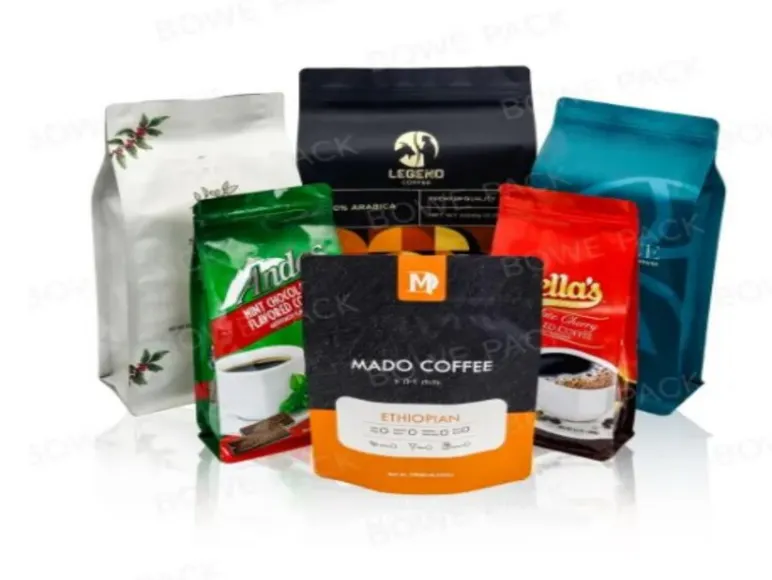
Custom-printed flat-bottom coffee pouches engineered at specialized flexible packaging factories represent the pinnacle of modern specialty coffee presentation and preservation. The flat-bottom geometric architecture combines the self-standing stability of a classic stand-up pouch with the spacious capacity of a side-gusseted bag, creating five distinct vertical panels for high-impact branding, origin narratives, and nutritional compliance. Because roasted coffee beans are highly sensitive to environmental factors, these pouches utilize high-barrier multi-layer laminates—ranging from traditional foil composites to fully recyclable mono-plastics and certified biodegradable biopolymers—to completely block oxygen, moisture, and ultraviolet light transmission.
A critical functional feature integrated at the factory level is the one-way degassing valve, which allows trapped carbon dioxide gas released by fresh roasts to escape safely while blocking ambient oxygen from entering the bag. Advanced manufacturing facilities utilize high-speed rotogravure and digital printing presses with non-toxic water-based inks to deliver vibrant graphics, enhanced by tactile surface finishes like registered matte varnishes or spot UV highlights. For consumer convenience, factories incorporate premium reclosure systems like pocket zippers, ensuring an airtight seal that maintains product freshness and aroma long after opening, while driving retail appeal on competitive shelves.
5. Recyclable Flat Based Pouch Eco Friendly Flat Bottom Bag Supplier
Finding a reliable supplier for recyclable flat-based pouches is a critical step for brands aiming to merge premium shelf appeal with sustainable waste management. The flat-bottom bag, also known as a block-bottom or box pouch, is widely considered the gold standard in modern flexible packaging due to its exceptional stability and presentation. Leading international eco-friendly suppliers specialize in manufacturing these advanced pouches entirely from mono-material structures, typically utilizing Mono-PE (Polyethylene) or Mono-PP (Polypropylene) polymer families. By ensuring that the entire bag—including the side gussets, base panel and closure tracks—shares a uniform plastic composition, the empty packaging can be processed directly through standard flexible recycling streams, diverting thousands of empty bags from landfill space.
Top-tier global factories incorporate ultra-thin layers of EVOH (Ethylene Vinyl Alcohol) within the mono-plastic matrix during the co-extrusion process. This sophisticated engineering enables suppliers to provide high-barrier protection that blocks 100% of oxygen, light, and moisture transmission, matching the performance of legacy aluminum-foil laminates without contaminating the recycling stream. This optimal barrier system makes the pouches perfect for protecting sensitive items like roasted coffee, organic cereals, pet food, premium nuts, and powders. Sourcing directly from certified suppliers unlocks comprehensive Original Equipment Manufacturer (OEM) customization options, including factory-installed recyclable pocket zippers, laser scoring for effortless opening, and one-way degassing valves made from the exact same polymer family. Furthermore, suppliers utilize state-of-the-art digital and rotogravure printing presses with non-toxic, eco-friendly water-based or soy inks to display vibrant graphics across all five printable panels, helping sustainable brands establish an eye-catching, zero-waste retail presence that aligns with circular economy regulations.

