Tapered roller bearings: role and application
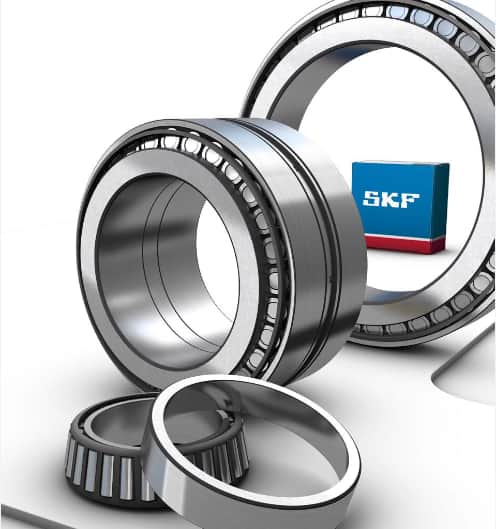
A tapered roller bearing can be recognized by hearing irregular operation by using this method. The sound usually indicates that the bearing is in poor operating condition when it makes a low whine sound, sharp hissing sound, squeaking sound, and other irregularities. If it makes a low whine sound, it will be in good running condition.
A liquid lubrication method reduces friction loss and surface wear by separating the sliding surface from direct contact by the lubricating oil. An oil film can also absorb vibration, causing a sharp squeaking noise. Inappropriate bearing clearance may also cause metallic noises. As a result of the dent on the outer ring of the tapered roller bearing, vibration will occur and a smooth and crisp sound will be produced. Noise will also be produced during installation if knocking scars are present. This noise will vary depending on the bearing's speed.
This sound of tapered roller SKF bearings occurs when the damaged surface is rolled over. If there are pollutants in the bearing, a hissing sound will often occur. It is important to replace the bearing as soon as possible if the bearing is damaged. In most cases, bearing damage can be detected by hearing, but it must usually be replaced immediately when the bearing arrives. A better method would be to detect the bearing's running condition in advance using, for example, electronic condition monitoring equipment.
Tapered roller bearing characteristics
The advantages
Adaptability to axial and radial loads
Its design makes it particularly well-suited to handle both axial and radial loads. Tapered roller bearings are versatile bearings used in a wide variety of applications. Due to its tapered shape, it can accommodate both types of loads and evenly distribute the contact between its rolling elements.
A tapered roller bearing's raceways assist in preventing misalignment and reduce friction. It can also handle radial loads that are significantly higher than its axial loads.
Capacity to carry heavy loads
It is well known for its high load-carrying capacity due to its unique design, which features tapered inner and outer races and tapered rollers. Due to the tapered design of the races and rollers, the bearing can handle axial and radial loads, as well as thrust loads.
A large load can be handled by the bearing because the load is evenly distributed across the entire contact area between the races and rollers.
Stiffness is high
Among its most important features is its high stiffness, which is a result of its unique design, which consists of a series of tapered rollers running between two conical inner and outer raceways. The contact angle between the rollers and the uniform spacing between them aid in forming a solid, rigid connection. Due to its improved rigidity, the tapered roller bearing has a higher load capacity than other bearing types.
Service life is long
A tapered roller bearing's design reduces friction and enables smooth rotation, both of which prolong the bearing's life. By altering the bearing's bore size and shape, the bearing's service life can be further extended. With proper maintenance and lubrication, tapered roller bearings can perform reliably and long-lastingly. Read more: https://www.rollsbearing.com/8735-skf-32032-x-bearings.html
In conclusion
This comprehensive reference for tapered roller bearings covers the essential criteria to consider when choosing high-quality bearings. Anyone interested in purchasing high-quality tapered roller bearings in 2023 will find this article useful, since it provides comprehensive information on the bearings from every angle.
