Target audience research method everyone wants to steal
I swear, sometimes I feel like I’ve stumbled onto a secret that’s just sitting there in plain sight, waiting for people to wake up and notice.
You see, I never quite understood why so many marketers rely on gut feelings instead of real audience research. Like, we’re in 2025, and 40% of marketers don’t even research their target audience.
Let that sink in.
They just throw content into the void, hoping something sticks. And honestly? Leadership is a big part of the problem.
The boss resistance paradox
You’d think execs would want marketing teams to understand their customers, right? Well, plot twist is they’re the ones blocking it.
For whatever reason, a lot of company leaders actively prevent their marketing teams from talking to customers. No direct interviews. No conversations. Just a weird, invisible firewall that makes no sense.
Meanwhile, those same leaders are the first to ask:
“Why aren’t our campaigns converting?”
“Why are engagement rates so low?”
“Why do we keep burning through marketing budgets with no ROI?”
Well, maybe — just maybe — it’s because marketing is being forced to guess instead of doing actual research.
How I escaped this pool of nonsense
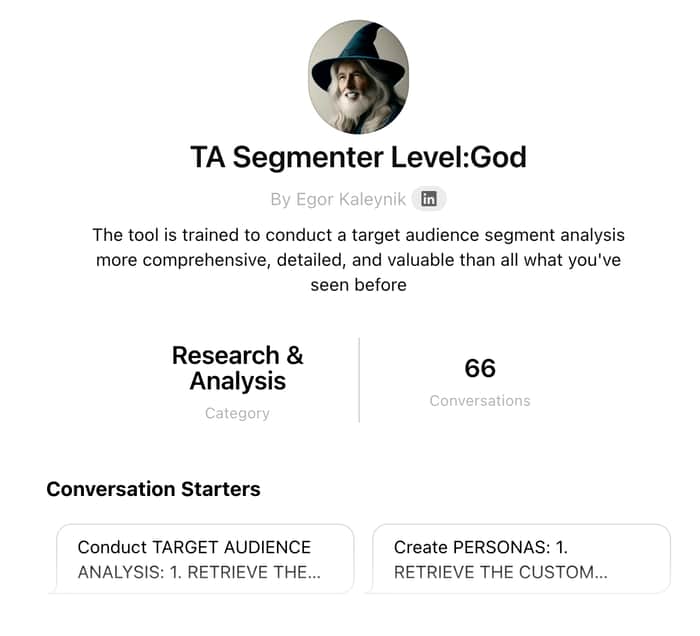
Since I’m not about to waste time begging for access to customer insights, I built my own method. No permissions needed. No client leadership approvals, even telling anyone is non-mandatory. Just raw, AI-powered data.
And it works.
Step 1. Broad initial analysis
I start with a rough sketch: who the company serves, what problems they solve, and who’s likely to care. Simple, but enough to get going.
Step 2. Persona development
Now, I go deeper. I craft detailed audience personas based on real-world data, not wishful thinking.
Step 3. Champion identification
I don’t waste time with generic LinkedIn profiles (half of them are AI-generated fluff anyway). Instead, I find the people actually engaging in discussions — the ones whose opinions matter.
Step 4. Data collection
I pull data from LinkedIn, Reddit, Hacker News, Twitter, Quora, and other sources. My last analysis covered 2,932 pages, 5,034 records, and 665,757 words, what is totally impossible for a human to process manually, but AI eats that up.
Step 5. Refinement
With each iteration, audience insights get sharper. The difference between the first and final segmentation? Night and day.
Step 6. Integration
Once the data is solid, I use it to craft hyper-personalized marketing messages that actually resonate. No generic sales pitches, no fluff, just content that makes people feel like, damn, this was made for me.
With this method, I can:
- Build a complete audience segmentation in an hour or two
- Scale research to 50+ decision-makers at once
- Get insights without client approvals or waiting for leadership to “allow” it
And the best part: it leaves traditional customer interviews in the dust.
What next? Probably I should wrap and market it
I’ve been thinking… why not turn this into a self-service product?
Would you use it? Let me know.
P.S. I did this research for one of the last leads didn't finally turned into my client. So, sharing an example with confidence [PDF]: https://drive.google.com/file/d/1NBGuH7FZ-0kzc4Sl91p5pQPMiPxXrH1A/view?usp=sharing

Kudos!