Taxi Booking App Development: Complete Guide for Startups
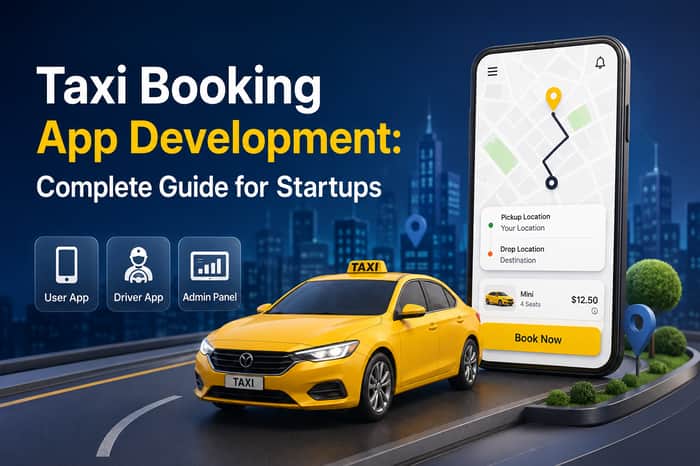
The transportation industry has changed significantly with the rise of on-demand mobility services. Customers now expect convenient, fast, and reliable transportation that can be booked directly from their smartphones. This has created a strong opportunity for startups to launch a taxi booking app and build a scalable ride-hailing business.
A taxi booking app connects passengers with nearby drivers through a digital platform. Users can enter their pickup and destination locations, select a ride type, view estimated fares, book a taxi, track the driver, make digital payments, and provide feedback after the trip.
For startups, developing a taxi booking app is not only about creating a mobile application. It involves choosing the right business model, defining essential features, integrating modern technologies, recruiting drivers, and creating an effective monetization strategy.
What Is a Taxi Booking App?
A taxi booking app is an on-demand transportation platform that allows customers to book rides using a smartphone.
The application typically uses GPS, maps, payment gateways, notifications, and a backend management system to connect passengers and drivers.
A complete taxi booking solution generally consists of:
- Passenger app
- Driver app
- Admin panel
- Backend system
- Payment system
- Web-based management tools
This structure allows startups to manage bookings, drivers, customers, pricing, payments, commissions, promotions, and analytics from a centralized platform.
Why Should Startups Invest in a Taxi Booking App?
The growing preference for smartphone-based services has made app-based transportation a major business opportunity.
1. Growing Demand for On-Demand Transportation
Customers want transportation that is available whenever they need it. A taxi booking app makes it possible to request a ride without calling a traditional taxi operator.
2. Convenient Customer Experience
Users can book rides, select vehicle categories, estimate fares, track drivers, and pay digitally from one application.
3. Scalable Business Model
A digital taxi platform can expand from one city to multiple cities by adding drivers and service areas.
4. Multiple Revenue Opportunities
Startups can generate revenue through commissions, booking fees, subscriptions, surge pricing, corporate accounts, advertisements, and premium services.
5. Better Business Management
An admin panel provides real-time information about rides, drivers, customers, revenue, cancellations, and business performance.
How Does a Taxi Booking App Work?
The basic booking process is straightforward.
Step 1: Customer Registers
The passenger creates an account using a phone number, email address, or supported social login.
Step 2: Pickup and Destination
The customer enters the pickup location and destination.
Step 3: Selects a Vehicle
Depending on the business model, users may select options such as economy, sedan, SUV, premium, or shared rides.
Step 4: Views Estimated Fare
The application calculates an estimated fare using factors such as distance, travel time, vehicle category, and pricing rules.
Step 5: Books the Ride
The passenger confirms the booking request.
Step 6: Driver Accepts
The system finds suitable nearby drivers and sends the ride request to available drivers.
Step 7: Driver Reaches the Pickup Point
The passenger can track the driver's location through GPS.
Step 8: Ride Begins
After pickup, the driver starts the trip and follows the navigation route.
Step 9: Payment
The customer pays using an integrated payment method or another supported option.
Step 10: Rating and Review
After completing the ride, the passenger and driver can provide ratings and feedback.
Essential Features of a Taxi Booking App
A successful taxi platform needs features designed for both passengers and drivers.
Passenger App Features
Important passenger-side features include:
- Registration and login
- Profile management
- GPS location detection
- Pickup and destination selection
- Fare estimation
- Vehicle selection
- Instant booking
- Scheduled rides
- Driver information
- Real-time driver tracking
- Ride history
- Multiple payment options
- Promo codes
- Digital receipts
- Ratings and reviews
- Push notifications
- Emergency/SOS functionality
- Customer support
Driver App Features
The driver application should help drivers manage rides and earnings efficiently.
Key features include:
- Driver registration
- Document upload
- Profile verification
- Online/offline status
- Ride request notifications
- Ride acceptance/rejection
- Navigation
- Passenger information
- Trip management
- Earnings dashboard
- Wallet
- Daily and weekly reports
- Ride history
- Ratings
- Support
- Notifications
Admin Panel Features
The admin panel acts as the control center of the taxi booking business.
Administrators should be able to manage:
- Customers
- Drivers
- Vehicles
- Bookings
- Ride categories
- Pricing
- Commissions
- Payments
- Refunds
- Promotions
- Coupons
- Ratings and reviews
- Service areas
- Driver documents
- Reports
- Revenue analytics
- Customer complaints
- Notifications
A powerful admin panel helps business owners monitor operations and make data-driven decisions.
Advanced Features for a Modern Taxi Booking App
Startups can differentiate their platforms by integrating advanced technologies.
AI-Powered Ride Matching
AI can analyze driver availability, location, traffic conditions, and demand patterns to improve driver-passenger matching.
Dynamic Pricing
Pricing can automatically change based on demand, availability, distance, time, and local conditions.
Real-Time GPS Tracking
Passengers can monitor the driver's location and estimated arrival time.
AI-Based Customer Support
AI-powered chat support can answer common questions and assist users with bookings, payments, cancellations, and other issues.
Voice Booking
Voice-based booking can allow customers to request rides using natural language rather than manually entering every detail.
Demand Prediction
AI and analytics can help predict high-demand areas and periods, allowing businesses to position drivers more efficiently.
Taxi Booking App Monetization Models
Startups can select one or combine multiple revenue models.
Commission Model
The platform charges drivers a percentage of each completed ride.
Booking Fee
A fixed service or platform fee can be added to each booking.
Surge or Dynamic Pricing
Higher fares can be applied during periods of increased demand, depending on local regulations and the business model.
Driver Subscription
Drivers can pay a fixed weekly or monthly subscription instead of paying a commission on every ride.
Corporate Accounts
Businesses can receive dedicated transportation solutions for employees and corporate travel.
Premium Ride Services
Luxury vehicles and premium transportation categories can generate higher revenue per ride.
Advertising
Businesses can promote products or services through advertising placements inside the platform.
Taxi Booking App Development Cost
The cost of developing a taxi booking app depends heavily on the project's requirements.
Major cost factors include:
- Number of platforms
- UI/UX design
- Passenger app development
- Driver app development
- Admin panel
- Backend development
- Real-time tracking
- Payment integrations
- Map and navigation integrations
- AI features
- Security requirements
- Testing
- Cloud infrastructure
- Maintenance and updates
A basic taxi booking platform will generally cost less than a customized solution supporting multiple vehicle categories, advanced analytics, AI, subscriptions, corporate accounts, and multi-city operations.
Startups can also consider a ready-made taxi booking app or white-label solution to reduce development time and initial investment.
Custom Taxi App vs Ready-Made Solution
Startups generally have two approaches.
Custom Development
A custom application is built from the ground up according to the company's exact requirements.
Advantages:
- Complete customization
- Unique user experience
- Flexible architecture
- Easier implementation of specialized features
Disadvantages:
- Higher development cost
- Longer development timeline
- Greater maintenance requirements
Ready-Made Taxi Booking Solution
A ready-made solution provides pre-built taxi booking functionality that can be customized for a specific business.
Advantages:
- Faster launch
- Lower initial development effort
- Pre-built core features
- Easier market testing
Disadvantages:
- Customization may depend on the solution provider
- Some advanced features may require additional development
For startups testing a new market, a customizable ready-made solution can be a practical way to launch an MVP and validate demand.
Technology Stack
A taxi booking platform typically requires several technologies working together.
Common components include:
- Mobile app technology
- Backend framework
- Database
- Cloud hosting
- GPS and mapping APIs
- Payment gateways
- Push notification services
- Analytics tools
- Security technologies
- AI/ML services
The exact technology stack should be selected according to the target market, expected traffic, scalability requirements, budget, and business objectives.
How to Launch a Taxi Booking App
Startups should follow a structured approach instead of developing every possible feature immediately.
1. Conduct Market Research
Study competitors, customer expectations, pricing, transportation regulations, and driver availability in the target market.
2. Select a Niche
You can focus on a specific segment such as:
- Airport transportation
- Corporate transportation
- Women-focused transportation
- Luxury rides
- Intercity transportation
- Electric vehicle rides
- Bike taxis
- Accessible transportation
3. Define the Business Model
Determine how the platform will earn revenue and how much commission or service fee will be charged.
4. Build the MVP
Start with essential booking, driver management, payment, tracking, and administration features.
5. Recruit Drivers
A reliable driver network is essential for providing consistent service.
6. Test the Platform
Test booking, GPS, payments, notifications, driver matching, cancellations, and other important workflows.
7. Launch in a Focused Market
Starting with one city or selected service area can make operations easier to manage.
8. Analyze Performance
Monitor bookings, cancellations, customer retention, driver activity, average revenue per ride, and other key metrics.
9. Expand
Once the business model is validated, expand into additional locations and introduce advanced features.
Marketing Strategies for a Taxi Booking App
App development alone does not guarantee success. Startups also need an effective customer acquisition strategy.
Useful marketing approaches include:
- Local SEO
- Search engine advertising
- Social media campaigns
- Referral programs
- Driver referral incentives
- First-ride discounts
- Corporate partnerships
- Influencer marketing
- Loyalty programs
- App store optimization
- Email and SMS marketing
A strong referral system can be especially useful because satisfied customers can bring new users to the platform.
Key Challenges in Taxi Booking App Development
Startups should also prepare for common challenges.
Driver Availability
A platform needs enough active drivers to provide reliable service.
Customer Retention
Competitive pricing and good service are important for turning first-time customers into repeat users.
Safety
Driver verification, trip monitoring, emergency assistance, and secure payment systems should be considered essential components.
Competition
The ride-hailing market can be highly competitive. Startups should identify a clear differentiator rather than simply copying existing platforms.
Operational Management
Handling cancellations, refunds, disputes, driver onboarding, and customer support requires efficient administrative processes.
Future of Taxi Booking Apps
The future of taxi booking is likely to become increasingly technology-driven. AI-powered matching, predictive analytics, automated customer support, connected vehicles, electric mobility, and smarter route optimization can improve operational efficiency.
Businesses may also combine taxi booking with other mobility services, creating broader mobility platforms that support multiple transportation options from one application.
Conclusion
Taxi Booking App Development offers startups an opportunity to build a scalable on-demand transportation business. A successful platform requires more than passenger and driver applications—it needs an efficient backend, powerful admin panel, reliable GPS tracking, secure payments, effective driver management, and a sustainable revenue model.
Startups should begin with a focused market, launch an MVP, understand customer behavior, continuously improve the platform, and then expand. By combining a strong business strategy with the right technology and customer experience, entrepreneurs can create a competitive taxi booking platform capable of growing across cities and markets.
