"TBD" is a conversion killer (and why founders get defensive about it)
I spent my weekend auditing landing pages, and I found a massive "Trust Leak" that I see everywhere: The "TBD" Trap.
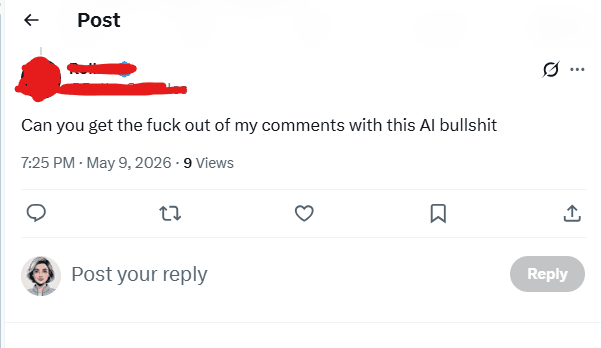
I told a founder that showing a "TBD" prize pool while their stream was "Offline" was scaring users away. Their response? They told me to "GTFO."
It’s hard to hear your "baby" is ugly, but logic doesn't care about feelings. If you ask for a user's trust (or their money) before you show the value, your conversion rate will stay at 0%.
I’m currently at 4 sales for my logic auditor tool, RoastMyLanding, and I’m hunting for Sale #5 today.
I’ll do 3 manual logic roasts in the comments for free. >
Drop your link if you’re brave enough to hear why people aren't clicking your CTA.

The asymmetry that makes this so hard to fix: founders read "TBD" as transparency, visitors read it as "they haven't thought this through yet."
There's also a hierarchy worth noting — not all TBDs damage trust equally. Pricing TBD is the worst because it triggers "they'll charge whatever they want." Feature TBD is next. Launch date TBD is the most forgivable because it signals
work in progress rather than evasion.
The GTFO reaction in that screenshot is actually a diagnostic — it means the founder knows the page isn't ready but launched anyway. That's a different problem than founders who genuinely don't know.
Which type of TBD do you see most often in your audits — pricing, features, or social proof?
Spot on analysis. 'Founders read it as transparency, visitors read it as a lack of thought' is the perfect way to frame that asymmetry.
To answer your question: I actually see Social Proof TBD (like empty placeholder testimonial cards saying 'John Doe, CEO') and Pricing TBD the most. Pricing is a absolute conversion killer because the brain instantly defaults to 'this is going to be way too expensive for me.'
You're so right about the GTFO reaction too—it’s pure launch anxiety manifested on a webpage! Appreciate the killer insights here.
Social proof TBD is such a good catch - the 'John Doe, CEO' placeholder is almost worse than having no testimonials at all because it signals the founder knows they need them but couldn't be bothered to get real ones. At least empty space is honest.
Pricing TBD is the one I keep seeing on SaaS tools mid-launch. The "contact us for pricing" move that reads as 'we'll charge you whatever we think you can afford.' Kills momentum instantly.
What's your take - do founders usually push back when you flag these, or do they already know?
The TBD trap is real but it's the visible tip of a bigger pattern — landing pages shipped before the product is real enough to talk about specifically. "TBD" is just the most obvious artifact. Same trap shows up as "coming soon" badges, placeholder testimonials, vague "trusted by teams everywhere" claims, fake user counts dressed up as social proof.
The pattern we see at Hivemind across landing page audits: founders ship the page when the product exists, then spend 6 months wondering why traffic doesn't convert. The fix isn't fewer TBDs, it's waiting until you have one real customer story, one real result, one real screenshot. A landing page built around one real proof point outconverts a polished page built around imagined ones every time.
The founder telling you to GTFO is the tell, by the way. Defensive reaction to a logic critique usually means the founder already knew and didn't want to fix it.
Spot on. I’ve started calling these 'Ghost Headlines'—copy built for a user that doesn't exist yet.
The 'GTFO' reaction usually happens because the critique hits the 'Truth Gap' between what they built and what they're claiming.
I see this 'Hallucinated Proof' in almost every audit. I actually moved my tool to $19 unlimited access specifically so founders can test, go find that one real proof point/screenshot you mentioned, and re-audit immediately without the friction of paying twice.
If anyone here is stuck in the 'TBD Trap,' drop your URL. I’ll show you which 'imagined' point is killing your trust.
The deeper reason founders default to TBD: they genuinely have not decided yet, and the landing page is live before the thinking is done. The fix is not just removing the placeholder - it is making the decision. If the price is unclear, pick a number and test it. If a feature is not built, either leave it off the page or name a specific date. Visitors do not mind uncertainty when it is communicated honestly. They do mind when they can feel the founder hiding it behind vague language. TBD reads as I have not thought about this yet - and makes visitors wonder what else has not been thought through.
The deeper reason founders default to 'TBD': they genuinely haven't decided yet, and the landing page is live before the thinking is done.
The fix isn't just 'remove TBD' - it's making the decision. If you're unsure of the price, pick a number and test it. If a feature isn't built yet, either leave it off or name a specific date ('Q3 2026'), not 'coming soon.'
Visitors don't mind uncertainty when it's communicated honestly. They do mind when they can feel the founder is uncertain and hiding it behind vague language. 'TBD' reads as 'I haven't thought about this yet' - and makes them wonder what else hasn't been thought through.