Stuck at $300/mo until revenue skyrocketed to $17k/mo in a month
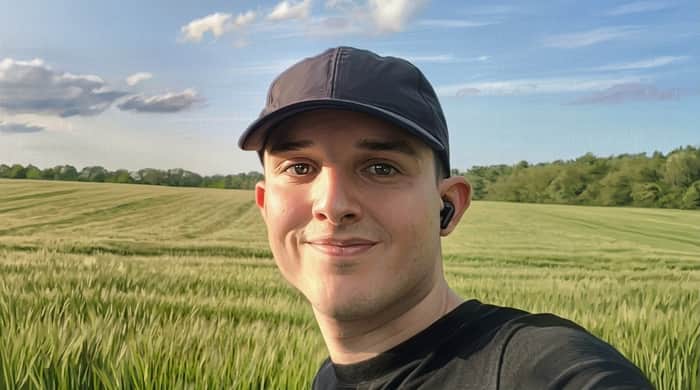
After launching RankInPublic, Antonio Escudero booked a one-way ticket to Vietnam with his life savings: $4k. Revenue barely covered expenses for months, but then it skyrocketed to $17k/mo.
Here's Antonio on how he did it. 👇
Booking a one-way ticket
My name is Antonio Escudero. I am a 24-year-old founder who started indie hacking in 2025.
In my last year of university, I started skipping classes to work on my own projects. At the time, I was very interested in Deep Learning and, seeing its rapid advancement and believing (I still do) it would replace the majority of traditional software engineering jobs, I quit my CS degree.
RankInPublic wasn't my first attempt. I tried three projects before, and all failed because they either required too much initial capital, lacked proper marketing, or competed against large players in fields needing network effects. I was stuck and getting pressure from every direction to go back to university and settle into a normal 9-to-5.
The idea for RankInPublic stemmed from my obsession with Deep Learning and LLM models. At the time, I checked LMArena.ai every day and thought, what if I created the same concept for startups? An A vs. B comparison of SaaS products where the community votes on the best. So, I built it. I didn't consider it a business at the time; I just wanted to build it and observe community interaction. I promoted it on my X profile, and after a few people joined the platform, I decided to continue.
At this point, I was running out of money. I needed revenue quickly in order to avoid becoming an employee. That's when I discovered a post by Tony Dinh about the Hacker Residency, and after receiving a recommendation from Levelsio, I booked a one-way ticket to Da Nang, Vietnam. I had $4k left and lived there on roughly $190/month.
A month after starting RankInPublic, I received my first payment from someone wanting to sponsor a tournament. For a long time, I was making less than $300/mo. Then, suddenly, revenue reached $17k in a single month. Currently, the site has close to 8,000 users and $33k in total revenue. Monthly revenue varies because one-time payments make up the majority of revenue, but it's between $11k and $17k.
Now, I'm also building RankLoop, an AI-powered SEO product for automated backlink and content generation — launching soon.
Building the product
That first version was very simple. It only included features for people to compare two startups and vote for the one they preferred.
I bought an .xyz domain for a couple of cents and fully vibecoded the website in a single day using Gemini 2.5 Pro. Cloudflare Pages hosted the frontend for free, while the backend and database used Supabase's free tier. Because all the services I needed offered free plans, the only real expense was the domain, and the entire initial product cost almost nothing to launch. That approach was important because it meant it wasn't a big deal if it failed.
The tech stack evolved significantly since then. The current site preserves none of the original code. A couple of months in, I completely rewrote the site to fix major issues. These issues mainly included difficulties handling international taxation, a suboptimal setup for SEO because the site was not server-side rendered, and a desire to use a more LLM-friendly backend, like Convex.
Initially, the stack was:
Frontend: Vite + React
Backend: Supabase
Payments: Stripe
Auth: Supabase Auth
Hosting: Cloudflare Pages
The current stack is:
Frontend: Next.js
Backend: Self-hosted Convex
Payments: Dodo Payments
Auth: Better Auth
Hosting: Hetzner + Dokploy

One-time payments vs. recurring revenue
RankInPublic uses a freemium business model. Founders can submit their products and participate in the platform for free, while paid options offer those who want faster results or additional exposure. Most products sell through one-time payments. Skipping the queue costs $29. Directory submission packages cost $199 for 100 directories and $249 for 140 directories. The main recurring product, the featured landing page spot, costs $29 per week or $99 per month.
We have $1k MRR from the subscription, but the majority of RankInPublic's revenue comes from the directory submission service. I created it by scraping thousands of startup and SaaS directories from across the internet and organizing the most useful ones into a database. I use a combination of freelancers and scripts to complete the submissions. This allows me to scale the service without personally submitting every product to every directory. Margins are around 65%. Main expenses include freelancers, LLMs, infrastructure, payment processing, and the tools needed to operate the service.
When I first started charging, my prices were much lower. However, I noticed some competitors charged almost twice as much while generating significantly more sales. This made me realize lower prices can sometimes make customers believe a product or service has less value. After increasing my prices and positioning the service as a higher-value offering, the business began generating more revenue.
One-time sales make the business less predictable; I need to continuously acquire new customers to maintain the same income level. This is a main reason I am building RankLoop.ai. I want to take RankInPublic's most revenue-generating part, SEO backlink building, and turn it into a more stable, recurring income source. My goal is for almost all future revenue to come from recurring sources rather than one-time purchases, making the business less dependent on constantly finding new customers through social media.
Viral loops and building in public
To grow RankInPublic, I mainly followed two strategies. First, I built the site around a viral loop concept. Users share their product pages to get more votes and improve their chances of winning the competition. This brings more potential users and customers to the site. I placed share buttons next to the matchup cards, making it easy for users to promote their products across different social media platforms. This viral loop multiplies the impact of any additional marketing efforts because every new participant has an incentive to bring more people to the platform.
My second user acquisition channel has been my social media profiles. While building my SaaS, I shared the entire process on X and LinkedIn. I post about new features, revenue, problems I encounter, lessons I learn, and the progress of the business. Sharing the process publicly has helped me build an audience of founders and indie hackers who are also the target customers for RankInPublic.
I think the jump from $300/mo to $17k/mo that I mentioned was mostly because of my posts. It happened when I started promoting the site with lead magnets that consistently brought in 20k+ daily impressions. It also helped that I recently started posting at night here in Vietnam, which would be the daytime in the US/Europe. Here's an example:
I do not run paid advertisements. I tried for a bit, but found that the space was extremely saturated and dropped it after burning a few thousand dollars. Not running ads keeps customer acquisition costs low, but it also makes the business highly dependent on social media algorithms. Because most customers pay only once, a decline in my posts' reach can directly affect sales.
My advice for growing a new product is to build marketing into the product itself whenever possible. Users should have a reason to share it — there needs to be a direct benefit. Founders should also start building an audience before they need to sell something, sharing their product's creation process instead of only posting when it is ready to launch. Consistently showing progress, problems, and results helps build trust and makes it much easier to attract the first users without spending money on advertising.
Creating helpful habits
Several books, people, and experiences have been particularly helpful to me. Zero to One influenced my thinking about building businesses, while Tony Dinh, Levelsio, Marc Louvion, and Rob Hallam showed me I could build independent internet businesses without following the traditional career path. The Hacker Residency encouraged me to move to Vietnam, leave my comfort zone, and fully commit to what I was building.
One of the most helpful ideas has been going all in and burning the boats. Stepping outside my comfort zone, ignoring the expected path, and not caring too much about what others think allowed me to make decisions I probably would not have made otherwise. I try to act when uncertain, start conversations with strangers, and believe in my goals as if I were predestined to achieve them. That belief gives me direction and prevents temporary setbacks from changing what I believe is possible.
Physical discipline helps me act despite discomfort. I run daily while listening to videos from the Sanchez YouTube channel, practice calisthenics, take cold showers, and intentionally do physically or emotionally difficult things. This makes it easier to take action instead of remaining stuck in doubt when facing friction in my work.
A stable daily schedule is also important. I plan my goals the night before, wake up early, and begin with the most difficult tasks. When I feel afraid or doubtful, I write down my thoughts and try to understand what causes those emotions. I also intentionally create my circumstances, surrounding myself with the right people and environments to gain energy and motivation toward my goals. At the same time, I avoid activities that make me feel good without bringing me closer to those goals, such as partying or attending social events unrelated to what I am trying to achieve.
Four pieces of advice
Here's my advice for indie hackers who are just starting out:
Do not build the entire product first and only think about distribution afterward. Try to understand where your users spend time, how you can reach them, and what would make them share or recommend your product.
Look for unconventional ways to distribute your product. Do not try to compete in channels where much larger competitors already dominate. Instead, find an angle where you can stand out or become the best option for a specific group of users.
Ship fast and start with a bare-bones product. Waiting for everything to be perfect is usually an inferior strategy because it creates doubt and leads you to build features your users may not care about. Launching early allows you to see what people actually use and improve the product based on real feedback.
Provide useful content through your social media profiles to naturally attract people interested in what you build. Do not focus only on getting as many views as possible. A smaller number of views from the right audience can be much more valuable if those people visit your site and become users or customers.
What's next?
I plan to surpass $1M in ARR in 2027. I'd also like to spend a couple of months living in San Francisco and Singapore. And I want to fund a deep-tech startup.
You can follow my progress as I build and grow my SaaS products on my X profile. I'm also in the Build in Public community on X, which is a great place for new indie hackers to share and connect with each other.
You can also visit https://rankinpublic.xyz and https://rankloop.ai to learn more about what I am currently building.

Leave a Comment
Just checked RankLoop - interesting idea and great viral mechanic