This full-time data scientist built a $7k/mo portfolio of side projects
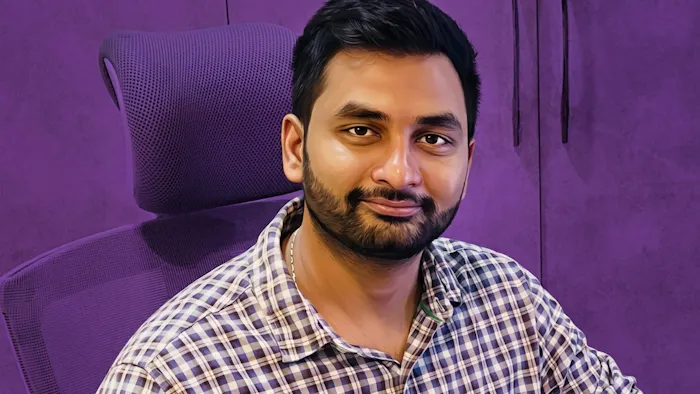
Ramsri Goutham Golla is a full-time data scientist with a portfolio of side projects. That portfolio — which includes Questgen.ai, Supermeme.ai, and AiArtist.io — has over 2.5M registered users and is bringing in nearly $7k MRR.
Here's Ramsri on how he's doing it. 👇
Building three apps while working full-time
I am Ramsri, a microSaaS builder from India, currently building three apps alongside my full-time job as a data scientist:
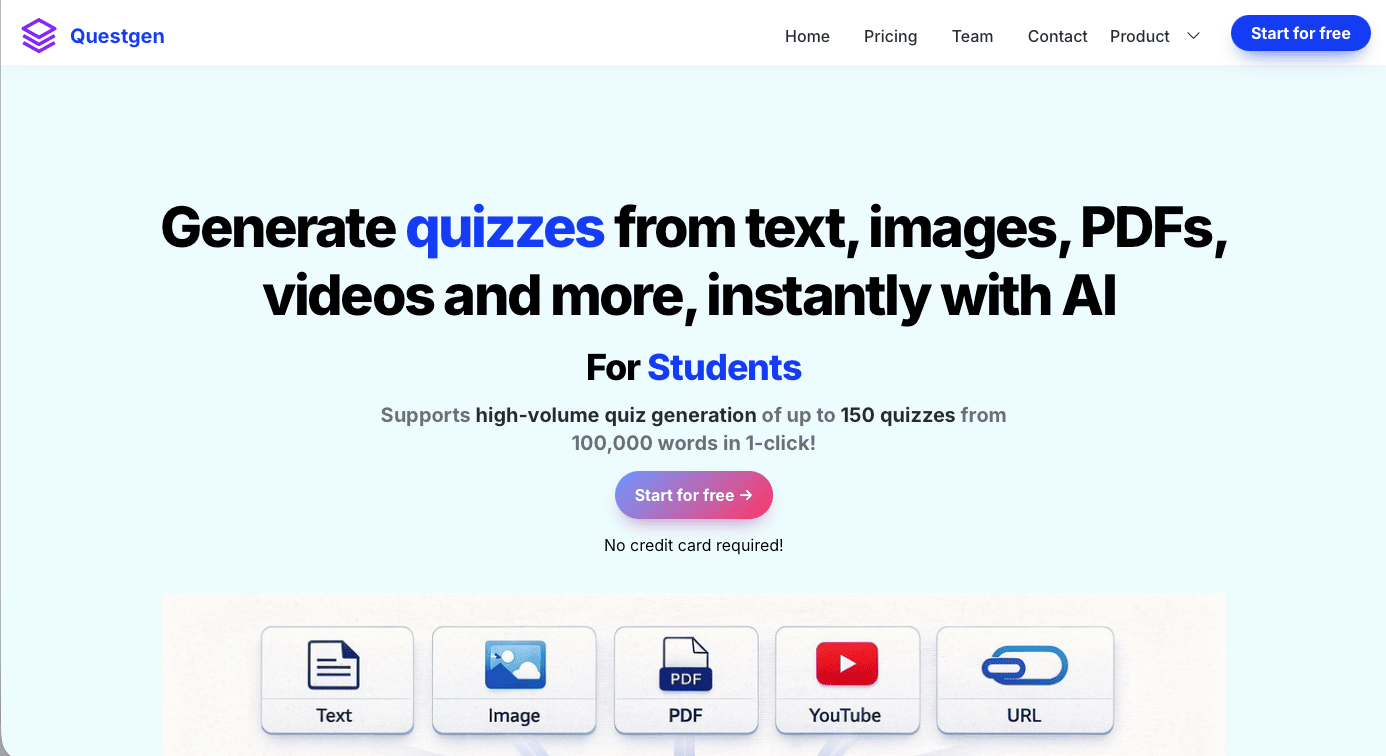
Questgen.ai is an AI quiz generator that takes text, PDFs, or URLs and generates quizzes such as MCQs, True/False, and Fill-in-the-blanks. Since its launch 4 years ago, it has generated over $150K USD in revenue and has over 150K registered users.
Supermeme.ai is an AI meme generator. It takes any text and generates complex, multi-panel memes ready for social media posting. It has over 2 million registered users and achieved Product Hunt #1 of the day upon its launch.
AiArtist.io is an AI motion graphics generator that creates videos from any text. Recently launched, it has over 20 paying users.
At their peak in 2025, the apps hit $100k in total ARR. Currently, they hover between $6k and $7k MRR, with more than 2.5 million registered users.
A bet that paid off
In 2021, I explored ideas at the intersection of AI and education. As AI emerged, I saw quiz generation as an ideal challenge, believing technology would significantly improve its quality in the coming years. That bet paid off; after 2023, text-to-quiz generation gained momentum.
I spoke with several educators to understand their quiz generation pain points, and learned that they outsourced quiz generation to item bank companies. I also found out that they conducted several stages of review. From these conversations, I saw an opportunity that would help companies manage quizzes with their internal workforce instead of outsourcing.
That led to Questgen.
I first used no-code tools like Bubble to create a working version. But the functionality had limitations because those tools abstracted code, so I learned a full-stack platform (NextJS) and built a full-scale app.
The stack is currently NextJS + Supabase for the backend and authentication. And nowadays, I use tools like Claude Code to vibe code and add features.
Converting to a subscription model
Initially, we launched as pay-per-use, but we soon converted to a subscription-based model. Plans start at $10-$15 for the starter plan and go up to $50 for higher usage. The annual plan is 40% cheaper than the monthly plan.
We have 60-70% margins after covering LLM costs.
Open source and SEO
I initially open-sourced Questgen as a GitHub repo. Anyone could download the models and self-host quiz generation locally or within their organizations.
Open source was a great way to promote and launch. People are more likely to share open-source projects, so it quickly gained traction from word of mouth. Beyond that, GitHub drove traffic, and I wrote a lot of blog posts on the general topic of question generation. That kickstarted SEO.
After Questgen gained considerable monthly traffic, I added its web app URL to the GitHub repo's main page (README). This allowed people who didn't want to self-host to become customers.
Since launch, our focus has been on SEO for both products. That includes alternate landing pages, keyword targeting, and programmatic SEO pages for individual memes.
I also love building in public. From the start of an idea, I always share my progress online, primarily on X and LinkedIn. I post almost every day. It's also important to launch and relaunch!
A viral PH launch
For Supermeme, we launched on Product Hunt. It went viral and ranked #1 for the day. Here's how:
Since none of us had a huge audience and we hadn't done a PH launch before, we reached out to Hunters on X until we found one who was interested in our product. They then launched our product.
We aligned with trends. Text-to-text AI was saturating, and AI was entering the image generation space. We believed one-click text-to-AI memes were perfect, aligning with technological trends and audience demand. This proved crucial.
We posted on all our social media channels on launch day to maximize visibility. People who had followed us while we built in public supported us, so our earlier founder-led marketing proved helpful here!
We prepared all launch materials in advance and ensured our landing page screenshots precisely conveyed our messaging about easy AI meme generation.
Competing with big dogs
The biggest challenge was sustaining growth when ChatGPT, Anthropic, etc. rolled out native integrations. The traffic and subsequent subscriptions flattened out.
But native integrations lack input and output formats. For example, users need to output quizzes in several formats for learning management systems. These formats are not readily available online, so native apps cannot easily replicate them. So these have been my differentiator.
Launch, iterate, repeat
My advice is to continuously experiment with upcoming models and tools to discover ideas and challenges.
Also, launch lightweight demos and create mini-content on social media platforms like X or YouTube to gauge an idea's vibe and reception.
Then, double down on ideas that work well.
That's exactly what I'm doing. You can follow along on X and LinkedIn. Or check out Questgen.ai, Supermeme.ai, and AiArtist.io.

Leave a Comment
This is something I’ve been thinking about a lot lately. Getting the first few customers seems less about having a perfect product and more about finding the right people who actually have the problem.
Love the idea so far!
I host AIX – Beyond the Prompt, an AI-focused podcast, and I'm starting to feature some early-stage AI founders to help give their products more visibility.
We could have a conversation about what you're building and the story behind it. There's no fee or sponsorship involved!!
If you're interested check the AIX podcast on YouTube or Spotify and/or get in touch.
The open-source + SEO combination is probably the part I’d take away from this. A lot of side projects try to push people straight to a paid product, but giving users something genuinely useful first seems to create a much easier path to trust.
I also like the idea of treating distribution as part of the product from the beginning. If you can get a GitHub repo, useful content, and the actual SaaS working together, each new piece of content can keep bringing users in long after you’ve published it. That feels much more sustainable than relying on a single launch.
Loved the "distribution equals product" point, that's the part most builders underrate. The portfolio approach makes total sense too, three smaller bets beat one big one for risk. On the build side, this is why I've leaned on ready-made source code from places like Zipprr for new ideas instead of rebuilding the same NextJS/Supabase scaffolding each time, it frees up time for exactly the SEO and open-source distribution work you're describing. Congrats on the $7k/mo, that's a great outcome from consistent shipping.
Managing a $7k/mo microSaaS portfolio alongside a full-time job is peak execution!
Leveraging Product Hunt hunters and aligning Supermeme with the exact shift toward image gen shows how critical launch timing is. Also love that you're using vibe coding with tools like Claude Code to speed up side project iterations—it really lowers the barrier to maintaining multiple products solo. Rooting for AiArtist's growth!
"Incredible journey, Ramsri! Transitioning from open-source repository traction into a full SaaS funnel for Questgen is a brilliant blueprint for dev-tool founders.
Your insight on defense mechanisms against native LLM tools (like ChatGPT) is spot on—focusing on specialized LMS export formats where generic AI fails is a great moat. How do you balance feature requests across three distinct apps while managing a full-time data scientist role?"
"Incredible journey, Ramsri! Transitioning from open-source repository traction into a full SaaS funnel for Questgen is a brilliant blueprint for dev-tool founders.
Your insight on defense mechanisms against native LLM tools (like ChatGPT) is spot on—focusing on specialized LMS export formats where generic AI fails is a great moat. How do you balance feature requests across three distinct apps while managing a full-time data scientist role?"
250M users across a portfolio while still clocking in a 9-5?? that's not a side project anymore that's a whole second job wearing a side project costume
Love that you open sourced Questgen early on, that's a gutsy but smart way to build trust and traffic at the same time. We've been thinking about something similar with Draftly, how much of growth is really just people trusting you enough to try the thing. Curious how you split focus now across three products and a full-time job, is it rotation or more reactive based on what's growing that week?
The interesting part here is how the side projects were built gradually alongside a full-time job. aside, I think the biggest takeaway is that you don't necessarily need a huge team or a single breakthrough idea to build something useful. Consistency, learning from each project, and finding problems worth solving seem to make a much bigger difference over time. Really interesting case study for anyone experimenting with projects outside their main job. allpanellnet
Awesome breakdown! Maintaining 60-70% margins on AI wrappers with 2.5M registered users is rare. Love seeing how early domain positioning in 2021 paid off long-term for Questgen
Really interesting case study. What stood out to me is that you didn't rely on a single acquisition channel — you combined product validation, SEO, open source, building in public and Product Hunt. I think that's especially useful for solo builders because a good product can still struggle if distribution isn't considered early. I'm curious: if you were starting a new side project today with zero audience, which channel would you prioritize first?
Putting the hosted SaaS link right in the README of the open-source repo is such a clean play. Devs and tech-savvy users get to self-host and spread word-of-mouth, while non-technical folks who don't want the setup headache just click through and pay for the web app. Easily one of the best low-cost SEO and acquisition channels for solo devs.
Managing side projects while having a full-time job is already difficult, so reaching $7k/month across a portfolio is impressive from an execution standpoint. I’m especially curious how he decides which products deserve more attention and which ones to stop working on
Open source worked here because it created a natural trust and conversion path: developers could inspect or self-host the core capability, while teams that valued convenience could choose the hosted product. The important measurement is not repository stars, but how many users move from the README and content into an activated account and paid use. That separates community attention from an acquisition engine.
Nice work and great case study.
I would love you to check out Kognis just released.
What stands out to me here isn’t just the ~$7k MRR — it’s the portfolio strategy behind it.
The combination of shipping multiple small products, validating demand, using open source as a distribution channel, and then compounding that traffic through SEO is a much more interesting lesson than “build an AI SaaS.”
I also liked the point about competing with larger AI platforms by owning a specific workflow rather than trying to compete on the underlying model. The LMS-specific quiz formats are a great example of turning a seemingly small product detail into a real moat.
The bigger takeaway for me: you don’t necessarily need one perfect idea. You need a repeatable system for identifying problems, launching quickly, measuring demand, and doubling down when the signals are strong.
Great case study.
Really inspiring to see how consistent side projects can grow into a meaningful source of income. Great insights!
Balancing a full-time data science role while managing a portfolio with 2.5M users is absolutely wild.
good
Great example of focusing on the problem, not just the AI. The open-source + SEO approach is especially smart, and the LMS-specific output formats show how a niche workflow can stay valuable even when big AI platforms add similar features.
I am in the same early phase as yours, really motivating for me.
Balancing a full-time data science role while scaling a portfolio of side projects to $7k/mo is a huge achievement.
Managing multiple active deployments usually becomes the biggest bottleneck for solo builders. When running various programmatic SEO architectures and automated web pipelines, just the context switching between different custom Python scripts or JavaScript routing setups can eat up hours. It is incredibly easy to get bogged down in cloud maintenance across different platforms rather than actually shipping new features.
Curious how you manage the infrastructure load across an entire portfolio without it bleeding into your 9-to-5? Did you standardize your tech stack so every project uses the exact same deployment template, or do you rely on aggressive time-blocking to keep the side projects from overwhelming your schedule?
really amazing story
I have try few days ago AiArtist i really like it
Really impressive story
This is a great story of an Indie Hacker.
250M users while working full-time is wild. I'd love to know how he decides which side projects are worth doubling down on vs. letting go, especially with such limited time to spread around.
This is impressive. The portals came out well. Well articulated, and designed carefully..
Really inspiring journey! I think one of the biggest lessons here is that small, consistent experiments can compound over time. A lot of people wait for the “perfect idea,” but building multiple small projects and learning from real users seems like a much better way to discover what actually works.
I also like the idea of treating side projects as a portfolio rather than relying on a single bet. Each project can teach you something new about marketing, user behavior, SEO, and product development.
The hardest part for many builders is staying consistent after the initial excitement fades. Building small systems and improving them over time seems to be a key factor in turning side projects into meaningful income.
Curious to know — how do you decide which projects deserve more time and which ones to move on from?
Really enjoyed reading your journey. What stood out to me was how you validated ideas, launched quickly, and kept iterating instead of waiting for the "perfect" product. I also liked your focus on SEO and building in public—it shows how consistent effort compounds over time. I'm working on a Calculadora de horas extras, and this reinforced something I've been learning myself: even a simple tool can grow if it solves a real problem and keeps improving based on user feedback. Thanks for sharing your experience, and best of luck with the next stage of your products!
The strongest lesson here is what happened after the big AI platforms added similar generation features. The generation itself became easier to copy, but the workflow around it didn’t.
Questgen’s real advantage seems to be turning the output into formats people can actually use inside their existing learning systems. That feels like the more durable direction for AI products: move beyond “generate something” and own the review, formatting, export, and delivery steps around it.
I found it interesting that this does not read “three apps,” but rather “three diff distribution experiments.” ~
One pragmatic way to think of it is that each project had different acquisition engine. Widespread exposure, certain infographic, SEO and other open-source, Product Hunt, consistent content, etc.; all compounded in various ways. Launching three products with the same strategy is a completely different ball game.
a) The fact that they went from pay-per-use to subscriptions was interesting.
b) The conversion from pay-per-use to subscriptions was interesting too. Many entrepreneurs think of pricing as something to be optimized later, but it is often the variable that dictates the stability of the business more than growth itself.
I’m interested: if you were to start from scratch today, would you still do little things in parallel or would you focus on getting one to $5k – 10k MRR before adding a second?
The open source to SaaS path is underrated. Giving people a way to try the tech first can build trust before asking for payment.
One thing that stood out wasn't the AI products—it was your distribution strategy. Open source built trust, SEO built compounding traffic, and the SaaS solved the needs of people who didn't want to self-host. That's a much stronger moat than relying on model quality alone. Thanks for sharing the details.
Amazing journey Ramsri , you where very forward thinking very impressive
Amazing and really inspiring .
Questgen’s journey is really inspiring. I especially relate to the challenge of going beyond question generation and helping teachers create ready-to-use materials.
As someone who is about to become an independent software developer, I have benefited greatly from this article.
cool
Excellent insights, Ramsri! I really enjoyed reading your journey from building side projects to creating successful AI products. Your focus on SEO, open source, and building in public is truly inspiring. At Advantage Law Firm, we also believe that creating valuable content and earning trust through expertise is the foundation of long-term online growth. Thanks for sharing such practical lessons—wishing you continued success!
As someone deeply involved in SEO, I absolutely love your strategy of using an open-source GitHub repo as the top of the funnel. Most people overlook how powerful a well-documented README can be for driving targeted, high-intent traffic before even pushing the paid SaaS version. Did you actively build backlinks to the repo initially, or was the traffic purely organic from GitHub's internal search and your blog posts?
very informative
Building a portfolio of AI micro-SaaS products while working full-time is a great way to diversify. I love how Ramsri focused on specific niches like memes and education. For creators exploring the video generation space, is a versatile multi-model studio that helps streamline similar creati
yes i love how he focused on specific niches too and all products became a sucess thats very hard to see
The open-source sequencing is the part I'd have gotten wrong. You released the repo first, let GitHub and the blog posts build traffic, and only added the hosted app link to the README once there was traffic worth converting. Most people would lead with the paid product and treat open source as marketing. You did it the other way round and let the repo earn the right to sell.
I just launched my first thing and my instinct was the opposite — product front and centre from day one.
How long did the repo sit there before you added the app URL? And was that a deliberate sequence, or did you just not have the app ready yet?
Absolutely thery are good ones
Using GitHub and the open-source repo as a top-of-funnel strategy rather than an afterthought is such a brilliant approach. It completely lowers friction for users. Appreciate the transparent breakdown of how you structured the funnel!
yes good idea
It’s impressive how consistent effort on side projects can grow into a solid income stream over time. I like the transparency around the process, not just the wins but also the experimentation behind it.
The portfolio approach reduces idea risk, but it can also divide focus. Do these products share distribution, infrastructure, or customers, or are they essentially three separate businesses competing for the same limited time?
takeaway for me is that client and distribution matters! But how to get them!
Full-time job plus three shipped apps is the part that gets me — I'm barely keeping one going alongside my main job. Curious how much of that 2.5M user base came from the free tools versus paid conversion, since that's the exact tradeoff I'm weighing with EzWrite right now.
The biggest takeaway for me is that distribution matters as much as building. Open source, SEO, and frequent launches created momentum, while specialized output formats built a moat against bigger AI platforms. Really solid playbook!
The number that stands out isn't the 2.5M registered users. It's what it implies about conversion. At ~$7k MRR against plans starting around $10–15, that's a few hundred paying accounts out of 2.5 million registrations — roughly one payer per several thousand signups.
Which suggests the two products do completely different jobs. Supermeme brought 2M registrations and comparatively little revenue. Questgen brought 150K registrations and $150K over four years. The viral one produced the headline number; the small one produced the business.
Worth saying plainly, because "2.5M users" is the stat everyone will remember from this post and it's probably the least useful one in it.
What is best way to get the clients or paid customer?
what's your approch for the developer who develop his site but struggling to get clients?
That was amazing!!! The open-source → README → paid web app path is underrated. Most people treat OSS and SaaS as either/or; you used GitHub as the top of funnel and only asked people to pay when self-hosting was more friction than a subscription.
One question: when you’re running three apps + a day job, how do you decide which product gets the next weekend — revenue dip, personal interest, or SEO opportunity?
woow amazing
Great case study. I’m also building an AI product in the education space, although I’m still very early with a much smaller user base.
Questgen’s journey is really inspiring. I especially relate to the challenge of going beyond question generation and helping teachers create ready-to-use materials.
Stories like this remind me to keep building and learning from others in this space.
Really inspiring. Keep going! I’m also building an AI influencer product, so I can relate to the challenges of the early stage. Wishing you steady progress and more users.
What stood out to me wasn't the revenue, it was the discipline to keep showing up consistently while working full time. I'm still balancing a day job with my SaaS, and the hardest part isn't building, it's deciding what not to work on. Curious if there was anything you deliberately stopped doing to keep making progress.
This comment was deleted a month ago