The Advice Matrix: Why 90% of "pick your brain" conversations go nowhere
I spent over 70 hours last year giving free advice and tracked the results. The outcome was disappointing: almost no one took real action. Then, I found Francesca Gino's research at Harvard Business School on how people accept advice. It explained everything, and it’s not what you might think.
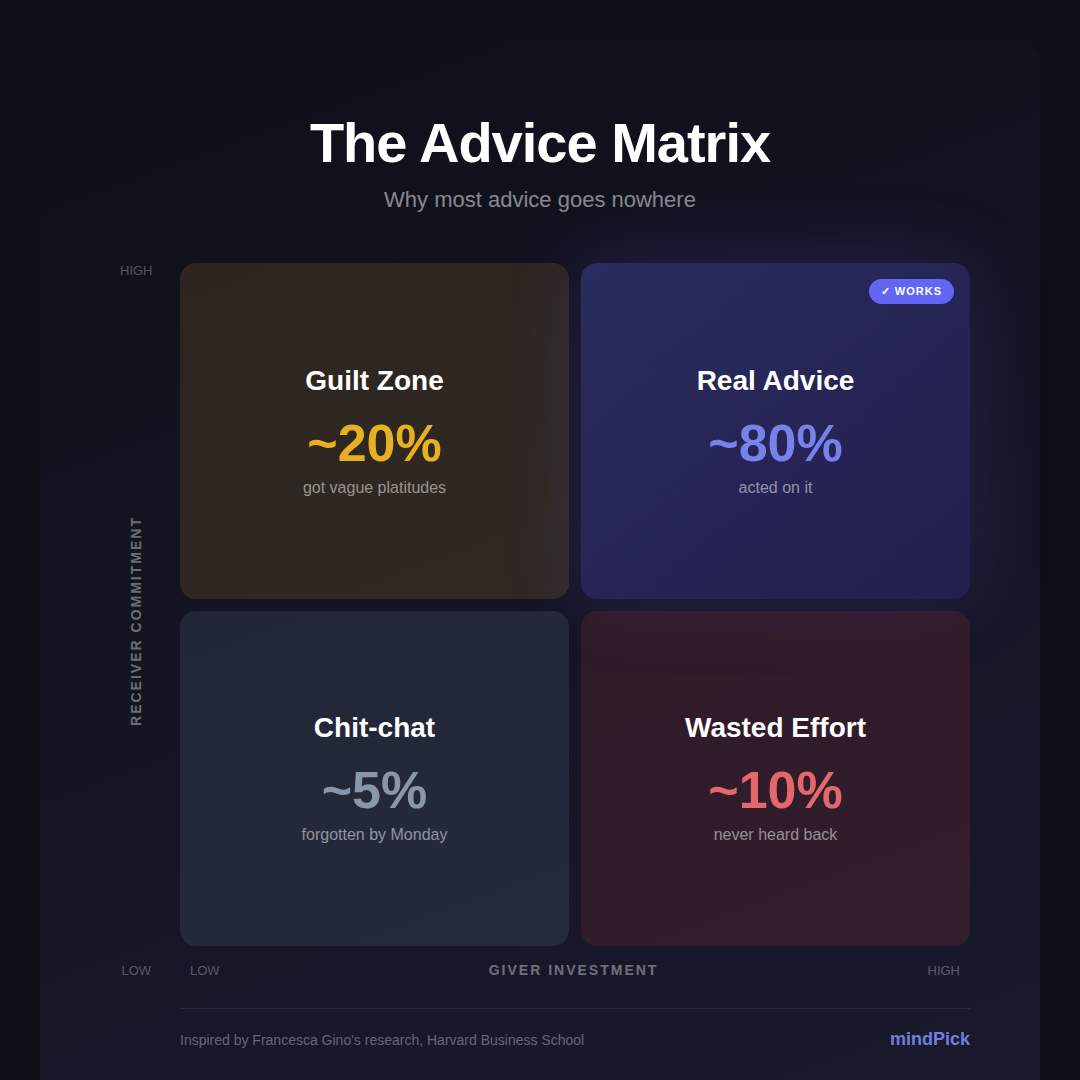
Two axes are important:
Giver investment - How much effort did the person giving advice put in?
Receiver commitment - How much is the receiver invested?
Here are the quadrants:
Chit-chat (low/low) - About 5% is forgotten by Monday. These are casual coffee chats. They are pleasant but unhelpful.
Guilt Zone (low giver/high receiver) - Around 20% receive vague responses. Someone wants help, but you deliver a quick answer. They feel guilty for pushing for more, and you feel guilty for not providing enough.
Wasted Effort (high giver/low receiver) - About 10% never reply. You spend an hour crafting a thoughtful response, but they asked casually. It remains unread in their inbox.
Real Advice (high/high) - About 80% take action. Both sides are invested, and this is where real change occurs.
The surprising finding is that adding friction—time, money, or effort—for the receiver increases the chance they will actually use the advice. Free advice seems valuable to give, but it is rarely valuable to receive.
I’m building something around this insight at mindpick.me, but honestly, this framework has changed how I view knowledge transfer, whether paid or not.
Question for IH: Where do most of your advice conversations fall on this matrix?

