The AI Lie Detector That Will Change Online Meetings Forever: Meet LiarLiar
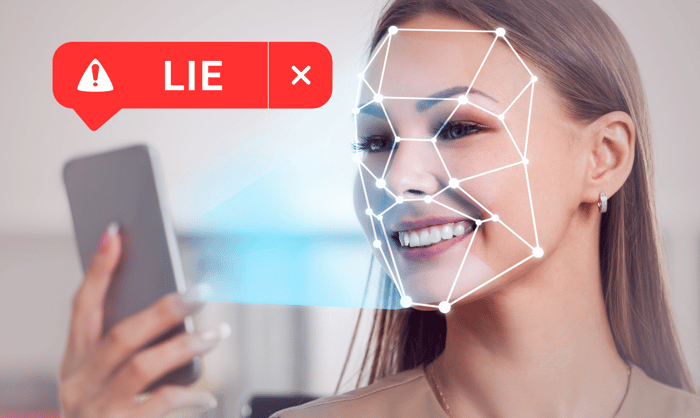
A team of computer vision engineers have reinvented truth verification, blending AI innovation with psychological insights to unmask deception.
Imagine you’re conducting a job interview, negotiating a contract, or even engaging in an online dating conversation—all through a video call in this era of digital communication.
To truly be certain of the honesty of the person on the other side of the screen is a challenging endeavor. Enter LiarLiar.ai, the cutting-edge software that promises to transform the art of lie detection.
How It Works?
At its heart, this software is a symphony of advanced computer vision algorithms and deep psychological research, all focused on discerning the veracity of human expression. The software meticulously analyzes a spectrum of physiological and behavioral indicators that studies have associated with deceit. For instance, when a person tells a lie, they might unconsciously exhibit decreased blinking or an erratic gaze—LiarLiar.ai is on the lookout for these tell-tale signs.
The system vigilantly computes a ‘trustfulness score’ by monitoring and interpreting subtle changes in facial expressions, heart rate variability, and eye movement patterns. This score adjusts in real-time, presenting a dynamic gauge of credibility.
But the innovation doesn’t end with visual cues. Tapping into the acoustic nuances of speech, the software assesses the voice for sudden shifts in tone and pitch—parameters that could betray an individual’s composure or reveal underlying stress.
Beyond detecting deceit, LiarLiar.ai boasts an integrated Emotional reader, a feature that elevates the tool from a lie detector to an emotional intelligence enhancer. This bespoke function peels back the layers of mediated interaction, helping users not only to recognize but also to comprehend the emotions the subject is trying to conceal.
This seamless integration of multiple streams of analysis—facial, vocal, and emotional—renders this software a tool of unparalleled depth in the field of truth verification, with potent applications across a myriad of digital interactions.
While traditional polygraph tests are confined to the realms of specialists and shrouded in controversy, this unique software sets itself apart. It integrates an array of biomarkers and behavioral signals beyond the reach of the naked eye or the skilled interrogator. This holistic approach is what distinguishes it from its predecessors. Users get a seamless, constant analysis of blink rates, heart rhythm, micro-expressions, emotional states, and more—all lending to a more comprehensive assessment than ever before.
Real-World Applications and Case Studies
The potential for LiarLiar.ai to impact various sectors is boundless. Its applications span from the personal to the professional, turning it into an asset across industries and interactions. In the judicial system, such software could become an indispensable tool for analyzing testimonies and interrogations, providing an objective layer of psychological assessment to corroborate statements.
In corporate settings, during negotiations or sensitive financial dealings, LiarLiar.ai could serve as a silent arbitrator, ensuring that all parties are engaging with integrity—a virtual handshake of honesty. Imagine the benefit to investors and executives alike, equipped with the ability to detect possible deceit before a deal is sealed.
The software could revolutionize recruitment, empowering HR professionals to better understand candidates beyond their rehearsed responses, peering into the unspoken signals that convey their true intentions, and ensuring alignment with the company’s values.
Even in the world of online dating—a realm rife with misrepresentation—LiarLiar.ai could provide users with the confidence that the person they’re connecting with is presenting themselves genuinely, enabling more authentic connections.
Or consider a consumer protection agency employing the software to validate the claims of a company during a product endorsement, preventing false advertising and protecting the public interest.
These examples only scratch the surface of what’s possible with LiarLiar.ai and do not even mention what could happen when this technology reaches AR glasses. The future of AI lie detection is not only about exposing falsehoods but about creating an environment where truth is the expectation, not the exception. With tools like this one, that future is well within reach.
LiarLiar.ai stands as a testament to the power of AI in enhancing the pursuit of truth. It beckons society to not merely accept digital communication at face value but to engage with it more mindfully, empowered by a tool that can pierce through the facade of deception.
To delve deeper into the world of LiarLiar.ai, visit their website, and for more insights, check out their blog.
