The AI Startup Making Creatives Obsolete… Or More Powerful Than Ever?
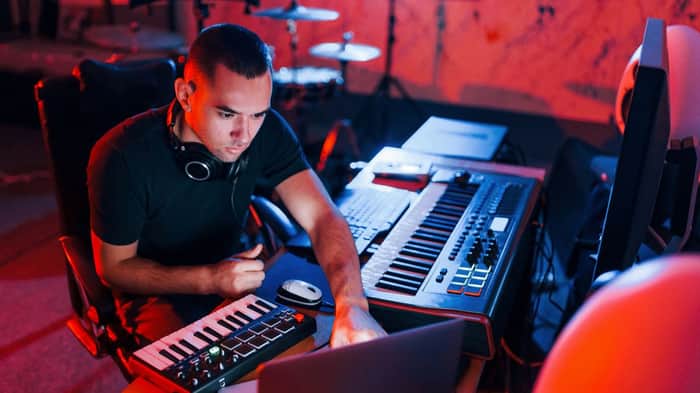
How AI platforms are rewriting the rules of work — and why those who refuse to adopt them are quietly falling behind.
For years, creative work followed a predictable, labor-intensive process:
graphic design took hours of drafting, revisions, and exporting;
writing required research, editing, and rewrites;
video editing demanded rendering time and precision;
music production required full studios and technical mastery.
Today, AI platforms — from Suno to Midjourney, Runway, ChatGPT, Canva AI, and Adobe Firefly — can compress those pipelines into minutes.
What once needed teams, tools, and long nights now requires a prompt.
AI vs Manual Work: The New Divide
Manual Creative Work
✔ Deep emotional nuance
✔ Unique style and personal identity
✔ Full control over micro-details
✔ Polished, high-end craftsmanship
✘ Time-consuming
✘ Requires high skill and experience
✘ Slower delivery cycles
✘ More expensive to execute
Manual work still produces the highest tier quality, but speed has become the new competitive currency.
AI Creative Work
✔ Instant ideas
✔ Infinite variations
✔ Faster revisions
✔ Lower cost
✔ Accessible even to beginners
✘ Sometimes generic
✘ Limited emotional subtlety
✘ Not perfect for ultra-custom, high-end projects
The quality gap shrinks every month — and for most use-cases, AI is already “good enough” or superior in speed and experimentation.
The New Competitive Advantage: Speed
The brutal truth in 2025:
Work is no longer judged only by quality — but by how fast ideas can ship.
Creators using AI can produce:
10 logos instead of 1
30 content drafts instead of 3
5 product demos instead of 1
20 music mockups instead of 2
unlimited variations for client approval
Those who use AI don’t just work faster —
they iterate faster, learn faster, and sell faster.
And in business, speed compounds.
Why Those Who Avoid AI Will Fall Behind
Not because they’re less talented.
Not because they lack creativity.
But because markets now reward:
rapid output
constant experimentation
multi-format content
fast trend response
high-volume ideation
frequent publishing
AI users can respond to client demands instantly.
Non-AI users simply… can’t.
In the same time a traditional designer finishes one concept,
an AI-powered designer can pitch 20.
This doesn’t remove talent —
it multiplies what talent can do.
AI Doesn’t Replace Creatives — It Turns Them Into Supercreatives
The winners today are hybrids:
Human taste + AI acceleration.
Musicians using Suno as a sketchpad.
Designers using Midjourney for concept boards.
Writers using AI for first drafts.
Editors using Runway for instant cuts.
Marketers using AI for content calendars.
Entrepreneurs using AI to build 10x faster.
In every industry, these hybrids outperform the old model.
The ones who adapt get leverage.
The ones who resist get stuck in the slow lane.
Final Thought
AI isn’t removing creative work.
It’s removing the limitations that used to slow creative work.
The future isn’t human vs machine.
The future is human + machine.
And the gap between those who use AI
and those who don’t
is growing wider every single day.
For AI-powered music, sound design, or custom voice models, visit: santelmomusic.com
