The B2C-or-B2B decision you're forced to make too early — and why I stopped hard-coding it
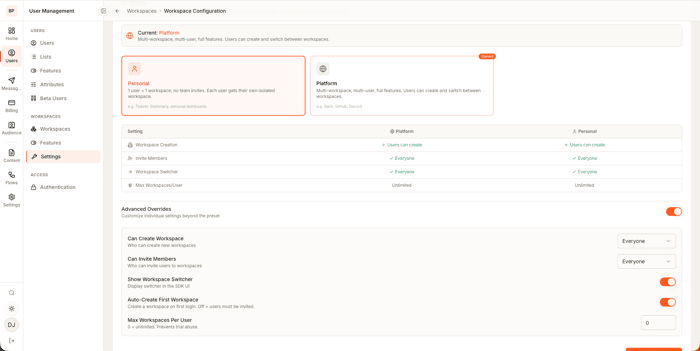
Every SaaS makes one architectural bet before it has any customers: are you single-user (B2C) or teams (B2B)?
It feels like a small thing early on. It isn't. That one decision quietly shapes your entire data model — how workspaces work, whether invites exist, how permissions are structured, how billing is scoped. And you're forced to choose it at the exact moment you know the least about who your customers will actually be.
I've watched this go wrong in both directions:
Build B2C, then a team customer shows up wanting shared accounts — and you realize your whole tenancy model assumes one user owns one workspace. Retrofitting multi-user is a rewrite, not a feature.
Build B2B "to be safe," and you've saddled a simple single-user product with workspace-switching and invite flows nobody asked for.
The problem is that you usually can't know which one you are until you're in market. So hard-coding it early is making an irreversible-feeling decision on a guess.
After hitting this across my own products, I stopped treating it as a build-time decision and made it a setting — Personal vs Platform mode, switchable, where flipping it changes the workspace model but only affects new users so existing data is preserved. The point wasn't "look, a toggle." It was: stop forcing the irreversible version of a decision I'm going to want to revisit once I actually have customers.
How you guys handled this:
- Did you pick B2C or B2B upfront — and did you end up regretting it or pivoting?
- For those who pivoted single-user → teams (or the reverse): how painful was the retrofit?
- Do you think this is even worth abstracting, or is it premature optimisation to make it flexible before you know?

What I find interesting here is that the architecture decision and the customer decision are getting made at the same time.
The tricky part is that the architecture can feel wrong later even when the real mistake was simply being wrong about who the first customer would be.
Those two failures can look almost identical in hindsight.
The tool: https://www.buildbase.app