The Complete SMS Modem Guide for Efficient Bulk Messaging and Network Control
Introduction
As businesses continue to rely on instant communication, SMS remains one of the most dependable ways to reach customers. Whether it is sending appointment reminders, one-time passwords, promotional offers, delivery notifications, or internal alerts, text messaging offers high open rates and immediate visibility. While cloud messaging services are widely available, many organisations prefer local control over their messaging infrastructure through dedicated hardware.
This complete SMS modem guide explores how SMS modem technology works, why it is valuable for commercial messaging, and what businesses should consider before deployment. Understanding the capabilities of an SMS modem for bulk messaging helps organisations make informed decisions about communication systems that support efficiency, reliability, and scalability.
Understanding What an SMS Modem Is
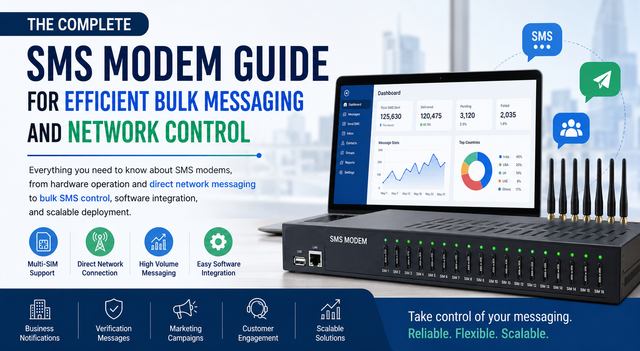
An SMS modem is a hardware device that uses one or more SIM cards to send and receive SMS messages directly through mobile carrier networks. Instead of routing messages through an external messaging provider, the modem communicates with the carrier using installed SIM cards.
The device connects to a computer or server through USB, Ethernet, or serial interfaces. Specialised software manages message queues, monitors SIM status, schedules campaigns, and processes incoming messages.
This approach provides businesses with direct network messaging, allowing them to maintain greater operational control over their communication infrastructure while managing messaging activities from a central location.
How SMS Modems Operate
The operation of an SMS modem follows a straightforward process.
First, SIM cards are installed into the modem's available ports. The device connects to a management computer where messaging software controls all operations.
When messages are created, the software distributes them among the available SIM cards. Each SIM communicates directly with its assigned mobile carrier, delivering messages to recipients through standard cellular infrastructure.
Incoming replies follow the reverse process, arriving through the carrier network before being collected by the modem and delivered to the management software for further processing.
This local communication workflow gives organisations complete visibility into message handling while supporting bulk SMS control from one central platform.
Why Businesses Choose SMS Modems
Many organisations prefer dedicated messaging hardware because it provides flexibility that cloud-only services cannot always offer.
Some of the most common advantages include:
• Direct communication with local mobile carriers
• Independent control over messaging operations
• Support for multiple SIM cards
• Local management of sending and receiving
• Easy integration with business software
• Scalable hardware configurations
• Centralised monitoring of messaging activity
These benefits make SMS modem solutions suitable for organisations that regularly send high volumes of commercial messages.
SMS Modem Port Capacity Explained
One of the most important factors when selecting hardware is port capacity.
Each modem contains multiple GSM or LTE modules, each supporting one SIM card. The number of ports determines how many independent messaging channels operate simultaneously.
Typical configurations include:
• 8-port SMS modems
• 16-port SMS modems
• 32-port SMS modems
• 64-port SMS modems
Higher port counts increase overall throughput by allowing multiple SIM cards to send and receive messages at the same time.
Selecting the appropriate capacity depends on expected daily message volume, campaign frequency, and anticipated business growth.
The Role of Software Integration
Hardware alone does not create an efficient messaging platform. Management software plays an equally important role.
Most SMS modem solutions include software that handles:
• Message scheduling
• Contact management
• Delivery monitoring
• Incoming message processing
• Campaign management
• SIM status monitoring
• Queue management
• Reporting and analytics
Many platforms also provide APIs, enabling developers to connect messaging functions with CRM systems, ERP software, customer support applications, authentication platforms, and internal business tools.
This level of integration allows businesses to automate communication workflows while maintaining complete operational control.
Direct Network Messaging for Greater Independence
One of the biggest advantages of dedicated hardware is the ability to perform direct network messaging.
Instead of routing every message through a third-party cloud provider, the modem communicates directly with the installed carrier SIM cards.
This approach offers several operational advantages:
• Reduced dependency on external messaging providers
• Greater visibility into message routing
• Flexible carrier selection
• Local control of communication workflows
• Simplified management of SIM resources
For organisations operating in multiple regions, direct network messaging also allows different carriers to be assigned based on network coverage or business requirements.
Common Business Applications
SMS modems support a wide range of commercial communication needs across many industries.
Customer Notifications
Businesses use SMS to send:
• Appointment reminders
• Delivery updates
• Payment confirmations
• Service notifications
• Booking confirmations
These messages improve customer experience while reducing missed appointments and service interruptions.
Verification Messages
Authentication systems frequently send one-time verification codes through SMS.
Local modem deployments can integrate with existing authentication systems to automate secure verification processes.
Marketing Campaigns
Businesses often conduct permission-based promotional campaigns to inform customers about:
• Product launches
• Seasonal discounts
• Loyalty rewards
• Event invitations
• New services
Because SMS reaches users almost immediately, it remains an effective communication channel for time-sensitive promotions.
Internal Business Communication
Many organisations also use SMS for internal purposes, including:
• Staff alerts
• Shift notifications
• Emergency communications
• System maintenance announcements
• Operational updates
These applications help teams stay informed regardless of internet availability.
Deployment Considerations Before Installation
Successful implementation requires more than purchasing hardware.
Several practical considerations should be evaluated beforehand.
Carrier Selection
Reliable network coverage is essential.
Businesses should choose mobile carriers that offer stable signal strength in the deployment location while supporting the intended messaging volume.
Hardware Capacity
Future expansion should be considered during initial planning.
Selecting a slightly larger modem than current requirements often provides flexibility for future business growth.
Software Compatibility
Verify that the modem software integrates smoothly with existing business systems, databases, APIs, and messaging workflows.
Compatibility reduces implementation time while simplifying long-term management.
Physical Environment
The modem should operate in a stable environment with:
• Reliable power
• Proper ventilation
• Consistent network connectivity
• Adequate cooling
• Secure physical access
These factors contribute to long-term hardware reliability.
Managing Bulk SMS Control Effectively
As messaging volumes increase, efficient administration becomes increasingly important.
Modern management software helps maintain bulk SMS control by organising message distribution intelligently across available SIM cards.
Important management features include:
• Automatic load balancing
• Queue prioritisation
• Message scheduling
• Failed message retries
• Delivery reporting
• SIM monitoring
• Traffic distribution
• Usage statistics
These capabilities improve operational efficiency while simplifying day-to-day messaging management.
Scaling with Business Growth
Communication requirements rarely remain static.
Businesses often begin with moderate messaging volumes before expanding into larger customer bases or additional regions.
Fortunately, SMS modem infrastructure scales relatively easily.
Organisations can:
• Add more modem units
• Increase SIM capacity
• Expand server resources
• Integrate additional software modules
• Connect multiple offices
This flexibility allows communication systems to grow alongside business operations without requiring complete infrastructure replacement.
Best Practices for Reliable SMS Operations
Proper planning improves long-term performance.
Businesses should follow several recommended practices:
• Regularly monitor SIM activity.
• Keep modem firmware updated.
• Back up messaging configurations.
• Test integrations after software updates.
• Monitor delivery success rates.
• Schedule routine hardware inspections.
• Organise contact databases carefully.
• Maintain proper carrier documentation.
These simple practices help minimise downtime while supporting consistent message delivery.
Choosing the Right SMS Modem Solution
Not every organisation has identical messaging requirements.
Before investing in hardware, decision makers should evaluate several key factors:
• Expected daily SMS volume
• Number of concurrent campaigns
• Required port capacity
• Software integration needs
• Available technical support
• Future expansion plans
• Budget considerations
• Network coverage quality
Carefully reviewing these requirements helps ensure the selected hardware aligns with operational objectives.
A well-planned SMS modem for bulk messaging solution provides the flexibility needed for both current and future communication demands.
Looking Ahead to Smarter Messaging Infrastructure
Business communication continues to evolve as organisations seek faster, more reliable, and more controllable messaging systems. Hardware-based messaging remains an attractive option for companies that value local infrastructure, flexible carrier management, and scalable deployment.
This SMS modem guide demonstrates that dedicated messaging hardware offers much more than simply sending text messages. It creates a complete communication environment where organisations can manage SIM resources, automate workflows, integrate with existing software, and maintain direct oversight of their messaging operations.
Whether supporting customer notifications, verification services, marketing campaigns, or internal communications, an SMS modem provides dependable infrastructure for modern messaging needs. Combined with thoughtful planning, suitable software, and effective bulk SMS control, businesses can build communication systems that remain efficient, adaptable, and ready to support future growth through direct network messaging.
