The Death of One-Size-Fits-All SaaS: Why Customization Is the Future
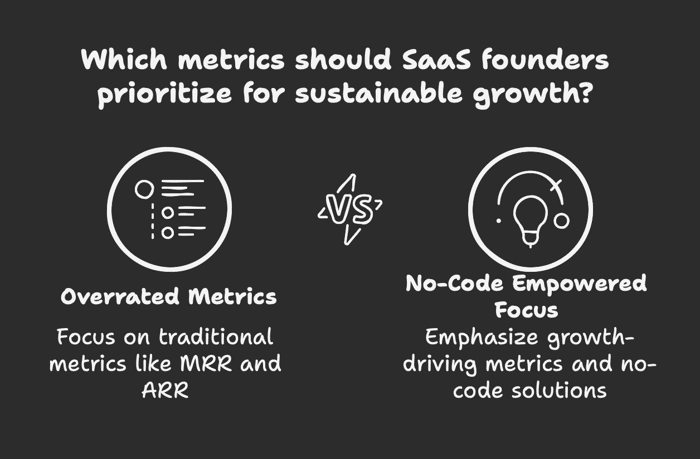
If you’re building a SaaS, you’ve probably been bombarded with advice on which metrics to track. Everyone talks about MRR (Monthly Recurring Revenue), ARR (Annual Recurring Revenue), LTV (Customer Lifetime Value), CAC (Customer Acquisition Cost), churn rates, NRR (Net Revenue Retention), and a dozen other acronyms as if they are the gospel of SaaS success.
While tracking key performance indicators is crucial, some of these metrics get far more attention than they actually deserve. In my experience building and scaling SaaS products, I’ve seen many founders fall into the trap of obsessing over numbers that don’t truly impact long-term growth. Instead of getting caught up in vanity metrics, let’s explore what really matters and how leveraging no-code solutions like Fuzen.io can help SaaS founders focus on what drives sustainable success.

1. Monthly Recurring Revenue (MRR) Isn’t Everything
MRR is often seen as the holy grail of SaaS success, but focusing too much on it can be misleading. Growing MRR doesn’t automatically mean a healthy business if you’re also experiencing high churn or unsustainable customer acquisition costs.
What to Focus on Instead:
- Net Revenue Retention (NRR): A high NRR (>100%) indicates that existing customers are not only staying but also expanding their usage, allowing you to grow even without acquiring new customers.
- Profitability and Cash Flow: If your MRR is growing but your burn rate is out of control, you might be heading towards a financial cliff.
- Customer Satisfaction & Product Stickiness: A product that keeps customers engaged and generates word-of-mouth referrals is far more valuable than just having a growing revenue figure.
2. Customer Acquisition Cost (CAC) Can Be a Distraction
CAC is an essential metric, but early-stage SaaS startups often struggle with inconsistent CAC figures. Instead of hyper-optimizing acquisition costs too soon, founders should focus on organic growth and retention.
What to Focus on Instead:
- Customer Payback Period: How long does it take to recover the cost of acquiring a new customer? A shorter payback period is a stronger indicator of sustainability.
- Organic Growth & Referrals: If your customers are naturally spreading the word about your product, it means your value proposition is strong.
3. Churn Rate Isn’t the Ultimate Indicator of Success
Churn can be alarming, but for many SaaS businesses, some level of churn is natural. Instead of panicking over a single number, it's essential to analyze who is churning and why.
What to Focus on Instead:
- Segmented Churn Analysis: Are SMBs churning more than enterprises? Are new users leaving quickly while long-term users stay engaged?
- Expansion Revenue: If existing customers are upgrading, purchasing add-ons, or expanding their usage, your business can grow even with some level of churn.
4. Lifetime Value (LTV) Projections Are Often Fiction
LTV calculations are based on assumptions that may not hold true, especially for early-stage SaaS businesses. Instead of relying on speculative LTV figures, focus on real, short-term indicators of success.
What to Focus on Instead:
- Short-Term Revenue Per Customer: How much revenue do new customers generate within their first few months?
- Early Retention Trends: Strong early retention often leads to better long-term LTV, so ensuring users stick around after the onboarding phase is crucial.
5. Vanity Metrics: Social Media Followers, Website Traffic, and Email List Size
A large Twitter following or high website traffic might seem impressive, but if they don’t convert to paying customers, they are meaningless. Instead of focusing on surface-level engagement, prioritize real conversions and active users.
What to Focus on Instead:
- Conversion Rates: Are visitors signing up and becoming paying customers?
- Engagement Metrics: Are free trial users actively using the product and upgrading to paid plans?
Why Customization & No-Code Tools Like Fuzen Are the Future of SaaS
SaaS success isn’t just about tracking the right metrics—it’s also about building the right product that adapts to customer needs. Traditional one-size-fits-all SaaS models often struggle because they don’t provide enough flexibility.
Customization is the future, and this is where no-code solutions like Fuzen.io come into play.
What is Fuzen? Fuzen is a no-code platform that enables businesses to build customized SaaS solutions tailored to their unique needs. Instead of forcing customers into rigid workflows, Fuzen allows them to create custom applications, automate processes, and integrate seamlessly with existing tools—without writing a single line of code.
How Fuzen Helps SaaS Founders Focus on What Matters
Faster Product Development: Traditional software development can be slow and costly. Fuzen.io enables rapid prototyping and iteration, so you can focus on product-market fit instead of technical complexities.
Better Retention & Expansion: Since businesses can customize workflows and features, they’re more likely to stick with your SaaS offering and expand their usage over time.
Lower CAC & Higher Organic Growth: When customers can tailor your SaaS to their needs, they’re more likely to recommend it, reducing reliance on paid acquisition.
What Actually Matters in SaaS Growth?
Instead of obsessing over surface-level metrics, SaaS founders should focus on:
- Product-Market Fit: If users love your product and actively use it, retention and referrals will follow naturally.
- Retention & Expansion Revenue: A strong user base that sticks around and increases their spending is more valuable than new users who churn quickly.
- Sustainable Growth & Profitability: A business that can sustain itself without endless funding rounds is far more resilient in the long run.
Final Thoughts
SaaS founders often get lost in tracking vanity metrics instead of focusing on what truly drives success. Instead of obsessing over numbers that don’t move the needle, prioritize customer retention, organic growth, and sustainable revenue models. Leveraging no-code solutions like Fuzen.io can help businesses adapt and build flexible, scalable SaaS solutions that meet evolving customer needs.
If you’ve built a SaaS product, what’s a metric you used to obsess over but later realized wasn’t that important? Drop a comment—I’d love to hear your thoughts!
