The ER and “being in the hospital” are not the same product on a medical bill
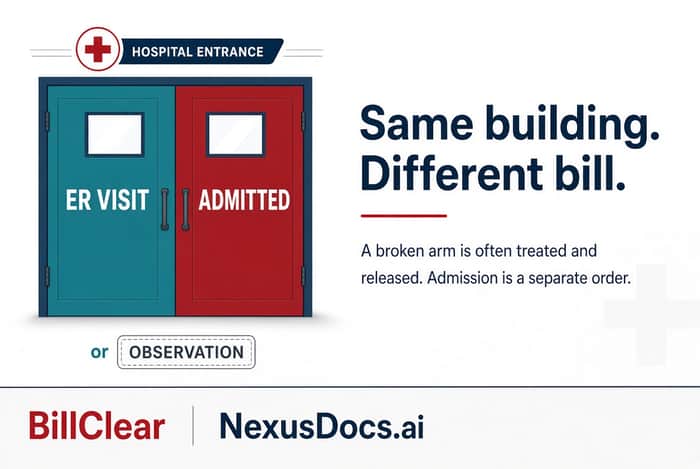
It's crucial to understand that an emergency room (ER) visit and a hospital admission are fundamentally different items on your medical bill. An ER visit typically entails outpatient care, which includes a facility fee, physician fee, imaging, and potentially a splint or procedure—all while you receive treatment and go home. This process can already be costly, and it reflects one specific type of claim.
In contrast, being admitted to the hospital involves a separate decision entirely. A physician must formally order your inpatient admission, which impacts not only your deductibles but also how medications are billed and whether future skilled nursing days count toward coverage, particularly concerning Medicare.
Don't overlook the third crucial distinction: observation status. You might find yourself in a room with a wristband and stay overnight, yet still be classified as outpatient. This means your bill might not align neatly with a standard ER copay or a full admission—creating confusion and potential financial surprises.
Take, for instance, the common scenario of a closed broken arm. Typically, the process for this would be treat-and-release: an X-ray, a splint, and follow-up with an orthopedic specialist. Only significant medical reasons—like an open fracture, emergency surgery, or other complications—should lead to an admission, rather than just the manner in which you arrived.
Before you leave the hospital, make it a point to ask these three essential questions:
- What is my status currently—discharge, observation, or inpatient?
- If I'm being admitted, can you explain the clinical reason in a single sentence?
- Who will I need to follow up with, and is that visit part of this encounter?
When your bill arrives, don’t be quick to pay the summary total. It’s vital to check whether the hospital has billed you for an ER visit, observation hours, or an inpatient stay. Compare it against your insurance Explanation of Benefits (EOB) because misclassification can lead to costly mistakes.
To simplify this process, consider using BillClear, the NexusDocs tool designed to break down medical bills in plain English. It highlights line items and poses essential questions to ask before you make any payments. Learn more about how it can help at https://nexusdocs.ai/billclear.html.
#MedicalBilling #Healthcare #BillClear #NexusDocs
