The Evolution of Slot Games: From Classic to Digital
\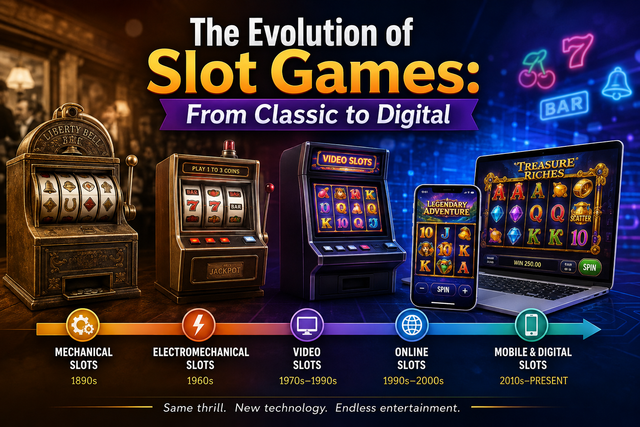
Slot games have undergone one of the most noticeable transformations in the history of gaming entertainment. What began as a simple mechanical machine with spinning reels and a handful of symbols has developed into a diverse digital experience featuring sophisticated graphics, interactive features, creative themes, and mobile-friendly gameplay. Despite these technological changes, the basic attraction remains familiar: players spin reels and wait to see which symbols appear.
The history of the slot also provides an interesting example of how entertainment changes alongside technology. Mechanical engineering introduced the earliest machines, electricity made them more flexible, computers transformed their internal operation, and the internet eventually made digital versions widely accessible. Today, modern games may look very different from their early predecessors, but many still preserve familiar elements such as reels, paylines, fruit symbols, bells, and lucky numbers.
Understanding this development helps explain why slot games remain recognizable even after more than a century of innovation.
The Mechanical Origins of Slot Games
The earliest slot machines appeared during the late nineteenth century. These machines were entirely mechanical, which meant their operation depended on physical components such as gears, springs, levers, and rotating reels.
One of the best-known early machines was the Liberty Bell, developed by Charles Fey in San Francisco around the end of the nineteenth century. It featured three spinning reels and symbols including horseshoes, stars, card suits, and bells. Players activated the machine using a lever attached to its side.
The mechanism was straightforward. Pulling the lever set the reels into motion, and the internal machinery eventually brought them to a stop. Certain combinations produced a payout according to the machine's rules.
These early designs established several characteristics that would influence slot games for generations. They included:
- Multiple spinning reels
- Recognizable symbols
- Winning symbol combinations
- A physical activation mechanism
- Predetermined prize structures
The simplicity of these machines was an important part of their appeal. Unlike games requiring detailed rules or complex strategies, players could understand the basic concept almost immediately.
Why Fruit Symbols Became So Recognizable
Fruit symbols became closely associated with traditional machines during the early twentieth century. Cherries, lemons, oranges, plums, and watermelons appeared frequently, along with BAR symbols and bells.
Their popularity was connected partly to machines that awarded prizes such as chewing gum rather than direct cash payments in certain markets. Fruit imagery was associated with different gum flavors, helping create a visual tradition that survived long after the original reason for using those symbols had faded.
Even modern digital games frequently incorporate fruit symbols when developers want to recreate a classic atmosphere.
This demonstrates an interesting feature of gaming design. Technology can change dramatically while familiar visual elements continue to provide a sense of continuity. A modern game displayed on a smartphone may operate through advanced software, yet cherries and bells can immediately remind players of mechanical machines from decades earlier.
The Arrival of Electromechanical Machines
A major transition occurred during the 1960s when manufacturers began introducing electromechanical technology.
These machines combined electrical systems with traditional mechanical components. The familiar lever often remained, but electricity increasingly controlled important functions inside the machine.
This development allowed designers to introduce features that would have been difficult to achieve through purely mechanical engineering. Lighting effects became more prominent, sounds became more engaging, and payout mechanisms could operate more efficiently.
Electromechanical machines represented an important bridge between two eras. From the outside, many still resembled traditional machines. Internally, however, the technology was moving toward electronic control.
This period demonstrated that the traditional format could adapt successfully without losing its recognizable identity.
Video Slots Changed the Visual Experience
The next major development came with video technology.
Instead of relying on physical reels, video slots displayed simulated reels on a screen. This change significantly expanded what designers could create. Once reels no longer had to exist as physical objects, developers gained much greater flexibility over layouts, symbols, animations, and game features.
Video screens also made it easier to offer multiple paylines. Traditional machines were often centered around a relatively simple winning line, while video versions could provide many possible combinations.
Graphics gradually became more detailed as computer hardware improved. Themes expanded beyond traditional fruit and bell imagery to include subjects inspired by history, mythology, fantasy, adventure, animals, travel, and popular culture.
The screen effectively became a creative canvas rather than simply a digital replacement for mechanical reels.
Random Number Generators Transformed Internal Operation
Digital development changed more than appearance. It also transformed how game outcomes were determined.
Modern electronic and digital slot games generally rely on random number generator technology. An RNG is software designed to continuously produce numerical values. When a player initiates a spin, the system uses the relevant generated values to determine the resulting symbols.
This differs considerably from early mechanical systems, where physical reel positions and internal mechanisms determined outcomes.
For players, however, the visible experience remains deliberately familiar. Reels still appear to spin before stopping on symbols, even though the underlying result is generated electronically.
Understanding this distinction is useful because visual animation should not be confused with the process determining an outcome. The spinning reels shown on a digital screen provide the presentation, while software manages the internal operation.
Online Gaming Created a New Era
The expansion of the internet during the 1990s introduced another major turning point.
Gaming no longer depended entirely on visiting a physical venue or using a standalone machine. Online platforms could provide digital games through computers, allowing players in permitted jurisdictions to access them remotely.
This change also removed many physical limitations faced by traditional machines. A physical venue has limited floor space and can accommodate only a certain number of cabinets. A digital platform can potentially host a much broader library of games.
Online development encouraged greater experimentation with themes and features. Developers could create new titles without manufacturing an entirely new physical machine for every release.
As internet technology improved, games also became visually richer and more responsive. Better browsers, faster connections, and improved computer performance helped digital gaming move beyond the relatively basic designs of its early online period.
Bonus Features Expanded the Traditional Format
Classic machines focused primarily on spinning reels and matching symbols. Digital technology allowed developers to build additional layers around that basic structure.
Bonus features became especially common. Depending on the design of a particular game, these may include free-spin rounds, expanding symbols, multipliers, additional screens, or interactive sequences.
Modern titles may incorporate features such as:
- Wild symbols that substitute for selected symbols
- Scatter symbols connected with special features
- Free-spin rounds
- Multipliers affecting certain results
- Expanding or shifting symbols
- Progressive prize structures
- Themed bonus games
These additions made the experience more varied while preserving the fundamental reel-based concept.
Importantly, features differ substantially between games. Players should therefore review the information and rules supplied with a particular title rather than assuming that symbols or bonus mechanics function identically everywhere.
Mobile Technology Changed Where Games Are Played
The rise of smartphones created another significant stage in the evolution of digital gaming.
Early online games were designed mainly for desktop computers. As smartphones and tablets became widely used, developers increasingly needed games that could operate effectively on smaller touchscreens.
This required substantial changes in interface design. Buttons needed to be easy to tap, text had to remain readable, and layouts had to adapt to different screen sizes.
HTML5 technology played an important role in this transition by allowing browser-based games to function across multiple devices without depending on older technologies that lacked broad mobile support.
Mobile design also encouraged cleaner interfaces. Developers learned to place essential information within limited screen space while keeping controls accessible.
As a result, the modern digital slot experience is increasingly designed around flexibility. The same underlying game may be accessible through desktop computers, tablets, and smartphones, depending on the platform and regional availability.
Graphics and Sound Became Part of the Experience
Mechanical machines had obvious creative limitations. Their symbols had to fit on physical reels, and sound generally came from bells or mechanical movement.
Digital games face far fewer restrictions.
Modern titles can feature detailed illustrations, animated backgrounds, cinematic sequences, character animations, soundtracks, and themed sound effects. These elements help establish atmosphere before the player even initiates a spin.
Sound design has become particularly important. Developers may use different audio cues for ordinary spins, feature activations, special symbols, and other events.
At the same time, classic-inspired games remain popular. Not every title attempts to create a cinematic experience. Some intentionally use simple graphics, traditional symbols, and familiar sounds to reproduce the feeling of older machines.
The market therefore combines nostalgia with technological experimentation.
Classic Design Still Influences Modern Games
One of the most interesting aspects of this evolution is how much of the original format remains visible.
Developers could theoretically abandon reels, fruit symbols, bells, and paylines entirely. Yet these elements continue to appear because they provide immediate visual familiarity.
Many modern games deliberately recreate the appearance of traditional machines while using contemporary software underneath. A title might feature three reels and classic fruit symbols but operate completely through digital technology.
Others take the opposite approach by using elaborate graphics and unconventional layouts while maintaining the fundamental concept of symbol-based outcomes.
This balance between familiarity and innovation has helped the format evolve without becoming unrecognizable.
Understanding Modern Slot Games Responsibly
Greater accessibility also makes responsible participation increasingly important. Digital entertainment can be available quickly through connected devices, so users should approach gambling-related games with clear limits and realistic expectations.
Games involving real-money wagering should be treated as entertainment rather than as a reliable way to generate income. Outcomes involve chance, and previous results do not guarantee what will happen on a future spin.
Useful habits include setting a spending limit beforehand, understanding the game's rules, avoiding attempts to recover previous losses, and taking regular breaks.
Players should also use appropriately licensed services where online gambling is legal and verify local regulations because laws and access requirements vary between jurisdictions.
Technology may have changed how games are delivered, but responsible decision-making remains essential.
Where the Next Generation May Lead
The development of slot games shows how effectively a simple entertainment concept can adapt to new technology. Mechanical reels gave way to electrical components, video displays replaced physical limitations, software introduced new features, and the internet brought games onto computers and mobile devices.
Future development may continue through improved graphics, more responsive interfaces, personalized accessibility features, and emerging interactive technologies. Developers are likely to keep experimenting with presentation while retaining enough familiar elements to connect new games with their historical roots.
What makes this evolution particularly interesting is that the central concept has survived every technological shift. The machines of the nineteenth century and today's digital games operate in very different ways, yet the familiar image of spinning reels and matching symbols remains immediately recognizable.
From mechanical cabinets to sophisticated mobile experiences, slot games illustrate a broader story about entertainment technology. Innovation changes the tools, presentation, and possibilities, while successful ideas often preserve enough of their original identity to remain familiar across generations.
