The Farming Trick That Fixed My Soil (After I Kept Getting It Wrong for Years)
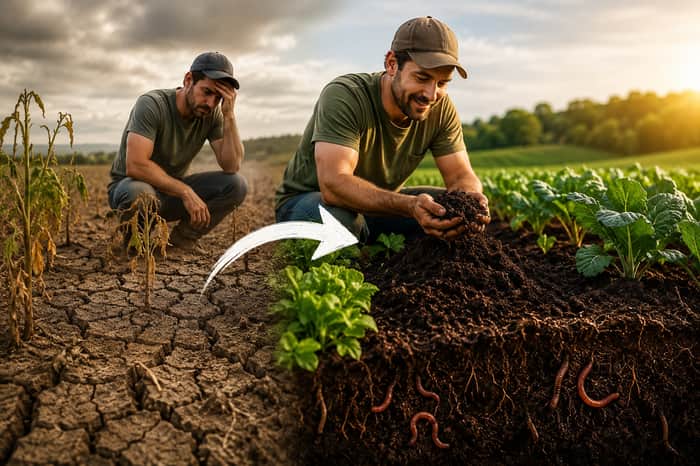
For a long time, I believed that better seeds, better equipment, or better timing would fix my farming problems.
But season after season, something felt off.
Yields would drop without clear reason. Soil would feel tired. Costs kept increasing, but results didn’t match the effort.
It took me a while to accept a simple truth:
the problem wasn’t what I was adding to the farm — it was how I was using the land itself.
That’s when I started understanding crop rotation, not as a textbook concept, but as a real, practical system that changes everything.
1. Repeating the Same Crop Is the Silent Mistake
Most farmers (including me earlier) fall into a pattern:
- Find one crop that works
- Keep repeating it season after season
It feels logical. If something works, why change it?
But here’s what actually happens:
- The soil starts losing specific nutrients
- Pests and diseases become stronger and more targeted
- Yields slowly decline, even if everything else stays the same
I saw this firsthand. The land didn’t fail suddenly — it degraded quietly.
Crop rotation breaks this cycle.
Instead of growing the same crop again, you switch to a different one with different nutrient needs. This gives the soil time to recover naturally.
2. Soil Isn’t Just Dirt — It’s a Living System
This was a mindset shift for me.
Earlier, I treated soil like a base — something you just add fertilizers to.
But soil is alive. It has:
- Microorganisms
- Nutrient cycles
- Natural balance
When you grow the same crop repeatedly, you disturb that balance.
Crop rotation helps restore it.
For example:
- Legumes (like pulses) add nitrogen to the soil
- Other crops use that nitrogen
- Some crops improve soil structure
So instead of forcing productivity with chemicals, you work with the soil’s natural system.
Once I started rotating crops properly, I noticed:
- Soil texture improved
- Water retention got better
- The land felt healthier overall
3. It Reduces Costs Without You Realizing It
This is something people don’t talk about enough.
Crop rotation is not just about soil health — it’s also about economics.
Before rotation, I was spending more on:
- Fertilizers
- Pesticides
- Soil treatments
Because the land kept demanding more inputs.
After implementing rotation:
- Pest cycles reduced naturally
- Soil needed fewer external inputs
- Dependency on chemicals went down
It wasn’t an overnight change, but over time, the cost difference became very clear.
And in farming, reducing cost is just as important as increasing yield.
4. It Forces You to Think Long-Term
Crop rotation changes how you think as a farmer.
Instead of asking:
“What will give me maximum profit this season?”
You start asking:
“What will keep this land productive for the next 5–10 years?”
That shift is powerful.
Because short-term thinking often leads to:
- Overuse of land
- Soil damage
- Dependency on external inputs
Rotation builds discipline. You plan seasons in advance. You think in cycles, not just harvests.
And that’s where real sustainability begins.
5. It’s Simple in Concept, But Needs Consistency
Crop rotation is not complicated.
The basic idea is:
- Don’t repeat the same crop on the same land continuously
- Alternate crops with different nutrient needs
- Include soil-enriching crops like legumes
But the challenge is consistency.
Many farmers try it for one or two seasons and stop if results aren’t immediate.
That’s a mistake.
Crop rotation works like a system — not a one-time fix.
In my case, the real benefits showed after multiple cycles. Once the soil started recovering, everything else became easier.
What Changed for Me
After applying crop rotation properly:
- My yields became more stable
- Soil quality improved naturally
- Input costs reduced
- Farming felt more predictable and less stressful
But more importantly, I stopped fighting with the land and started working with it.
That’s a big difference.
A lot of people look for advanced techniques or expensive solutions to improve farming.
But sometimes, the answer is simple — just not obvious.
Crop rotation is one of those things.
It doesn’t require huge investment.
It doesn’t depend on technology.
But it changes how your entire farm behaves over time.
If there’s one thing I’ve learned, it’s this:
Healthy soil is not built in one season — it’s built through decisions you repeat consistently.
If you want a deeper, practical breakdown of how crop rotation works, different crop combinations, and how to apply it step-by-step, I’ve explained it in detail here:
Crop Rotation: Maximizing Yields and Soil Health
This goes beyond the idea and into actual implementation.
