The Health Benefits of Doing Absolutely Nothing
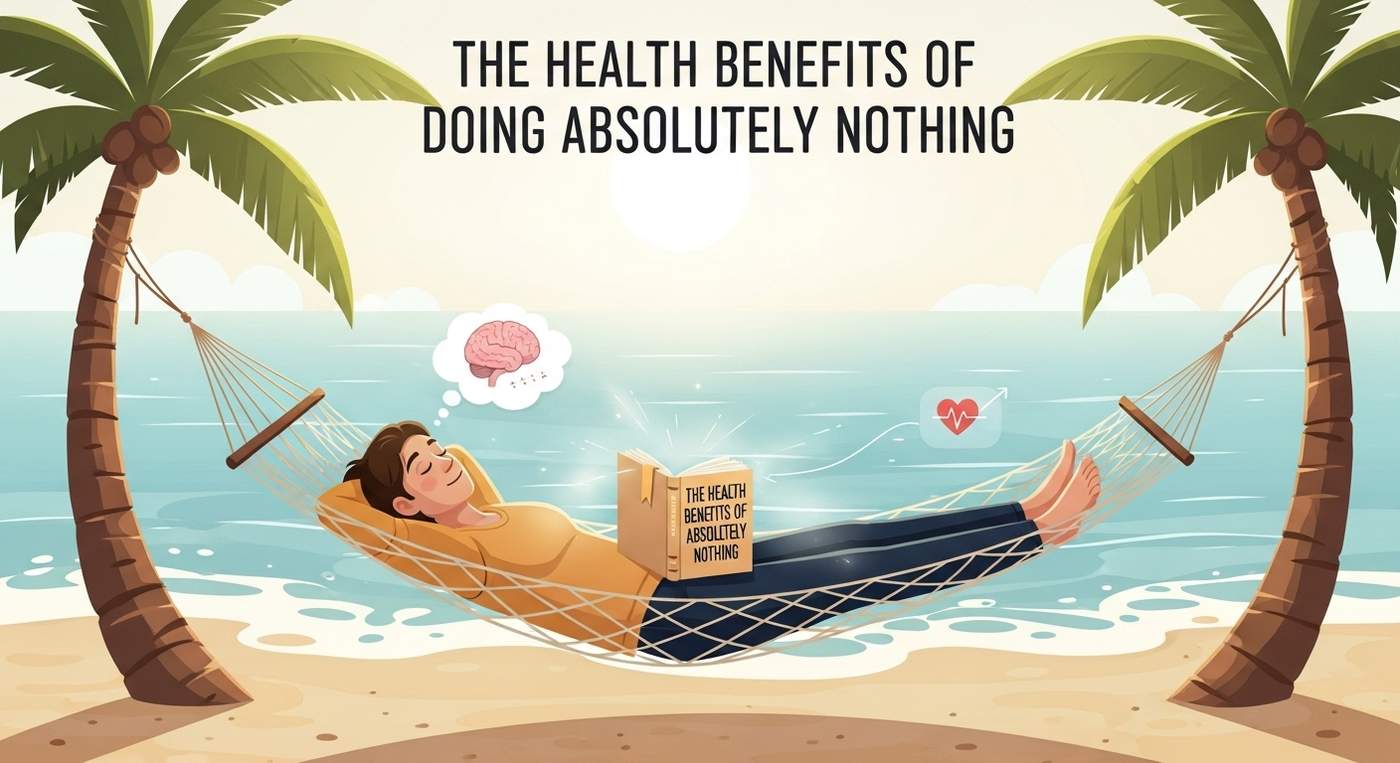
Imagine this: you’re sitting on your couch with your phone in another room. No TV humming in the background. No music. No podcast telling you how to optimize your life. Just quiet. Just stillness. Just you.
At first, it feels nice — maybe even freeing. But give it a few minutes, and your mind starts to fidget. You think about what you should be doing, what you haven’t done, or whether you’re wasting time. That right there is the modern condition. We’ve grown so addicted to movement and stimulation that stillness feels unnatural.
Yet, doing absolutely nothing might be one of the most important things you can do for your body and mind. It’s not laziness or idleness — it’s recovery. It’s the moment your brain finally gets to breathe. The human body was never designed to be “on” all the time. We were made to move, then rest; to think, then pause. But in our modern lives, that pause has disappeared.
Doing nothing sounds simple, but it’s actually a powerful form of self-care — a reset button for your nervous system, your mental health, and even your creativity.
Why Doing Nothing Feels So Unnatural
We live in a culture that glorifies being busy. Productivity has become a form of self-worth, and rest has turned into something we have to “earn.” As Htet Aung Shine, Co-Founder of NextClinic, explains, “Even when we rest, we feel the urge to make it purposeful — like meditating to reduce stress, reading to grow, or walking to get our steps in. True idleness, the kind where you do absolutely nothing at all, has become rare.”
But here’s what’s happening beneath the surface: your brain is overstimulated. Constant notifications, background noise, and multitasking keep your nervous system in a low-level fight-or-flight state all day long. You might think you’re fine, but that restlessness, that tired-but-wired feeling, is your body’s way of asking for stillness.
“Doing nothing feels uncomfortable because your brain has forgotten how to be bored. It craves constant input”, adds Sinead Corceran, Yoga Trainer ERYT200 & Course Director at All Yoga Training. “But boredom is actually where the brain repairs itself.”
When you stop feeding it information, it starts to sort through everything you’ve absorbed — making sense of emotions, solving problems in the background, and cleaning up mental clutter.
In short, doing nothing isn’t a waste of time. It’s maintenance.
The Science Behind Stillness
When you stop doing and simply “be,” your body activates what’s called the parasympathetic nervous system — also known as the rest-and-digest mode. It’s the opposite of the stress response. This is when your heart rate slows, your breathing deepens, your blood pressure stabilizes, and your body begins to repair.
As Dr. Vishwanath “CV” Chegireddy, Plastic Surgeon at Aesthera Plastic Surgery by Dr. CV Chegireddy, says, “We spend so much time in the sympathetic state — alert, active, responding to demands — that we rarely give our bodies a chance to recover. Doing nothing brings your body back into balance.”
Even a few minutes a day of intentional stillness can lower cortisol levels, regulate your mood, and improve focus.
Scientists have also found that when your mind isn’t focused on a specific task, something fascinating happens: your default mode network switches on. This network is responsible for memory consolidation, self-reflection, and creativity. It’s why your best ideas often pop up in the shower or when you’re daydreaming. By doing nothing, you’re literally giving your brain space to connect the dots it can’t when it’s overloaded.
Experts from Lashkaraa.com —Lehenga Choli specialists add, “Just like creating a detailed lehenga choli requires patience and careful attention, giving your mind quiet moments allows ideas to take shape and problems to resolve naturally.”
The Mental Benefits of Doing Nothing
When you give yourself permission to do nothing, your mind begins to quiet down. That silence, though awkward at first, is where clarity starts to form. You begin to notice how you feel, not just what you’re doing. Stress begins to loosen its grip. Anxiety loses its fuel.
As Dr. Amanda Baes, Owner of Healing Hands Chiropractic, adds, “Doing nothing allows your thoughts to drift without direction. This wandering mind state helps process unspoken worries and emotions you didn’t even realize were weighing on you. It’s like cleaning out a cluttered room — once the noise settles, you can actually see what’s there.”
Over time, people who practice intentional stillness tend to feel calmer, more patient, and less reactive. They develop a kind of mental space between what happens to them and how they respond. That space is emotional maturity. It’s what keeps you from snapping at someone, overreacting to small things, or spiraling into worry.
Even creativity thrives in this space. Doing nothing gives your brain the downtime it needs to connect old ideas in new ways. Some of history’s greatest thinkers — Newton, Einstein, and even modern innovators — credited their breakthroughs to moments of deep rest or daydreaming.
Bill Sanders, from QuickPeopleLookup adds, “Even short periods of doing nothing help you notice patterns in your life and relationships that are easy to overlook when constantly busy.”
When your mind isn’t busy “doing,” it’s free to imagine.
The Physical Benefits of Doing Nothing
Physically, your body loves stillness more than you realize. When you’re not rushing or multitasking, your heart rate slows, your breathing deepens, and your body gets a chance to restore itself. The stress hormone cortisol, which builds up through constant activity, starts to drop. This small shift can lower blood pressure, boost your immune system, and even improve digestion.
Sleep quality also improves when you introduce moments of real rest during the day. Most people jump from one task to another until they crash at night. Their bodies are exhausted, but their minds are still racing. Doing nothing — even for ten quiet minutes — teaches your body how to truly switch off. You start sleeping deeper, waking up more refreshed, and feeling less fatigued during the day.
Sam Bishop, from Forever Urns notes, “Quiet moments also give us the chance to reflect on what matters most — our loved ones and meaningful memories — helping bring perspective and calm.”
Interestingly, stillness can also help with chronic pain and tension. When your body is relaxed, your muscles stop holding unnecessary tension, and your nervous system becomes less reactive to pain signals. It’s not magic; it’s physiology. You’re giving your body permission to stop fighting itself.
Doing Nothing Is Not Wasting Time
The biggest misconception about doing nothing is that it’s a waste of time. We’ve been conditioned to measure our worth through output. If you’re not working, learning, or improving, it feels like you’re falling behind. But nature doesn’t work that way. Growth requires rest. Fields lie fallow before new crops grow. Trees shed leaves before spring returns. Humans are no different.
Doing nothing isn’t about being lazy — it’s about creating space. Space for your body to recover, for your mind to organize itself, and for creativity to bloom. When you rest, your energy refills. When you pause, you gain perspective. And when you stop forcing productivity, you often find yourself naturally becoming more productive afterward.
Paradoxically, some of the most successful people in the world swear by moments of intentional idleness. They walk without their phones, sit quietly before big decisions, or take mini “mental breaks” throughout the day. These aren’t wasted minutes — they’re strategic pauses.
How to Practice Doing Nothing
Doing nothing sounds simple, but it’s harder than it looks. The trick is to remove stimulation, not replace it with low-effort entertainment. Sit somewhere comfortable, without your phone, TV, or music. Set a timer for five minutes. That’s it. Just sit. Notice your breathing, your surroundings, or the thoughts that pop up. Don’t judge them — just let them float by.
The goal isn’t to meditate or achieve calmness. The goal is simply to exist without agenda. Over time, those five minutes can stretch into ten, twenty, or even longer. You might notice your mind slowing down faster. Your body softens. You feel lighter.
You can also integrate small “nothing moments” into your day. Stare out the window instead of checking your phone between meetings. Lie on the floor for five minutes after work with no background noise. Sit outside and just look at the sky. These micro-pauses teach your brain that rest is safe — and that you don’t need to fill every second to be worthy of it.
The Modern Case for Doing Nothing
In an always-on culture, doing nothing has become an act of quiet rebellion. It’s choosing presence over productivity, quality over quantity, and awareness over automation. It’s refusing to let your worth be defined by your calendar or notifications.
We’ve mistaken busyness for purpose and noise for meaning. But the truth is, the moments that change us most deeply often happen in silence — when we stop rushing, stop scrolling, and simply exist. Those pauses are where self-awareness grows, where creativity sparks, and where your nervous system finally remembers what peace feels like.
Bill Sanders, from CocoFinder - People Lookup points out, “Stepping away from constant notifications and digital input allows your brain to reset and reconnect with what truly matters.”
Doing nothing won’t fix everything. But it will give you the clarity to know what actually needs fixing. It’s a reset button in the middle of chaos — one that costs nothing and heals everything that endless doing can’t.
Conclusion
So, the next time you catch yourself with a few spare minutes, resist the urge to fill them. Don’t grab your phone. Don’t open another tab. Just sit. Let your thoughts wander. Let your body breathe.
Doing absolutely nothing isn’t wasting time — it’s reclaiming it. It’s the quiet space where your mind reorganizes, your body restores, and your life realigns. In that stillness, you’ll realize something profound: you were never behind. You just needed to stop long enough to catch up with yourself.

