The High-Velocity Creative: Engineering Predictable Asset Pipelines
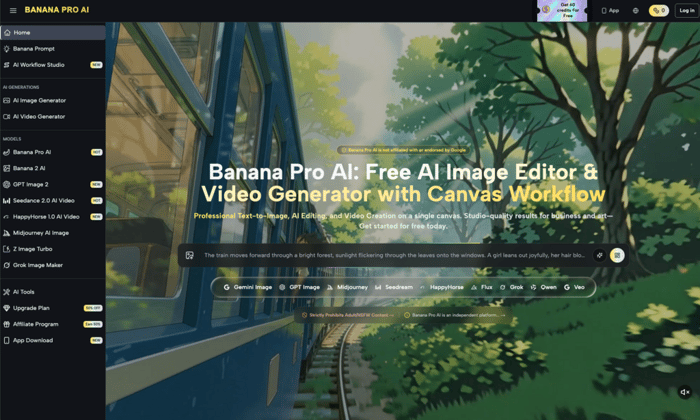
The current era of digital production is defined less by the novelty of generative tools and more by the reliability of the pipelines built around them. For the professional creator, a tool that produces a single "lucky" masterpiece is an interesting diversion; a tool that produces a consistent, high-quality output ten times in a row is a business asset. Moving from experimental prompting to a monetizable system requires a shift in mindset from "discovery" to "engineering."
When we look at the landscape of Nano Banana Pro, the value isn't just in the underlying models but in how they facilitate a repeatable workflow. For video editors and designers, the challenge has always been the bottleneck of manual iteration. By integrating a systematic approach to image and video generation, that bottleneck shifts from the labor of creation to the strategy of curation and deployment.
The Myth of the One-Click Solution
There is a persistent narrative that generative tools have removed the need for technical skill. This is a misunderstanding of how professional-grade content is actually made. In a production environment, an image or a video clip is rarely the final product. Instead, it is a component within a larger brand narrative or a marketing funnel.
A creator using Banana AI understands that the first generation is merely a starting point. The real work happens in the refinement—adjusting parameters, iterating on styles, and ensuring that the visual language remains consistent across a series of assets. This is where many hobbyists fail; they lack the discipline to build a "look" that can be reproduced.
Predictability is the currency of the creative agency. If you cannot guarantee a client that the "Style A" you produced today can be replicated for "Campaign B" next month, you don't have a service—you have a hobby.
Building the Image-to-Video Bridge
One of the most effective ways to monetize generative workflows is through the transition from static assets to motion. The traditional pipeline for high-end motion graphics involves complex rigging, lighting, and rendering—processes that can take days. Within the Nano Banana ecosystem, this process is condensed into an image-first workflow.
By starting with a high-fidelity static image—often refined through a specialized AI Image Editor—creators can establish the lighting, composition, and character design before a single frame of video is ever rendered. This "anchor image" serves as the source of truth. When you move this anchor into a video generation module, you are no longer asking the AI to "dream up" a scene; you are asking it to animate a specific set of visual parameters.
However, a moment of uncertainty remains in temporal consistency. While we can now generate impressive five-second clips, maintaining the exact physical dimensions of an object or the precise facial features of a character over multiple cuts still requires significant manual oversight. The technology is not yet at a stage where "character persistence" is a solved problem across long-form content without heavy post-production intervention.
Strategic Monetization: Beyond the Single Sale
To turn these workflows into a sustainable system, creators must look at "asset bundling." Selling a single AI-generated image is a race to the bottom in terms of pricing. The real value lies in providing a comprehensive visual package.
Consider the needs of a performance marketer. They don't need one perfect ad; they need twenty variations of that ad to split-test across different demographics. A production-savvy creator uses Banana Pro to generate these variants rapidly. By varying the color palettes, the background environments, and the subjects while maintaining the core brand message, the creator provides a high-utility service that justifies a premium price.
This "volume-plus-variability" model is the foundation of modern content systems. It allows for the creation of:
-
Themed Content Libraries: Selling niche-specific stock footage and imagery to smaller brands that cannot afford custom shoots.
-
Automated Social Channels: Building "faceless" YouTube or TikTok channels where the visual overhead is handled by automated pipelines.
-
Rapid Prototyping for Agencies: Offering "pre-viz" services that allow traditional agencies to see a fully realized version of their concept before they invest in a physical production.
The Role of the Canvas and Studio Workflows
A significant shift in the Nano Banana Pro environment is the move toward "Canvas" based editing. For a designer, a text box is a limiting interface. A canvas, however, allows for spatial reasoning. Being able to place an image, expand its borders (outpainting), and then selectively modify specific regions (inpainting) transforms the AI from a black box into a sophisticated digital brush.
When you are working within a workflow studio, you are effectively managing a factory line. You might start with a rough sketch, use an image-to-image process to add texture, and then utilize an AI Image Editor to clean up artifacts or adjust lighting. This layered approach is what separates professional output from the generic "AI look" that saturates social media.
Addressing the Consistency Gap
It is important to reset expectations regarding "fully automated" content. There is a common belief that we are weeks away from a "movie button." This is unlikely to be the case in the near future. The limitation lies in the "logical coherence" of generative outputs.
For instance, an AI might generate a beautiful kitchen scene, but in the next shot, the stove might have five burners instead of four. These small logical errors are the "uncanny valley" of professional production. As an operator, your value lies in your ability to spot these errors and correct them using manual tools or targeted regeneration. The "human in the loop" is not a temporary necessity; it is the quality control layer that makes the output monetizable.
Execution Over Innovation
The most successful creators currently using Nano Banana Pro are not necessarily the best "prompters." They are the best systems architects. They have figured out how to take a client's brief, break it down into a series of generative tasks, and assemble the results into a finished product.
This involves:
-
Defining the Style Seed: Establishing a set of reference images and prompts that define the project's visual DNA.
-
Batch Processing: Using tools to generate dozens of iterations at once, then selecting only the top 5% for further refinement.
-
Post-Generative Enhancement: Using traditional software (like Premiere Pro, After Effects, or Photoshop) alongside AI tools to add that final 10% of polish that AI often misses.
By focusing on the "boring" parts of the pipeline—file management, version control, and consistent styling—you create a moat around your business. Anyone can use a Banana AI model to make a pretty picture. Very few can use it to deliver a 30-piece ad campaign on a 48-hour deadline.
The Intellectual Property Landscape
Another area of necessary caution is the evolving nature of copyright and IP. Currently, the legal framework regarding AI-generated assets is in a state of flux across various jurisdictions. While tools like Nano Banana Pro provide the means to create, the "ownership" of the final output, especially when it is heavily derived from a specific model's training data, remains a point of legal debate.
Professionals should advise clients of these uncertainties. A strategic approach involves using AI as a "concept and component" tool, while the final, finalized branding elements are often hand-finished to ensure they meet the criteria for trademark and copyright protection. This transparency builds trust and positions the creator as a consultant, not just a vendor.
The Competitive Edge of Throughput
Ultimately, the goal of engineering these pipelines is throughput. In the digital economy, speed is often more important than perfection. If you can produce a "90% perfect" video in two hours, while a traditional studio takes two weeks to produce a "100% perfect" one, you will win the majority of the market share for social media, digital advertising, and rapid-response content.
The creators who thrive will be those who view Nano Banana Pro as a high-speed engine that requires a skilled driver. By focusing on repeatable systems, rigorous quality control, and a clear understanding of the technology's current limitations, you can build a creative business that is both scalable and highly profitable. The era of the "prompt artist" is ending; the era of the "creative engineer" has begun.
