The indie hacker community is a beautiful trap.
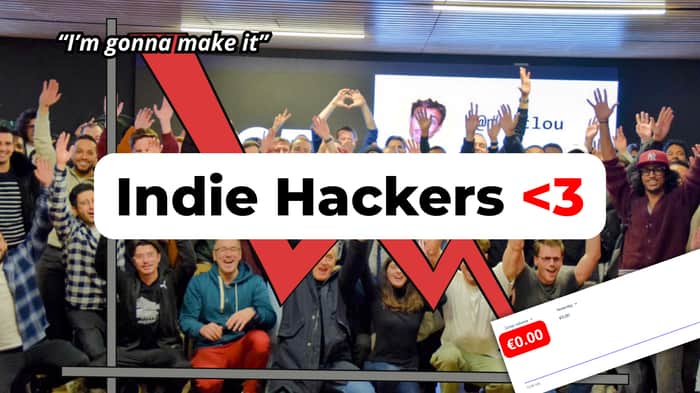
I've been building for over a year now. 15 projects. Most of them failed quietly. And the biggest lesson wasn't about code, design, or even product-market fit.
It was about who I was selling to.
1. The indie hacker dream
The indie hacker community is magnetic. You see solo founders hitting $10k MRR. People quitting their 9-to-5. Makers sharing revenue on their posts & bios. You think: I want that.
https://x.com/marclou/status/2027726233090593190
So you start building. You ship your first project. It gets no traction. You ship another. Same result.
Then something shifts. You stop building for strangers and start building for the people around you. For other indie hackers.
Why ? Because you solve your own problem. and you feel cheered because that’s the people you are surrounded with, for the best.
And that's exactly where the trap starts.
Building for you wont make you rich
That’s a classic. And the fundamental is true.
https://x.com/alexcloudstar/status/2031611184714035468
Here's what nobody tells you about the indie hacker audience on X:
You are resourceful, indie hacker, solo founders are resourceful. They can code. They can design. They can figure things out. Selling tools to builders is like selling canvas to a designer. Everyone already has one.
The ones who actually make money selling to this crowd (yes, you still have a bunch)? They're exceptional marketers. Not just good. Exceptional. Or already have an audience proactive and that trust them (they deserve it for the years of grind).
But most of us aren't there yet. And we're trying to sell $19/month tools to people who can build the same thing in a weekend.
My wake-up call with TrustViews
I built TrustViews, a directory that ranks projects by views. Simple concept. Organic visibility for founders.
The numbers looked great on paper: 400+ signups. Over 1 million views.
Revenue? Zero.
That was the moment it clicked.
Then… I am falling in the same trap (it’s comfy you know)
A few weeks ago, Marc Lou shared the TrustMRR API publicly. And my brain immediately went: "Let me build something on top of this."
I got excited. Started building.
Then, today as I was taking a day off-code and thinking…
Wait. Who am I selling this to? Indie hackers again. The same small pool of resourceful people who can build their own version of whatever I make.
I was doing the exact thing I knew didn't work. Not because I was stupid. Because building for this community is comfortable. They speak my language. They're in my feed every day. It feels productive.
But comfortable and profitable are not the same thing.
I’ll still push for a good 2 week in case it was the idea of the year but no big hopes.
2. The follower trap inside the trap
It gets worse.
You see successful indie hackers with 50k, 100k followers. They post revenue screenshots and get 500 replies. So you think: I need followers too. You, we get obsessed by analytics thinking it’s marketing. No it’s not.
And here's how most people actually grow on X in this space. They post "share your project below" post type. Then they follow every person who replies. Those people follow back. Repeat.

no source for this one
Dropping your project cost you time and you get peanuts expect a follow from a person that does not care. No SEO backlink, no people that care. This is not marketing.
You end up with 5,000 followers who showed up once to drop a link and never came back. Ghost audience. They won't buy anything. They won't even see your next tweet.
Then you have the reply guys.
People spending 3 hours a day (if not more). That's 3 hours not spent on outreach, not spent improving the product, not spent on actual marketing.
All that energy going into farming engagement from strangers who will forget you exist by tomorrow. Here's the thing: if you actually build something that works and share real progress, followers come naturally.
You don't need a reply strategy. Just interact with people who inspire you, post as things happen, and let the work speak.
Followers are not customers.
I've seen accounts with 20k+ followers making zero revenue and a few hundreds views. And accounts with 800 followers making $5k/month selling to the right people outside the bubble.
What actually works (from what I've observed)
I spend a lot of time studying founders who actually make money. Here's the pattern:
They sell to people who can't build it themselves.
The most consistent revenue stories I see on Starter Story and similar platforms are from people building iOS apps, simple tools, and digital products for non-technical audiences. People who don't know what an API is. People who will never build their own solution.
https://www.youtube.com/@starterstory
They market where attention is cheap and visual.
TikTok. YouTube Shorts. Instagram Reels. These platforms are built for reach. A 30-second demo of your app gets seen by 50,000 people who can't code. A tweet about your SaaS gets seen by 2,000 founders who can.
The math is obvious.
Their audience grew because they had results first, not the other way around.
This is the part people get backwards. The big indie hackers on X didn't grow an audience and then make money. They made money, shared the numbers, and the audience came to them.
Revenue screenshots attract people who are chasing the same dream. Those people check your profile, see what you're building, and some of them become customers. Sharing revenue is a growth channel.
Success creates curiosity. Curiosity creates traffic. Traffic creates a whole new revenue stream you didn't plan for.
They did outreach first, content second.
Every successful indie hacker I've talked to, in Discord groups, on calls, in DMs, started with cold outreach. Not tweets. Not threads. Direct messages to potential customers. Manual, uncomfortable, one-by-one outreach. Marketing came after they had something that worked.
marclou went through this
https://newsletter.marclou.com/p/how-to-get-your-1st-customer-for-a-micro-saas
The community is amazing. The business model isn't.
I want to be clear: I'm not trashing indie hackers, I am one. This community changed my life. You make real connections, and they are genuinely rooting for each other. I've had conversations in Discord groups that taught me more than any course.
But there's a hard truth most of us avoid:
We keep selling to each other. And the pool is “tiny” & resourceful (I love this word and hate it).
Meanwhile, there are millions of people out there who would gladly pay $9/month for something that solves a real, boring, everyday problem. They're not on X. They're on TikTok, reddit, LinkedIn… watching "how to remove background from photo" videos.
What I'm doing about it
I'm not abandoning the community. I still write my newsletter where I break down real growth plays for builders. 300+ founders subscribed, +50% open rate. I believe in sharing what I learn here. And I’ll push for a good week startuphunt.
But my actual money play? It's going to be outside this bubble.
I'm giving myself until january the 1st, 2027 to hit $10k/month. And if what I'm building isn't working, I'll pivot. No ego. No attachment to ideas. Just results.
Three months of 2026 are already gone. That's 25% of the year. The clock is ticking.
The uncomfortable summary
If you're an indie hacker reading this, here's what I'd tell you honestly:
- Stop chasing followers.
A ghost audience won't pay your rent.
- Stop building for builders.
Unless you're world-class at marketing, you're fighting over scraps in a tiny market.
- Start looking at where the real money is.
Non-technical people with real problems and willingness to pay. Market to them where they actually spend time.
- Do outreach.
The unsexy, manual work that nobody wants to post about. That's what actually generates first revenue.
The indie hacker dream is real. But the path most people take, building for each other, growing ghost followers, staying in the X echo chamber, that path leads to a lot of building and very little earning.
The journey started. I just hope more of us have the honesty to look at our numbers and ask: am I building a business, or am I just building?
