The indie maker's dilemma: 2 months in, 700 downloads, and I'm stuck
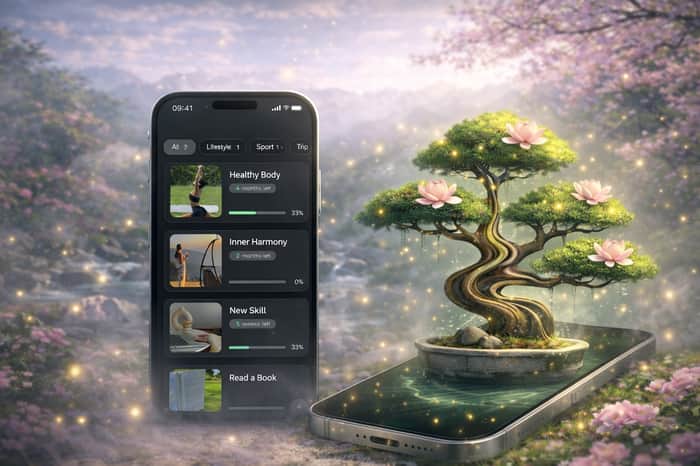
2 months ago I launched SelfOS — a productivity app I built from scratch using AI (Claude + Figma), with zero coding background. I shared my "zero to App Store" journey here and got some great feedback.
Now I'm back with an update. And a question I can't figure out.
The numbers (2 months in)
~700 downloads across iOS and Android
~20 paying users
5.0 rating on both stores
Revenue: around $150 total
Not life-changing, but real people are using it. Some even paid. That part still feels surreal.
What I tried for marketing
Telegram ads:
Small aesthetic channels (3K subscribers): $0.21 per install ✅
Big general channels (230K subscribers): $5.83 per install ❌
Lesson: Smaller, niche communities convert way better than big generic ones.
Indie App Santa ($75 promo):
Expected: 200-400 downloads
Reality: ~40 downloads, 18 lifetime purchases (~$100)
Verdict: Broke even, but not the boost I hoped for
Threads (free):
Dropped a comment in a relevant "share your app" thread
Result: 120+ downloads overnight
Cost: $0
That last one was wild. Random, unexpected, free — and outperformed everything else.
One thing that helped retention
While marketing was a struggle, I found something that actually improved retention: a little bonsai tree inside the app 🌳
It blooms as you complete tasks and build streaks. Simple gamification, but it gives users a reason to come back — not because of guilt or pressure, but because they want to see their tree grow.
It's like a visual mirror of your progress. And surprisingly, people love it.
So even if I can't crack distribution yet, at least the users who do find the app tend to stick around.
The dilemma I'm stuck in
Here's where I need help.
I'm caught in a loop:
Build more → but who will see it?
Market more → but the product could be better
The thing is:
Without more users, I don't know what to build next
Without new features, I feel like I have nothing fresh to market
Without marketing, no new users come
Classic chicken and egg.
My current plan
Build presence on Instagram, X, Pinterest, Threads
Look for micro-influencers in the productivity/aesthetic niche
Keep shipping small updates to have something to talk about
But honestly, I'm not sure if this is the right approach or just "feeling productive while avoiding the real problem."
Questions for you
For those who've been through this early stage:
How did you break the loop?
At what point did you shift focus from building to distribution?
Any tactics that worked for early traction without a big budget?
If you're curious: SelfOS is a minimalist life planner — tasks, goals, habits, shopping lists. Privacy-first, no accounts, aesthetic design. App Store / Google Play
Thanks for reading! 💚

The "without more users I don't know what to build next" part is the piece I'd push back on slightly - you already have signal, it's just not in a feature-request inbox. The bonsai/streak thing outperforming on retention IS a build decision that got validated after the fact. The Threads comment outperforming paid promo is a distribution decision that got validated the same way. You don't need more users to know what's next, you need to look at what already worked and ask "what's the next version of that," not "what's a new idea."
That's basically the loop I built Pythe to interrupt for myself - I kept treating build and market as two separate stuck points instead of one feed of evidence. Feed it what actually happened (bonsai retention win, Threads distribution win) and it'll tell you the highest-leverage next move instead of you guessing between "build more" and "market more." Not going to pretend it replaces the deciding, but it's saved me from re-litigating the same question every week. pythe.app if that'd be useful for the loop you're describing.
Funny timing - the six months since this post proved your point almost literally. The two things that worked both got their "next version": one free Threads comment outperformed ~20 paid placements, so commenting became a daily habit. And the creator-roundup format that comment accidentally landed in became my main paid channel - the last roundup came in around $0.2 per install, while influencer story placements flopped at $25+ per install.
The part I'd add from experience: that signal only became readable when I started measuring per channel. Before that, "what already worked" was just vibes with survivor bias.
So agreed - the evidence was there before the users were. It just wasn't in the inbox, it was in the numbers I wasn't looking at yet.
700 downloads with a privacy-first app is a real start, and the no-email constraint is a hard one. If you cannot ask the 20 who paid, the next best signal is what they already did in the product before they paid. That usually tells you who the stranger buyer is better than another feature. What did those 20 have in common besides paying?
The honest answer to your question is the reason my last month looks the way it does: I couldn't say. When those 20 paid, my analytics could count them but not describe them - the events existed, the connections between them didn't. That bothered me enough that this week's release exists largely to close the gap: every purchase now carries the name of the paywall gate that triggered it, the first join in a funnel that used to be loose events. I can't interrogate the old 20 - that data was never written down. The next 20 will answer your question whether they email me or not.
What I could see even without emails, for what it's worth: geography - Ukraine plus its diaspora, almost to a person - and the door into paying, which is overwhelmingly the 7-day trial of the yearly plan rather than any outright purchase. Whatever else they have in common, it includes refusing to pay before checking the promise against a real week. Which fits everything I've learned since: nobody here buys a feature list. They buy their own week with it.
The Threads result is the most compelling data point in here, free and unscripted, and it beat every paid channel by a wide margin. That's usually a signal, not a fluke: it means the app has a story worth repeating in the right context, and paid channels are just paying to interrupt people who weren't looking for it. I'd chase more of that specific move (finding threads where "share your app" is already the topic) before touching a budget again, which is slower to find, but it compounds, while ad spend resets to zero every month. On the build-vs-market loop, the fastest way out is usually to let the free channel that already worked tell you what to build next, rather than guessing.
Reading this five months later is a little eerie, because everything you predicted happened almost literally. I kept chasing exactly that move - answering people who were already asking - and one of those free, unscripted comments set off the biggest install wave the app has ever had. Paid channels meanwhile behaved just as you said: App Store search ads produced literally nothing attributable, and every growth spike on the chart traces back to a conversation, not a budget.
And the second half came true too: the free channel told me what to build. The most-requested feature from those conversations (calendar import) shipped within ten days of the pattern becoming obvious, and users noticed they'd been heard. Compounding is slow and it doesn't feel like marketing while you do it - but you're right that it's the only channel where effort doesn't reset to zero on the first of the month. Thanks for spelling it out back when it was still a guess :)
The day-one "one small success before we explain anything" instinct is the right call — most apps open with a feature tour and lose people before anything's had a chance to feel good. Using the Bonsai as the single through-line is a clean way to make four separate habits feel like one thing instead of four checklists.
The thing I'd genuinely be curious about, since it's the same wall I keep hitting on the consumer side with WakeWin: what keeps someone opening it once the novelty of unlocking new tree stages wears off? Visual progression is a strong hook for the first couple of weeks, and then it usually has to hand the retention baton back to the habit itself. If you've found anything that smooths that handoff I'd love to hear it — happy to trade what has and hasn't worked on my end.
That’s a great question, and honestly it’s something I’ve been thinking about a lot.
I’m actually releasing a big update soon, so I’m hoping it’ll help with that transition after the first few weeks.
The Bonsai now has completely new artwork for every growth stage instead of simple SVG graphics. After a 14-day streak, fireflies start appearing around the tree, and later it begins to bloom. I also added unique visuals for the waiting, withering, and dead states, plus an achievements panel and shareable Bonsai cards.
I’m hoping all of that helps keep the experience feeling fresh beyond week three, but I won’t really know until people start using it.
What retention experiments have worked best for you? I’d love to hear what made the biggest difference in WakeWin.
honest answer first: i can't give you curves. wakewin is still in ios beta with a waitlist behind it, so anything i told you about day 7 or day 30 would be me reading tea leaves off a sample too small to mean anything. so treat this as reasoning rather than results.
what i'd say from building in the same category: for an alarm app almost everything that looks like a retention experiment turns out to be a reliability fix. if someone's first alarm misfires there is no second morning, they delete it that day. so the work that actually moves the number isn't a feature, it's making the one moment that matters boringly dependable. your version of that is probably day one too. if the bonsai doesn't visibly respond to something the person did in the first session, the new artwork never gets a chance to matter.
on the new states, the withering and dead trees are the part i'd watch closest. there's a real difference between a tree that looks like it's waiting for you and one that looks like a verdict on you. someone misses a tuesday, opens the app, and if what they see reads as judgment they don't come back wednesday. same mechanic, opposite outcome, and it usually comes down to the drawing rather than the logic behind it.
before you ship more artwork though, i'd go talk to ten people who stopped using it. you've got 700 downloads so those people exist and some of them are reachable. nothing i could tell you about my own app is worth as much as ten of them telling you why they put yours down.
Thank you for this - "a tree that looks like it's waiting for you vs a verdict on you" is going straight into my design notes. Sharpest framing of this mechanic I've heard.
That line is honestly the one I've been trying to walk from day one. When you miss a day, the bonsai doesn't die - it wilts a little and waits. You get four quiet days to come back, and when you do, it visibly revives. Returning is celebrated, not punished: there's an achievement for coming back, and the app keeps a little "comeback log" instead of a shame screen with a zero. The one place I chose honesty over comfort: stay away long enough and it does eventually reset - but the next update adds earned "watering cans" that auto-save a missed day, so the protection comes from your own past effort, not from the tree pretending nothing happened.
Fully agree on the first session too. Planting the tree is literally the first thing that happens in onboarding, and the first glass of water or first completed task visibly feeds it within a minute. You're right that this moment is reliability work, not feature work - if it misfires, nothing after it matters.
The ten churned users - fair hit, and the honest answer is that my privacy stance makes it hard: no accounts, no emails, I can't reach anyone directly.
Good luck with wakewin - "boringly dependable" is a beautiful bar for the one moment that matters. How's the waitlist treating you?
honestly? 28 signups total, and 20 of them landed in one week in May when the link got passed around somewhere i still haven't identified. it's been about two a month since. so it's not a channel, it's a souvenir of one good week - roughly the same shape as your Threads comment doing 120 installs overnight.
on the churned ten: you can't email them, but you're not locked out. the people you can reach are the ones who come back, and your comeback log is the exact moment to ask. one question, in app, on the return screen. "what pulled you away?" from someone who already returned beats a survey to ten people who left, because they'll tell you what the app was competing with.
That’s actually a really interesting idea. I hadn’t thought about using the comeback moment itself to ask for feedback.
Longer term, I’m planning to expand SelfOS with a backend, so I’ll have more options for understanding retention and user behavior while still keeping privacy in mind. But a lightweight question on return could be a nice experiment even before that.
And speaking of those “souvenirs of one good week” - something pretty wild happened with SelfOS recently. A Threads + TikTok combo turned into a huge spike!
I’m planning two follow-up posts here: one about the big update I just shipped, and another breaking down that Threads + TikTok spike and what it did to the numbers:)
same boat with wakewin (a gamified alarm app i built, so this is my world). couple thoughts from the same consumer-app trenches:
your retention is already good. a 5.0 rating and people coming back for the bonsai means the product isn't the problem, so i'd stop touching it and go basically all-in on distribution. the loop breaks the moment you admit you already have something worth marketing.
that Threads comment doing 120 installs overnight is the whole lesson, you just have to do it on purpose. one real comment where your exact user already hangs out has beaten every paid channel i've tried. for a life-planner that's probably the aesthetic/productivity crowd. i go dig up the ADHD and heavy-sleeper threads for mine. doesn't scale cleanly, and that's fine, you only need a few a week.
on the bonsai: it works because it's the user's own progress, not a points gimmick. that's the part to lean into. i found the same, streaks tied to something people actually care about hold them way better than any reward i bolt on.
$150 with 20 people paying after 2 months solo is a real start. it's a distribution grind now, not a code one.
Thanks! I actually agree with you. The Threads comment was a huge wake-up call that distribution matters much more than I thought.
I did decide to spend a bit more time on the product first, though, because SelfOS was never meant to be just a productivity app. The original vision was always to build a complete life management system.
I’m almost at that point now. The next release adds four health modules (activity, nutrition, sleep and water), expanded personal statistics, full data export for users who want to analyze their habits, and a completely redesigned Bonsai progression.
At the same time, I’m trying not to disappear into “building forever.” I’m posting consistently on Instagram and Threads, and I even tried working with an Instagram influencer (€150), although the results weren’t great.
Once this release is out, I plan to shift much more of my focus toward distribution and probably start experimenting with Instagram ads.
My biggest challenge now isn’t building features anymore—it’s figuring out how to introduce all of them without overwhelming new users. That’s something I’m thinking about a lot.
the overwhelm worry is the right instinct to trust. four health modules on day one means a new user has to buy into your whole "life management system" vision before they get a single win, and most bounce before they get there. what worked for me: pick ONE module as the front door — the one that gets someone a visible result in their first session — and keep the other three tucked away until they've felt that. sleep is probably your sharpest wedge, it's the thing people are actively annoyed about at 11pm, and it pairs naturally with the Bonsai progression.
on the €150 influencer: one run tells you almost nothing, creator-audience fit swings results way harder than the spend does. i'm building a few apps in parallel (an alarm app + a couple of others) and the thing that keeps repeating is distribution only starts compounding once the first-run reliably gets someone to one concrete outcome fast. which module do you reckon converts best? happy to compare notes.
Thanks so much for taking the time to share all of this. I really appreciate hearing from someone who’s building in the same space, and your comments have genuinely made me rethink a few things.
That’s actually a really interesting point, and I ended up changing the onboarding because of that concern. Instead of introducing every module immediately, the new onboarding creates a simple personalized health plan based on a few questions, gives the user a small default goal, and starts them with a tiny Bonsai. The first objective isn’t to explain every feature—it’s to let them experience one small success on day one.
The Bonsai is really the thread that ties everything together. Completing tasks, moving more, sleeping well, drinking enough water—every small action contributes to the same tree. As it grows, new visual stages unlock (including little fireflies around the tree), so the idea is to make people curious about what comes next rather than just checking off another habit.
My hope is that people won’t think, “This app has tasks, health, and goals.” Instead, they’ll feel like it’s one place where all those parts of life grow together.
Thanks again for sharing your experience—it really helps to compare notes with someone going through the same challenges. I’d love to hear how WakeWin develops too.
ASO is the one I keep deprioritizing and probably shouldn't. The screenshots especially - I've seen posts where a single redesign lifted conversion by 30-40%. Have you found that long-tail keywords (something like "aesthetic habit app" vs "habit tracker") actually index well, or does the App Store algorithm still weight download velocity too heavily for niche terms to rank?
I don't have enough data to say definitively. My keyword research focused on mid-tail terms (daily planner, habit tracker, life organizer) rather than going ultra-niche.
My gut feeling is that download velocity still dominates the algorithm at scale, but long-tail terms might be the only realistic path for indie apps without big UA budgets - less competition, more intent-matched users even if volume is low.
Would love to hear if you've seen data pointing either way on this.
8-9% baseline with spikes to 50%+ when the right audience hits — that's not an ASO problem, that's a top-of-funnel targeting problem. The page converts. The wrong people are landing. The keyword mismatch between stores is worth fixing but the bigger lever might be finding the specific contexts where that 50% conversion happens and reverse-engineering who those people are and where else they hang out.
That makes total sense - and it matches what I'm seeing. The high-converting traffic always comes from aesthetic self-care and slow living communities, never from broad search.
Have you ever experimented with Apple Search Ads? I ran a campaign and conversion dropped to ~1%, which was a disaster compared to organic. My hypothesis is that I was bidding on the wrong keywords and attracting the wrong intent.
Do you have any experience with which keyword types actually work for a niche lifestyle app? Broad terms like "habit tracker" seem too competitive and wrong-audience, but I'm not sure what the right targeting looks like.
the threads win is the most signal-rich thing in this whole post - it means there's real demand, you just haven't found the repeatable version of that yet. before scaling paid, i'd look hard at aso first - keyword optimization, screenshots, category placement. it's free, compounds over time, and with strong retention (the bonsai thing is smart btw), you can turn organic store discovery into a real baseline. once you see that working, paid becomes much less risky to layer on. what's your current aso setup - have you done any keyword research for the app store?
ASO is something I've been actively working on. The conversion rate sits around 8-9% on average, and on days when the right audience finds the app it spikes to 50%+ so the page itself converts well once people land on it.
For keywords: both stores have the main terms covered - daily planner, habit tracker, goal tracker, shopping list. The subtitle on App Store is "Goals, Habits & Shopping Lists" which helps with indexing.
The real bottleneck is impressions only ~10K over 90 days. So discoverability is the gap, not page conversion. I suspect there's a long tail of aesthetic and self-care keywords I'm not ranking for yet.
Have you found any good tools for finding those niche long-tail keywords? I've been doing mostly manual competitor research but would love a better system.
if this is still a gap, i'd split the research into daily planning and self care first. your bonsai angle could fit the second group better. treat those as ideas to check in one country, not proven keywords. i'm building spek.app, self-learning ASO agents that help with that research and draft changes for you to review. which country are you focusing on now?
"Hi Viktoriia, really enjoyed reading your update! ❤️
The bonsai tree idea is genuinely brilliant. Most gamification feels forced, but tying it to something visual and emotional like watching a tree grow is super smart. That explains why your retention seems solid even with only 700 downloads.
I’m in a very similar boat right now (also ~2 months in). What surprised me most from your post is how well Threads performed for you compared to paid ads. It seems like the “random but relevant comment in the right thread” still works amazingly well in 2026.
Quick question for you:
At this stage, if you could only focus on one distribution channel for the next 30 days (Instagram, Threads, X, micro-influencers, or something else), which one would you double down on and why?
Wishing you the best — rooting for SelfOS to break the loop! 🌳"
Thank you so much, that means a lot 💚
Honest answer: I don't know yet - and I think that's the right answer at this stage.
Threads worked once but I'm not sure it's repeatable. The channels I haven't properly tested yet are Instagram and TikTok micro-influencers. Something tells me
that's where the real scale is for a visual.
I'm planning to test everything properly over the next few weeks and write a follow-up post with actual data - not just "this worked once" but what consistently moves the needle.
What's your app? Would love to follow your journey too ❤️
SelfOS is actually a harder distribution problem than B2B in some ways - you can't just find 20 target customers on LinkedIn. The 'showing up in the right places' question matters even more for consumer. Curious where your 700 downloads came from - if any single channel drove more than the rest, that's probably worth doubling down on before spreading to new ones.
Exactly - and the consumer distribution problem compounds because you can't just
re-target the same community. Once you've posted in a niche Telegram channel,
those 3K people already know SelfOS exists. You can't go back a month later with the
same ad to the same audience.
700 downloads and $150 — that ratio tells you the product is findable but something's breaking between download and value.
I'd look at what happens on day 2 and 3. Most apps lose people there not because the product is bad but because the first session didn't show them anything worth coming back for.
What does your day 3 retention look like?
Day 3 retention was brutal at first - single digits, maybe 2-3%. About six weeks ago
I shipped the bonsai streak mechanic and it moved the needle. Now sitting around 5-7%.
The Reddit ban thing is genuinely frustrating — the line between helpful and promotional is invisible until you cross it, and then it's too late. The communities that work long-term tend to be ones where you're a real participant, not just showing up when you want attention. That takes time to build.
"The product can't speak if nobody finds it" is probably the most honest summary of early-stage distribution I've heard. The uncomfortable truth is that showing up consistently in the right places, even when it feels awkward, IS the actual work right now — not a distraction from it.
You nailed it - "showing up consistently even when it feels awkward IS the work" is exactly what I needed to hear.
I kept thinking marketing was something I'd figure out after the product was ready. Turns out the product is never "ready enough" to market itself.
That cold email vs genuine community comment comparison is the clearest way I've seen it said. Same thing happened with Genie 007 - spent weeks on outreach sequences, sub-2% reply rate. One post in the right forum and 12 real conversations that week. Intent is everything. Cold email hits people in ignore mode. A thread like this hits them when they're already asking the question. What's the B2B thing you're building?
That 12 real conversations stat is striking - and honestly makes me feel better about
where I'm spending my time right now.
Not B2B actually - I built SelfOS, a self care and productivity app for iOS/Android. Tasks, habits, goals, and a bonsai tree that grows with your streaks 🌿
So my "right forum" challenge is different - finding communities where people are already asking "how do I actually stick to my habits" rather than productivity tool comparisons.
Still figuring out where those people live online. Any ideas welcome 😅
The anonymous survey angle is worth trying. I've resisted it because opt-in collection can shift my focus toward survey responses rather than actual behaviour. But a one-time optional link with nothing on by default threads that needle without breaking the model. The community hunting challenge is real. Most habit spaces are people comparing apps, not people in the moment of wanting to change. That second group is harder to find but converts completely differently.
The privacy-first constraint is actually fascinating because it forces you to solve distribution the hard way. Most founders lean on email lists and in-app nudges as a crutch. You can not, so you have to earn attention in communities instead.
I am building something completely different (B2B services) but hit the same loop. Sent 150+ cold emails, zero human replies. Meanwhile one genuine comment in a thread like this drove more real interest than weeks of outreach. Authentic participation beats broadcast every time.
On the privacy angle - have you considered an optional anonymous survey link in the app settings? Not collecting data by default, just giving users who want to help a way to do it. Respects the privacy-first model while cracking open that feedback loop.
The anonymous survey idea is smart - I actually have an in-app feedback form already, but only one person has ever used it. The form exists, the signal doesn't.
I've been thinking about incentivizing responses - a discount or free premium week for anyone who fills it out. But I'm not sure if that attracts genuine feedback or just discount hunters. Have you found a way to get quality responses without bribing people into it?
And yes - the privacy constraint forcing better distribution habits is a genuinely helpful reframe. I've been treating it as a weakness. Maybe it's just a different muscle to build.
The Threads spike is the clearest signal in this whole post. 120 downloads from one honest comment — that's not luck, that's the right message in the right community. The hard part is it doesn't feel like "real marketing" so we don't do it consistently.
One thing from my own experience: the loop you describe breaks when you stop asking "what should I build?" and start asking "where are the people who already have this problem, right now?" For me that was specific Facebook groups and Reddit threads — not broad audiences, but people already frustrated with the exact thing I was solving.
The bonsai retention mechanic is genuinely clever by the way. Most productivity apps use guilt. You used attachment. That's a real differentiator.
Thank you for the bonsai comment - "guilt vs attachment" is exactly the distinction I was going for, and it's nice to hear it lands that way 💚
You nailed the real blocker: it doesn't feel like 'real marketing' so it's easy to deprioritize. I've been trying to do it consistently but honestly it's harder than shipping a feature.
On finding the right communities. I tried Reddit the same way. Answered people's genuine questions about aesthetic planners, never dropped a link unprompted. Got permanently banned anyway. So now I'm more careful about where I show up.
The hardest part for me is that fine line between genuinely helpful and self-promotional. I'm naturally not great at selling myself - I'd rather let the product speak. But apparently the product can't speak if nobody finds it 😅
The Reddit ban for genuinely helpful comments is a real thing — I've had the same experience. The line between helpful and promotional is invisible until you cross it, and even then you're not sure which side you were on.
"The product can't speak if nobody finds it" is probably the most honest summary of early-stage distribution I've heard. The product being good is necessary but not sufficient. Showing up consistently in the right places — even when it feels awkward — is the actual work.
It's strangely comforting to hear someone else describe the Reddit experience the same way 😅
And yes - "necessary but not sufficient" is exactly the reframe I needed. I kept thinking if the product is good enough, distribution would somehow follow.
It doesn't. The product earns the right to spread, but it still needs a push.
Showing up consistently is the part I'm still training myself to do. It doesn't feel like "real work" the same way shipping a feature does - but I'm starting to think that's exactly why most people skip it.
"The ambiguity is what makes it hard to treat seriously" — that's the exact trap. I've been trying to reframe it as: if I did this consistently for 90 days and tracked it like a product metric, what would the data show? Makes it feel more like real work.
Curious — what ended up being your highest-signal channel once you committed to showing up consistently?
The clearest pattern so far: niche aesthetic self-care, psychology and motivation channels with mostly female audiences convert really well. That's where the product actually resonates - people are already in the right headspace.
The Threads spike hasn't repeated yet, even though I'm scanning for relevant posts daily. I think the first one was just perfect timing - the right post, the right moment. Still treating it as a volume game.
Instagram and TikTok micro-influencers are next on my list I've reached out to a few but got no replies yet. That silence is its own data point I guess 😅 Still figuring out the right approach there.
That's exactly it. The fact that it doesn't feel like real work is the moat. Most people skip the things that actually compound because they don't produce visible output on day one. Shipping a feature has a clear end state. Showing up in a community consistently doesn't. That ambiguity is what makes it hard to treat seriously.
"The moat is that it doesn't feel like work" - I'm going to think about that for a while.
The feature shipping comparison is spot on. There's a clear done state. Community showing up
has no done state, no green checkmark, no deploy confirmation.
Maybe that's why treating it like a metric actually helps - it creates the feedback loop that makes it feel real.
Stop thinking "what should I build next?" and start asking "what problem do my 20 paying users actually have?"
You have 20 people who gave you money. That's gold. Get on calls with 5-10 of them. Ask: "What made you pay? What almost stopped you? What's still frustrating?" Their answers will tell you exactly what to build AND give you marketing copy for finding more people like them.
The honest blocker: SelfOS is fully privacy-first, no accounts, no backend. So I literally cannot reach my paying users. No emails, no IDs, nothing. In-app feedback form exists but gets very little signal.
The closest thing I have to 'why they paid' is one user who emailed me out of nowhere saying the bonsai 'relaxes the soul.' That's probably my best data point right now 😅
Curious - have you ever solved this without compromising the privacy-first model? Because building a backend is on my roadmap, but partly just to be able to actually learn from users.
The Threads result is really telling — 120 downloads from a single free comment vs. all that paid effort. I've noticed the same pattern with my content site. The channels where I just showed up and genuinely participated always outperformed anything I paid for or carefully planned.
The bonsai tree idea is clever. Retention is the part most of us skip because acquisition feels more urgent, but 700 downloads with good retention is worth way more than 5,000 with everyone bouncing. Are you tracking which features keep the paying users coming back vs. free users?
Also, the niche Telegram channel vs. big generic one data is gold. $0.21 vs $5.83 per install — that's basically the whole indie marketing playbook in two numbers.
Thank you for this! genuinely encouraging to hear the same pattern holds for content sites too. Makes me feel less crazy for chasing that free organic feeling instead of just throwing more money at ads.
The Threads win was real but also a little humbling. I've been trying to replicate it and it hasn't clicked again yet. Maybe it was timing, maybe I need to do it 50 more times. Probably both.
On tracking features: Firebase shows Daily Tasks is by far the most-used module. People seem to love the interface, especially the ability to push tasks to tomorrow (we all do that 😅). And I keep getting comments about the visual design, so I think the combination of 'actually useful + looks good' is what tips people toward paying.
The bonsai probably seals it emotionally.
The bonsai tree detail is really telling. You accidentally built one of the hardest things to get right in a productivity app - a reason to come back that isn't guilt-based. That's a genuine retention moat and most apps in this space never figure it out.
On the loop: I build multiple apps solo and I've been stuck in that exact cycle more times than I'd like to admit. What helped me break it was treating marketing as just another feature to ship. Not a separate mode I switch into. Monday I push a bug fix, Tuesday I write 3 comments in communities where my users hang out, Wednesday I reach out to one micro-influencer. It all goes on the same task board.
Your Threads data is screaming at you though. 120 downloads from one comment means you already know how to write copy that resonates with the right people. The issue isn't that you need a strategy - it's that you did the thing once and moved on instead of doing it 50 more times. I'd spend the next 2 weeks just finding relevant threads on Threads, Reddit, and here. No new features. Just conversations. You already proved it works.
Thank you for the bonsai compliment - that one means a lot.
The idea actually came from analyzing Duolingo's retention mechanics. I became a victim of the owl myself - kept my streak alive just so it wouldn't attack me 😅 But I wanted something softer. Not guilt, just attachment.
I have a real bonsai at home, and it needs constant care and attention. Just like in life - we need regularity and balance to grow without burning out. It felt like the perfect metaphor for a productivity app that's also about self-care. So the bonsai became the heart of SelfOS.
On the Threads point - you're completely right, and honestly your task board system is exactly what I needed to hear. I've been treating marketing as a separate 'mode' I switch into when I feel ready, instead of just another thing on the list. I am finding relevant threads and commenting regularly now - it just hasn't clicked again yet. But I'm treating it as a habit, not a campaign.
That free Threads comment hitting 120 downloads is the most important data point in this whole post. That's not a fluke - that's someone in the right community at the right moment. The loop you're describing breaks when you stop framing it as build vs market and treat community engagement as part of the daily build process. Not a campaign, just 2-3 relevant threads a day.
Of your 18 lifetime buyers, do you know how many came from that Threads moment specifically? Because if even 5 did, that's a $25 acquisition cost on a free comment. That's your playbook.
You already answered the distribution question in your own data. Small aesthetic Telegram channels at $0.21/install vs big general ones at $5.83/install is a 27x difference. That's not a coincidence - that's your channel.
The loop you're describing isn't really a chicken-and-egg problem. You know what works. The thing blocking you is that doubling down on niche aesthetic communities feels less impressive than building an Instagram presence or launching everywhere. But the math already told you the answer.
The bonsai tree thing is also a real insight - it's showing you that the users who find SelfOS and actually use it love it. That's the foundation. The job right now isn't to build more features. It's to get more of the right people to discover it through the one channel that already works.
What aesthetic niches specifically converted best on Telegram?
On the Threads cohort - roughly 3-4 monthly subscribers came from that spike. That's the playbook for sure. I've been leaving comments regularly since then but haven't managed to replicate that spike yet, will keep going though. I think it's a volume game.
On the Telegram data - the channel that converted best was a small aesthetic/self-care channel, ~3K subscribers, $0.21/install. A big news channel with 230K subscribers was $5.83/install and completely wrong audience.
You're right! now I'm genuinely more motivated to focus on distribution than polishing the product. The best channels for me so far are aesthetic self-care, psychology and motivation niches - not all perform equally, but at least I stopped wasting money on irrelevant audiences.
700 downloads is a solid start for a first build, so congrats on that. But you’re definitely falling into the productivity trap. Building new features feels like progress, but right now it’s just a form of procrastination.
If 20 people have already paid, the product is validated. It doesn’t need more features to grow; it needs more eyes. I'd stop building for a month and focus 100% on distribution.
Also, be careful with those lifetime sales. $100 from 18 users is a "sugar high." It creates long-term support debt without any recurring revenue to back it up. For a productivity app, you need to prove people will actually subscribe, or you'll eventually burn out working for free. Lifetime deals are fine for quick cash, but they won't build a sustainable business.
From my side, running an MVP development studio, the founders who fail are almost always the ones who keep polishing a "perfect" product while the bank account hits zero. Since Threads worked for you, go where people buy with their eyes. Post clips of that bonsai tree on Pinterest or TikTok. That visual hook is a better marketing asset than any new feature you could build right now. Now go be a marketer.
I actually didn't plan to add lifetime at all. I built it specifically for Indie App Santa, which required either a free lifetime or a big discount. I was hoping for hundreds of downloads. It was honestly one of my biggest disappointments ~40 downloads instead of the 200-400 I expected. They say the free version works much better for IAS, so maybe I'll try that experiment someday, but I'm not sure yet.
So lifetime isn't part of my strategy - it was a one-time experiment that broke even. Monthly and yearly subscriptions are the actual goal, and renewals are starting to come in which feels more meaningful.
Instagram Reels, TikTok and Pinterest are genuinely next on my list. The bonsai is beautiful, and after a 14-day streak magical fireflies appear around it. It looks cute. Satisfying to watch even just as a viewer. Just need to get over the fear of being on camera 😅 Thanks for the push!
Your Threads spike is the most interesting data point here and you buried it. 120 downloads for $0 vs paying $0.21/install on Telegram. But the question that matters: did any of those Threads users convert to paid? If that cohort retained and paid at even half the rate of your TG users, you don't have a chicken-and-egg problem, you have an answer you haven't measured yet.
You're right, I buried the lede 😅
I did try to track it - roughly 4 paying users came from that Threads spike. So around 120 downloads, 4 conversions = 3.3% paid conversion from a free comment. That's actually better than my Telegram paid channels.
I've been trying to replicate it ever since. Found relevant threads, left genuine comments, but lightning hasn't struck twice yet. Maybe the first time was just perfect timing, maybe I need to do it 50 more times like someone else suggested here.
Just launched too , same vibe coding origin story, zero SwiftUI coding background before this. The Threads discovery is interesting. I've been trying to figure out where organic traction actually comes from without spamming. Following to see how this unfolds.
Oh nice, fellow vibe coder! 👋 What did you build?
The Threads thing genuinely surprised me. I wasn't even trying to 'market', just answered someone's question honestly. Maybe that's the whole secret: show up in conversations where people already have the problem, don't pitch.
Would love to follow your journey too - feel free to share your app!
2.8% paid conversion on a productivity app is honestly not bad — I'd argue you don't have a growth problem, you have a sequencing problem.
Before you try to scale downloads, figure out why those 20 people paid. Like actually ask them. Because if you can identify the pattern, you can double that conversion rate and suddenly 700 downloads turns into $300+ instead of $150. Way cheaper than chasing more top-of-funnel.
Thanks for reframing it as a sequencing problem - that actually helps a lot.
One thing I'm genuinely stuck on: I can't easily reach my paying users directly. SelfOS is privacy-first with no accounts and no backend, so I don't collect emails or user data. I have in-app feedback forms and a review prompt, but the signal is sparse.
Have you found ways to learn from paying users when you don't have direct contact?
This comment was deleted 5 months ago
This comment was deleted 5 months ago