The Invisible Architecture: Unmasking the Three Realities of the Candle Industry
We define our living spaces by their visible architecture: the furniture, the layout, and the textiles. Yet, the most profound influence is often invisible—the air quality and sensory atmosphere that permeates our home. In an era of high-stress living, our homes should be sensory sanctuaries facilitating recovery. However, in our attempt to curate that sanctuary, we have been sold a narrative that confuses "natural" with "safe." The candle industry is a three-act play of the good, the bad, and the misunderstood. As design-conscious individuals, it is time to pull back the curtain on how these products interact with our indoor air and long-term health, moving beyond marketing fluff to the actual science of our environment.
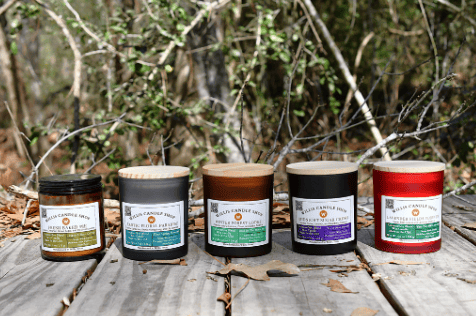
The marketplace is flooded with claims, leaving the consumer to navigate a landscape where profit often supersedes safety. For those searching for transparency, the Willis Candle Shop serves as a notable outlier, demonstrating that material disclosure is the hallmark of a superior experience. Understanding the three branches of this industry industrial petroleum giants, natural essential oil artisans, and engineering-focused studios—is essential for anyone looking to reclaim their home. By moving beyond surface-level marketing, one can make choices that align with a conscious lifestyle, recognizing that every time a flame is ignited, a chemical reaction is initiated that directly impacts the air quality of the sanctuary.
The Petroleum Problem: The Industrial Reality
For decades, the industry has relied on paraffin wax. Paraffin is a refined byproduct of the crude oil industry—the viscous residue left behind in the refining barrel, bleached and chemically treated. To achieve a smooth, "quality" finish, manufacturers rely on a cocktail of additives like stearic acid, microcrystalline wax, and chemical polymers like Vybar. This quest for visual perfection comes at a cost to the indoor climate.
If someone suggested lighting gasoline in a garage and burning it safely for 24 hours, a reasonable individual would rightfully hesitate; the risk of burning a petroleum byproduct seems unintelligent. Yet, this is effectively the dynamic invited into the home when paraffin candles are lit, knowingly burning benzene, toluene, and other byproducts of crude oil where the family lives. It is an industrial shortcut favoring mass-market volume and a "pretty" shelf appearance over respiratory health. It is time for the design-conscious consumer to reject this trade-off, recognizing that the aesthetic of a perfect wax surface is often just a mask for industrial byproducts that have no place in a healthy, modern living environment.
The Essential Oil Paradox: Why Natural Is Not Always Thermally Stable
The second branch is the "misunderstood," centered on the organic essential oil movement. Essential oils are the gold standard for skincare because the skin is temperate. However, when an essential oil is subjected to a candle flame—which can reach temperatures averaging 2,500 degrees Fahrenheit—the chemistry changes.
Essential oils are volatile organic compounds (VOCs) designed for room-temperature stability, not combustion. Under the intense heat of a burning wick, many essential oils undergo degradation, emitting acrid compounds and VOCs that are far from "purifying." An unscented organic candle is a perfectly safe option, but 99% of the market demands scent. When a consumer demands scent from an essential oil in a high-heat environment, they are changing the chemical architecture of the oil, and the results are not as safe as the marketing implies. Just as a chef would not cook with delicate oils that break down under high heat, the conscious consumer must be careful about what they ask their fragrances to do when confronted with a flame.
Engineering Excellence: The Third Way of Chandlery
The third branch, the "good," is where precision meets purpose. Willis Candle Shop approaches the candle as a piece of functional home equipment rather than a craft project. Their eco-friendly candle collection is built on a verified, data-driven wax matrix of 79% soy, 19% coconut wax, and 2% beeswax. This blend is engineered for a slow, clean burn, devoid of the chemical polymers used by the paraffin industry. Because of this natural reactivity, these candles may not look "perfectly smooth" after a burn; they might develop sinkholes or wall-clinging. This is a sign of a clean, natural burn. A simple relight smooths the surface out, proving that true quality is about function rather than superficial aesthetics.
Every candle begins with an 8% fragrance load (+/- 0.5%), adjusted based on testing to maximize burn ratios and stability. All fragrance oils utilized are phthalate-free, paraffin-free, paraben-free, and non-toxic. They measure every vessel for external heat temperature to ensure the pool reaches the edges of the jar without overheating the glass. Unlike vendors hiding behind proprietary blends, Willis Candle Shop is open about their process. As their motto states: "Our candle label doesn't just tell you what is inside the candle, it also tells you what is not inside the candle!" This commitment ensures the experience is consistent and safe from the first match to the bottom of the glass.
Transparency as the Future of Home Wellness
Home wellness is a continuous process of curation. By choosing products engineered for stability and long-term performance, the consumer commits to a standard of excellence that reflects their values. This is the path forward: a home designed with intent, constructed with clean materials, and fragranced with respect. When an engineered approach to the environment is chosen, the consumer prioritizes well-being, effectively turning the living space into a high-functioning vessel for recovery.
The future belongs to brands built on honesty and consumers willing to demand it. Together, a world is being built where home environments are safer, more sustainable, and ultimately, more aligned with the lives we lead. One should view candles not just as objects, but as the foundation of the home's invisible architecture—a testament to a higher standard of living that refuses to compromise on health or the simple joy of a clean flame.
