The largest lab-grown meat factory is opening in the US - A C02 gobbling machine - and more. This week's innovations.
Believer meats


Israeli-based company Believer Meats is commencing its first U.S. commercial facility in North Carolina. Believer Meats is one of the largest companies producing lab-grown meat with non-GMO animal cells. The company is cruelty-free and very respectful of the ecological environment. With the 10,000 metric tons of cultivated meat capacity, Believer Meats seems to be about to change the industry. They plan to use patented technologies to create custom-made bioreactors that can produce high cell densities and will help bring cultivated meat to market in the U.S. at scale.
https://www.believermeats.com/
Robco

Modular robotics for industrial small and medium businesses. Robco’s current offering is based around three components that focus on a lathe turning, laser engraving, and palletizing, with its business model based around clients ordering what they need to be made and that in turn being delivered as a service to them — the robots themselves are not purchased and stay on Robco’s balance sheet with the idea that they can be reconditioned and reused for other clients when needed. The plan is to bring on more modules in milling and quality inspection. The company is the first to offer an automation service for a precise task, instead of selling a robot or software.
Camero tech

This device let's you see through walls. It allows to detect and see people or stationary objects behind walls and impediments. It also has an AI-based live target tracking system. Even whether targets are sitting, standing, or lying down, high-resolution photographs of live objects can be seen down to the level of individual body parts. The targets don't have to be stationary for an extended period to be imaged. The Xaver 1000 is a crucial device for military, law enforcement, search and rescue teams, and intelligence units working in various scenarios, such as dangerous urban environments and catastrophe sites.
https://camero-tech.com/xaver-products/xaver-1000/
Repair carbon capture
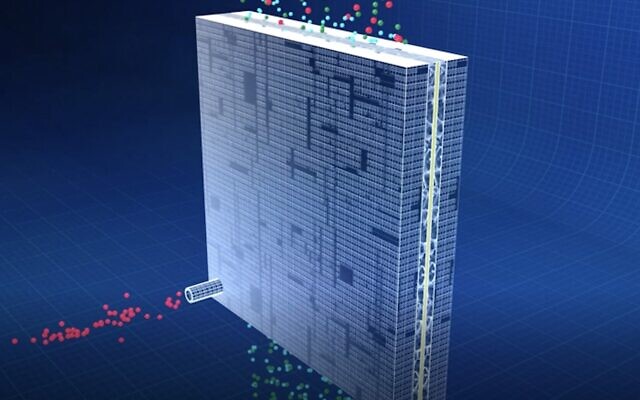
This company is developing a system for capturing air and removing carbon dioxide from it. Repair Carbon Capture is developing an electrochemical device inspired by batteries and fuel cells. While fuel cells in the hydrogen industry use electricity to separate hydrogen from oxygen, RepAir says its prototype separates and removes carbon dioxide from the atmosphere. Their system uses just a third of the energy compared to other technologies because it runs on renewable energy at ambient temperatures and requires no heating of solvents. The product comprises combined cell stacks, making it modular and easily scalable. At scale, they predict an average cost of around $70 per ton of CO2 removed.
Synchron


Synchron has developed a brain-computer interface that can access every corner of the brain using its natural highways, the blood vessels. The brain-computer interface is implanted in the blood vessel on the surface of the motor cortex of the brain via the jugular vein, through a minimally-invasive endovascular procedure. It does not require cutting in to the skull to install it, unlike Elon Musk Neuralink's product. Once implanted, it is designed to detect and wirelessly transmit motor intent out of the brain, restoring a capability for severely paralyzed patients to control personal devices with hands-free point-and-click.
