The LTV:CAC Trap: Why My 7:1 Ratio Made Me Complacent
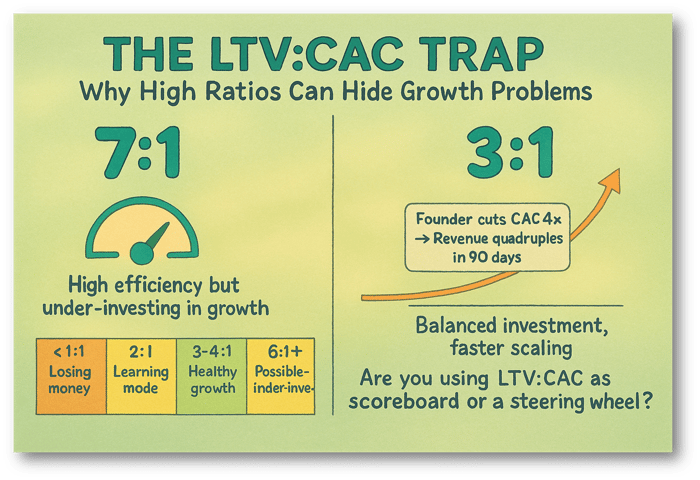
Last month, I thought we were crushing it.
Dashboard said: 7:1 LTV:CAC. Margins looked great. Team was celebrating.
Then an investor hit me with this:
“Your competitor is scaling 4x faster… at 3:1.”
That stung.
I went from proud → confused → slightly panicked.
Because the one metric I thought was our “strength” was actually a red flag in the LTV:CAC trap.
How I Fell Into the LTV:CAC Trap
I was treating LTV:CAC like a scoreboard:
Bigger number = winning
Keep CAC low = efficiency
Everyone will clap
But here’s the ugly truth: a perfect LTV:CAC ratio can mean you’re under-investing in growth.
We were too cautious on growth spend while competitors raced past.
What I’m Learning About the Ratio Trap
Early SaaS (pre-Product-Market Fit): 2:1 is fine. You’re testing.
Scaling stage: 3–4:1 means you’re pushing growth while keeping sanity.
6:1+: You’re probably sandbagging. Could grow faster if you spent more.
It’s not a “trophy score.” It’s context: stage, competitors, market speed.
A Small Case That Hit Me Hard
A founder friend replaced 70% of his ad budget with a referral engine.
CAC dropped 4x
Revenue jumped $12k → $48k MRR in 90 days
This made me rethink channels. Blended CAC > any single channel ratio.
Where I’m Stuck Right Now
Still figuring out how much to pour into growth without burning margin.
Feels like standing on the edge:
Play safe, stay “efficient”
Or take the bet, spend, and risk screwing CAC for speed
My Question to You
👉 Are you treating LTV:CAC like a scoreboard (bragging rights)… or a steering wheel (guiding growth bets)?
What’s one metric that totally fooled you before you learned better?

This is the trap I see constantly in e-commerce. Founders obsess over blended CAC/LTV, but the real problem is they can't even see CAC by channel. Revenue is in Shopify, spend is in Meta/Google, and nobody joins them. So the ratio looks fine in aggregate while one channel is actually bleeding money
The metric that fooled me: gross revenue. Looks great, feels like progress — but net margin is what actually pays salaries. That's why I built RIVANT: to show the real number, not the vanity one