The Measurement Problem in Autonomous Driving: Why AI Evaluation Remains a Critical Gap in Safe Deployment
The global autonomous vehicle market reached $231.47 billion in 2025 and is on track to hit $747.73 billion by 2030, a compound annual growth rate of 26.43%. That capital is chasing a promise rooted in a single number: U.S. federal crash data assigns the critical reason in 94% of crashes to the driver. Replace the human with a machine that reads the road more reliably, the argument goes, and most collisions disappear. The trouble is that the industry has spent years improving how cars sense the world while lagging on how to prove those systems are safe enough to trust. Sensors got sharper. The yardstick did not.
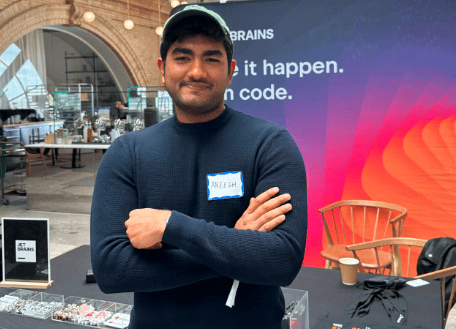
Aneesh Gupta, a software engineering expert specializing in machine learning systems, with deep work in perception evaluation, model improvement, and safety-critical AI for autonomous driving. Earlier in his career he led evaluation efforts at a leading autonomous vehicle company, where he built the framework his team used to measure how well its self-driving stack interpreted the physical world. His technical foundation runs through PyTorch, compilers, and large-scale model evaluation, and he now builds scalable machine learning infrastructure in production at a major technology company. He has also shared his thinking through conference talks and technical writing aimed at engineers facing the same measurement problems.
When Sharper Sensors Did Not Settle the Safety Question
The hardware around perception has matured fast. The automotive LiDAR market grew to $1.23 billion in 2025 and is forecast to reach $5.31 billion by 2030 at a 33.96% CAGR, while advanced driver-assistance systems crossed roughly $83 billion in annual value in 2025. Cameras, radar, and LiDAR now produce dense, high-resolution pictures of the road at centimeter precision. Yet richer input did not answer the harder question. A system can see a pedestrian and still misjudge whether it will step off the curb, and no amount of sensor resolution tells engineers how often that judgment fails in the messy conditions of real traffic.
This was the gap Gupta, a judge at The IDE Reimagined: JetBrains Codex Hackathon, set out to close. Rather than treat perception quality as something you eyeball from demo footage, he approached it as a measurement problem with its own engineering discipline. The work meant defining what good perception actually means in numbers, across detection, tracking, and the model's read of how objects behave, then building tooling that could score the full stack consistently against that definition. The goal was a framework any engineer on the team could run and trust, not a one-off benchmark owned by a single specialist.
"You cannot improve what you cannot measure honestly, and perception is full of ways to fool yourself," says Aneesh Gupta. "A model can look brilliant on a curated clip and quietly fail on the cases that actually hurt you."
Building the Yardstick Before Trusting the Car
Value in autonomous driving is shifting from metal to math. Hardware accounted for 57.36% of the autonomous vehicle market in 2024, but software is the faster-growing layer, expanding at a 26.82% CAGR through 2030 as the differentiator moves from sensors to the models and evaluation systems that interpret them. The economic logic is simple. Two companies can buy the same LiDAR unit, but the one that can measure and trust its perception stack is the one that can safely put more cars on more roads.
Gupta's framework treated evaluation as core infrastructure rather than a final checkpoint. As project lead, he designed it to be reliable and usable day to day, so that model changes could be scored against a stable, repeatable standard before anything reached a vehicle. That structure caught regressions early, reducing the errors that slipped into the onboard system and giving the team confidence to ship improvements faster. It was a first of its kind effort inside the organization, turning safety measurement from a subjective review into a quantitative gate.
"The framework was never the glamorous part of the program, and that is exactly why it mattered," Gupta notes. "It was the thing that let everyone else move quickly without guessing about safety."
From Anecdote to Repeatable Measurement
Principled measurement is now visibly paying off at scale. One leading robotaxi operator has logged more than 170 million fully autonomous miles as of December 2025, and its published data shows 92% fewer crashes causing serious or fatal injuries than human drivers in comparable conditions. Those figures persuade precisely because they rest on defined benchmarks and crash-rate methodology rather than highlight reels. A safety claim only carries weight when the measurement behind it is repeatable.
The same shift, from anecdote to evidence, sat at the center of Gupta's work. By scoring perception against consistent criteria, his team could state how the system performed instead of asserting that it felt safe, which is the standard regulators and the public increasingly demand. Gupta has also contributed to the broader research community, authoring the peer-reviewed paper Transformers For Recognition In Overhead Imagery: A Reality Check, presented at the IEEE/CVF Winter Conference on Applications of Computer Vision (WACV), where he examined the practical performance of emerging computer vision architectures against measurable benchmarks. He has carried that perspective beyond his own projects as well, speaking at industry events on ML evaluation and the engineering rigor that deploying these systems requires. His position has stayed constant: the credibility of an autonomous system lives in its evaluation methodology, not its marketing.
"Regulators are not going to blindly trust us, and they should not," Gupta reflects. "The teams that win are the ones who can show their work, with numbers anyone can reproduce."
Where Perception Evaluation Gets Hard
Scale is where evaluation earns its keep. That same operator now runs more than 400,000 paid rides a week and drives over 4 million autonomous miles in that span, enough volume that its analysis suggests it prevents roughly one serious-injury crash every eight days, with expansion to 20 additional cities planned for 2026. Each new city introduces conditions the system has never been scored against. The rare event that almost never appears in a test set becomes a near-certainty somewhere across millions of miles.
The hardest part of building the framework, Gupta says, was the long tail. Average-case accuracy is easy to report and largely useless for safety, because the failures that matter are the unusual ones: the partially occluded cyclist, the strange-looking vehicle, the sensor behaving oddly in glare or rain. He focused the evaluation on surfacing those cases rather than smoothing them into an aggregate score, so a model improving on common scenarios could not hide a regression on dangerous ones. Designing metrics that respected the rarity and the stakes of those events was the real engineering challenge.
"Averages lie in safety work," Gupta observes. "A 99% number can be hiding the exact 1% that puts someone in the hospital, so we built the framework to go hunting for that 1% instead of averaging it away."
Measurement as the Precondition for Scale
The next phase of growth is regional and regulatory. Asia-Pacific already commands 46.52% of the autonomous vehicle market, and the U.S. market alone is set to grow from $31.54 billion in 2025 to $67.51 billion by 2030 as federal testing waivers and viable ride-hailing economics pull higher levels of autonomy toward commercial scale. In every one of those markets, approval will turn on whether operators can demonstrate safety with hard evidence. Evaluation is becoming the gate between a working prototype and a deployable product.
That is why Gupta frames perception evaluation as foundational rather than peripheral. The discipline he built into a single autonomous driving program, defining safety quantitatively and measuring it repeatably, maps directly onto what the wider industry now needs to earn regulatory and public trust at scale. He has also worked to spread that engineering culture, contributing technical writing and taking part in hackathons that push other engineers toward measurable, accountable systems. His current work building scalable machine learning infrastructure carries the same conviction: a system is only as trustworthy as the methods used to evaluate it.
"The cars are getting good. The open question is how we prove it, city by city, edge case by edge case," Gupta says. "Whoever solves the measurement problem, not just the tech, is the one who gets to deploy at scale, and that is the work I want to keep doing."

