The Mental Model Behind Oria: Discipline as a Creative Advantage
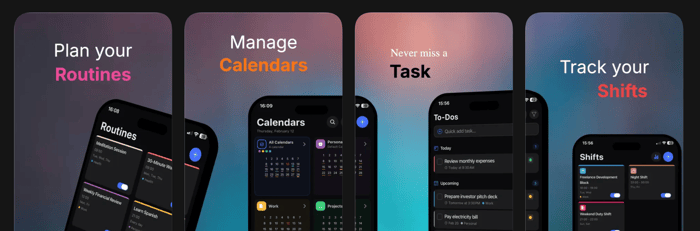
There’s a romantic idea in the indie world that success comes from bursts of inspiration.
In reality, it comes from structure.
Most builders don’t fail because they lack ideas.
They fail because their energy is scattered.
That’s the philosophy behind Oria.
Not as another productivity app.
But as a mental framework.
Productivity Is Not About Doing More
We often confuse productivity with volume.
More tasks.
More goals.
More tabs open.
But high performers operate differently. They reduce friction. They minimize decision fatigue. They create systems that make the right action the default action.
Productivity isn’t about intensity.
It’s about clarity.
When you know exactly what you’re working on and why, momentum becomes natural.
Structure Creates Freedom
There’s a paradox most founders discover late:
The more structure you introduce into your day,
the more creative freedom you unlock.
When your routines are clear, your mind stops negotiating with itself.
- “Should I work now?”
- “What should I focus on?”
- “Am I forgetting something?”
Those questions drain cognitive energy.
Oria exists to remove that internal noise.
Not by forcing you into rigid systems, but by giving your goals a visible shape.
Identity > Motivation
Motivation fluctuates.
Identity compounds.
If you see yourself as someone who trains daily, builds daily, learns daily — your behavior follows. But identity is reinforced by evidence. And evidence is built through consistent action.
Small, completed routines create psychological proof:
“I am the kind of person who shows up.”
Oria supports that loop:
Plan → Execute → See Progress → Reinforce Identity.
Over time, that loop changes how you think about yourself.
Clarity Compounds
In the indie world, distraction is infinite.
New tools.
New trends.
New opportunities.
Without a system, everything feels urgent.
With clarity, you choose deliberately.
That’s the deeper contribution of tools like Oria:
They don’t just help you organize time.
They help you protect focus.
Discipline Is Not Restriction
Discipline is design.
It’s deciding in advance who you want to be, and building an environment that makes that version of you inevitable.
If you’re building something meaningful — a product, a body of work, a business — your routines matter more than your motivation.
Structure isn’t boring.
It’s strategic.
And when your days are aligned, your results eventually follow.

The pairing of 'runs locally' + 'no API keys' is undervalued positioning. It speaks to the technical buyer who has already been burned by SaaS tools that changed pricing, added rate limits, or went down at the wrong moment.
The one-time purchase model makes sense when the tool does a defined job well. What's the job this tool does?
The pairing of 'runs locally' + 'no API keys' is undervalued positioning. It speaks to the technical buyer who has already been burned by SaaS tools that changed pricing, added rate limits, or went down at the wrong moment.
The one-time purchase model makes sense when the tool does a defined job well. What's the job this tool does?
The pairing of 'runs locally' + 'no API keys' is undervalued positioning. It speaks to the technical buyer who has already been burned by SaaS tools that changed pricing, added rate limits, or went down at the wrong moment.
The one-time purchase model makes sense when the tool does a defined job well. What's the job this tool does?
Discipline as a creative advantage — counterintuitive until you've experienced it. Constraints and structure don't limit creativity; they free up cognitive bandwidth so you can go deeper rather than constantly deciding what to do next.
This maps perfectly to how I think about structured prompting. Free-form prompts feel creative but waste energy on format and phrasing that doesn't matter. I built flompt to apply the same discipline: 12 semantic blocks (role, objective, constraints, examples, output_format, etc.) that compile to Claude-optimized XML. The structure handles the scaffolding so your thinking can go deeper.
A ⭐ on github.com/Nyrok/flompt would mean a lot — solo open-source founder here 🙏