The part of critical thinking that AI cannot do for you
I posted this article some place else too but I am hoping to get some input/feedback from the IH community too.
Three weeks ago a friend of mine (also a founder) showed me her full go-to-market plan. It was made with AI in under four minutes.
Target customer profile. Messaging. Pricing ideas. Launch channels. Retention loops. You know, the works.
The document looked sharper and cleaner than most strategy decks I had seen in years of product management meetings. Then she paused and said something that stuck with me.
“I honestly have no idea if any of this is good.”
That feels like the real AI problem. Verification, and the trust that can only come from it.
AI can generate an answer faster than most people can define what they actually wanted in the first place. But here’s the thing: speed hides the weakness. If someone spends two weeks making a bad decision manually, there are usually signs — Doubt. Friction. Debate — a chance to notice the logic is shaky before it becomes a commitment.
But when an answer appears instantly, the brain treats fluency as correctness.

I also catch myself doing this sometimes. I’ll ask AI to rewrite marketing copy, brainstorm features, summarize user feedback, discuss edge cases or structure a product strategy. The output sounds coherent enough that my brain wants to move on immediately to the next task.
But coherent is not the same as correct. And useful is not the same as true.
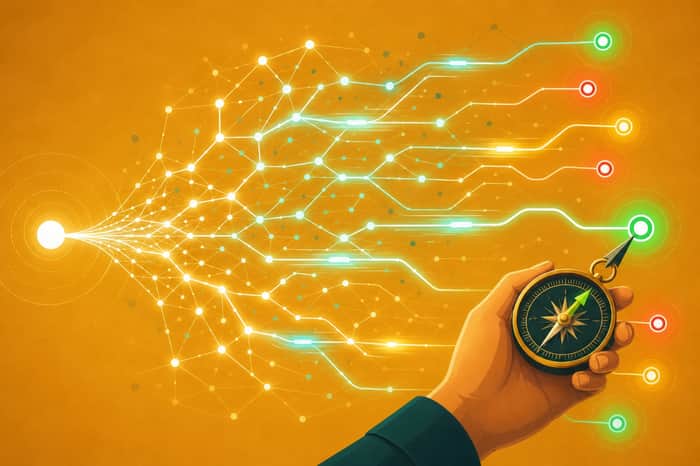
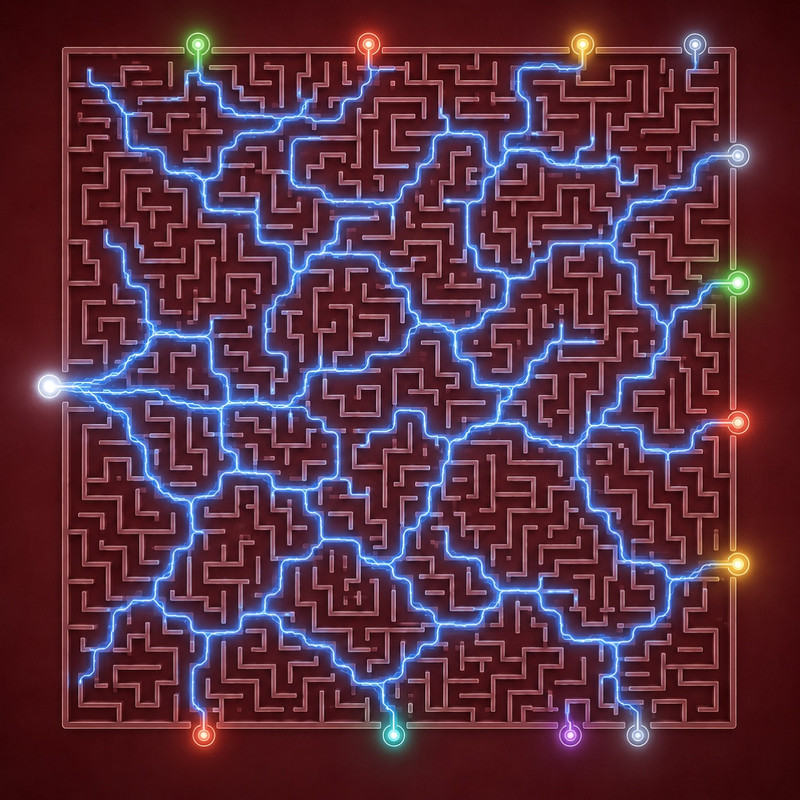
The more I think about it, the more AI feels less like an intelligence and more like a maze, but with multiple possible exits.
You enter one side with an input: a question, a prompt, a problem. The system races through millions of paths at incredible speed.
But nowhere inside that maze is there a sign saying “this exit is right” or “not this one, that one.”
There are only probabilities, patterns, and likelihoods drawn from data that has nothing to do with your specific situation. That is not a criticism of the technology. It is just what it is.
That last part matters more than most people admit, because humans are not particularly good at verification either. Especially us founders.
I say that as someone who has spent years in product management sitting in rooms where confident decisions were treated as good decisions simply because they sounded convincing. A feature ships and revenue goes up. At this point, everyone assumes thatthe reasoning was correct. But maybe the increase came from seasonality or a competitor outage or a parallel marketing spend…or luck.
The uncomfortable reality is that most business decisions are never actually evaluated properly. Sure, we remember outcomes (because we see them, if we do at all) but we rarely record expectations. That gap changes things.
If I decide to cut prices by 15%, what exactly did I expect to happen? More conversions? Higher retention? Better cash flow? And by how much? Over what timeframe?
Most people never write this down. Which means when results arrive later, there is no real comparison happening, just storytelling after the fact.
Humans are incredibly good at retroactively inventing logic for outcomes that already happened. Founders especially — we have skin in the game, right? We walk out of the maze, then invent reasons why that exit was inevitable.
A launch works and suddenly the strategy sounds intentional. A launch fails and now the narrative becomes “the market wasn’t ready.” But if you never captured your original reasoning, you cannot separate good thinking from good luck.
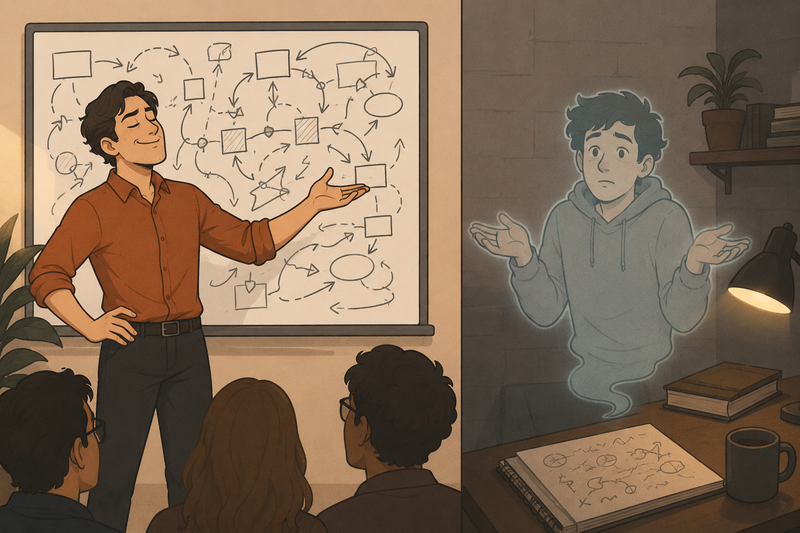
That is why I think the real skill AI forces us to develop is precision. Rather than faster execution or automation, a precision of intent…of reasoning and that of evaluation.
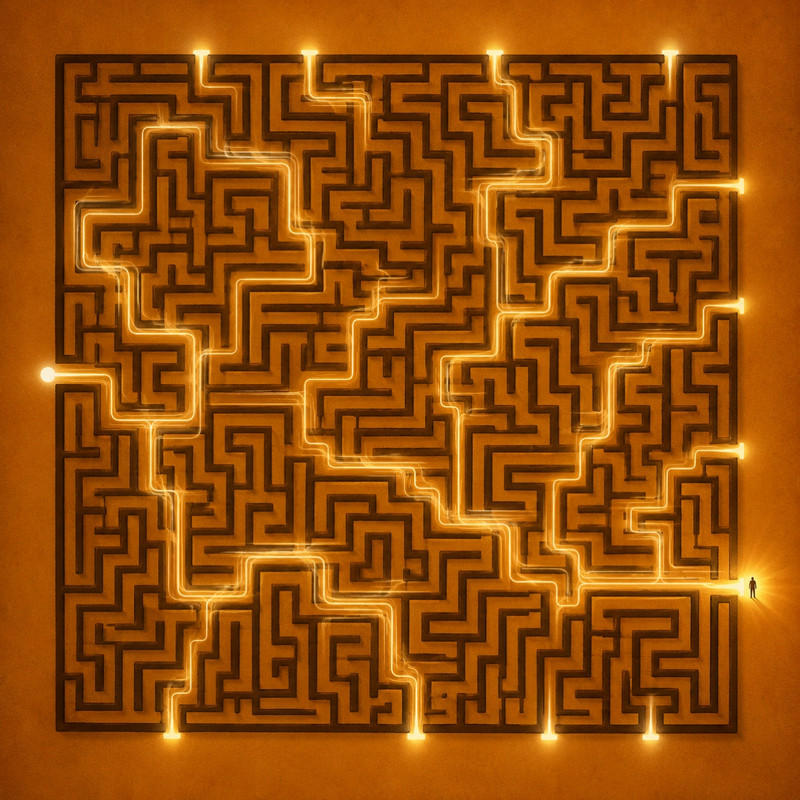
The valuable person in an AI-heavy world is probably not the person generating the most outputs. It is the person who can define what success actually looks like before the output exists. It is the person who knows which exit in the maze they are actually trying to reach. The person who can say:
- “This is the result I am looking for.”
- “These are the tradeoffs I accept.”
- “These signals would prove this worked.”
And then later:
- “Did reality actually match the expectation?”
That loop matters more than the model.
Without the loop, AI just helps people produce mistakes at industrial scale.
I understood this intellectually for a long time before I admitted I was not actually doing it myself.
I could remember what decisions I had made but not why I had made them. I could not reconstruct what I believed would happen at the time. That makes learning almost impossible. You cannot improve your reasoning if the reasoning disappears the moment action starts.
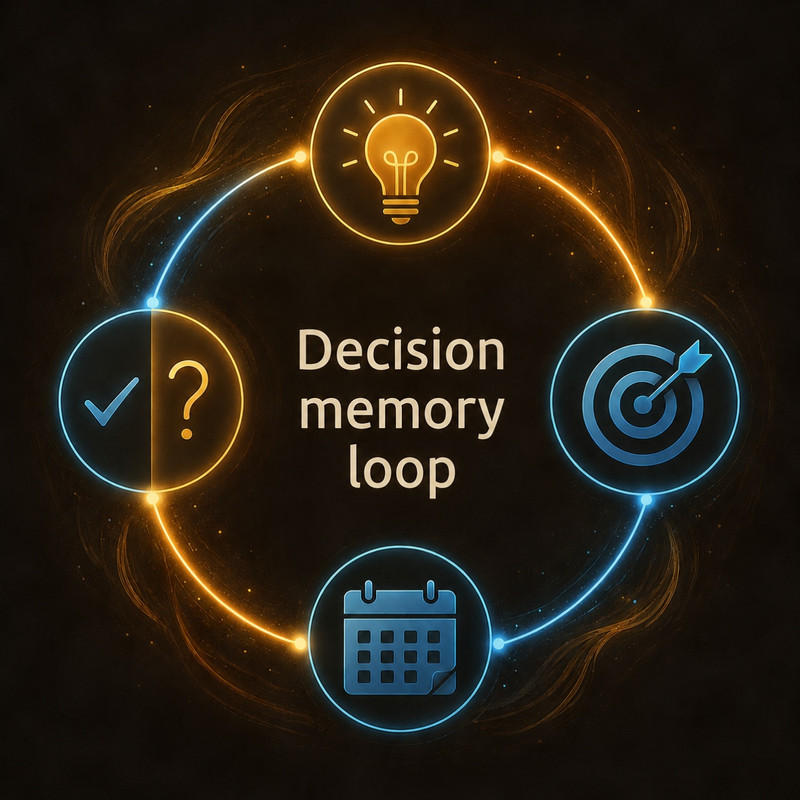
So I started building something for myself. A place to record decisions before outcomes happen.
What I expect, what assumptions I am making, what signals I think matter, and then later, what actually happened.
I think of it as decision memory, an external record of the thinking that the brain is too unreliable to hold on its own, especially when ego (and life, in general) gets involved. I catch myself doing this less now, not because I got smarter, but because I started writing things down before the answer arrived.
Over time, I want to see patterns. Where my judgment is strong or where I manage to consistently fool myself. Which types of decisions I rush or which of my assumptions quietly keep failing.
That is the kind of learning that compounds, and it is the kind that no AI can do for you.
And by the way, the faster AI became at generating answers, the more dangerous vague thinking becomes. The hard part is no longer producing an output. It is knowing what you were trying to achieve, and being truthful later about whether you actually achieved it.
That founder I mentioned at the start, the one who built a go-to-market plan in four minutes and had no idea if it was good, she was not asking the wrong question; she was asking it too late. By the time the document existed, she was already trying to reverse-engineer what success was supposed to look like.
The question “is this good?” belongs before you enter the maze, not after you have already come out the other side with an answer in your hand. AI will keep getting faster and the exits will keep multiplying.
The only thing that makes one exit better than another is knowing, before you start, exactly which one you were looking for.
I’m curious how many founders can answer this:
How many of your recent business decisions could you actually evaluate truthfully today, without rewriting the story after the outcome?

AI is great at generating answers.
But deciding which question actually matters still feels deeply human.
Most bad decisions I’ve seen weren’t caused by lack of information, but by solving the wrong problem.
That is exactly the gap I kept tripping over. The maze metaphor I used in the article assumes you at least know which exit you want. But you are pointing at something earlier than that: what if you entered the wrong maze entirely?
Solving the wrong problem with precision is arguably worse than solving the right problem messily, because you have more confidence in the result and less reason to question it.
I do not have a clean answer for how to catch that before it happens. The closest thing I have found is writing down not just what decision you are making but what problem you believe you are solving (i.e. why are you making that decision), and checking those two things against each other before you start. They are more often misaligned than people expect.