The Productivity System Indie Hackers Actually Want
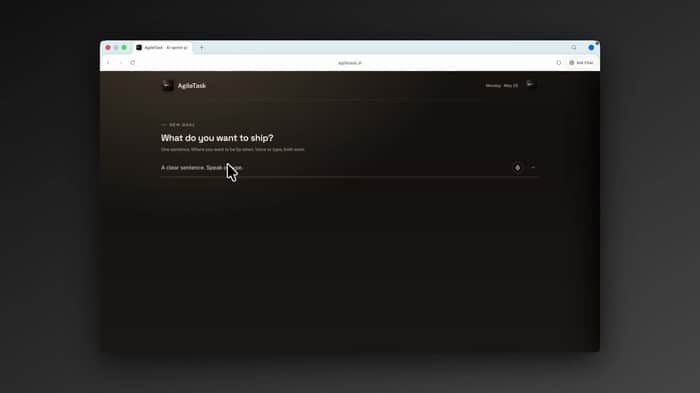
Most task tools ask founders to manage the system before they manage the business. AgileTask.ai is built to remove that drag and help solo builders get from idea to ship without turning productivity into a second job.
- The problem indie hackers know too well
Every founder has lived this: the day starts with a plan, then disappears into organizing, tagging, filtering, and rearranging work. The tool meant to create clarity becomes one more place where time leaks away.
That is the real problem, not a lack of discipline. When a workflow demands constant maintenance, it steals attention from the only thing that matters — shipping.
- The shift from features to outcomes
AgileTask.ai is not trying to be another “cool board.” It is designed around a simpler promise: keep the work visible, keep the next step clear, and keep founders moving.
Instead of asking users to build a perfect system, it helps them make decisions faster and turn those decisions into action. That changes the experience from task management to momentum management.
- What that looks like in practice
For early-stage founders, the value is not a long feature list. The value is having a live workflow that supports the actual rhythm of building.
A founder can:
• Pick the one thing that must ship this week.
• Break it into build, test, and launch steps.
• See what is next without rebuilding the plan every day.
That means less context switching, fewer abandoned lists, and more finished work.
- Why this matters now
Indie hackers do not need more process. They need a system that protects momentum while they are shipping, testing, and learning in public.
AgileTask.ai is built for that reality. It keeps the focus on progress instead of overhead, which makes it especially useful for feature launches, onboarding improvements, and growth experiments.
- The larger lesson
The best productivity products do not win by adding more structure. They win by making the right action obvious.
That is the idea behind AgileTask.ai: fewer moving parts, faster feedback, and a workflow that feels like progress instead of admin.
- Why this belongs on Indie Hackers
This is not an enterprise platform dressed up for founders. It is a practical system for people who want to ship more and manage less.
If that sounds familiar, AgileTask.ai is aimed at exactly that gap: the space between a great idea and the next release.
Conclusion
AgileTask.ai is still being shaped, which is part of the point. Early users are not just adopting a tool — they are helping define a product built around how indie hackers actually work.

This positioning is getting sharper.
The line that stands out is “the best productivity products do not win by adding more structure. They win by making the right action obvious.”
That is the product.
I would lean much harder into that and move away from anything that sounds like task management. The real enemy is not messy lists. It is founder hesitation disguised as planning. If AgileTask can make the next meaningful action obvious and reduce the number of ways a solo founder can avoid shipping, that is much more interesting than another AI task board.
The naming question still feels important for that reason. AgileTask is clear, but it keeps pulling the product back into the same category you are trying to escape: agile boards, task apps, productivity systems, planning tools.
A name like Xevoa.com would give the same product a broader execution/workflow frame without changing what you have built. It feels more like a system for movement and shipping, not a place to manage tasks.
The product is becoming more opinionated than the name suggests. That gap is probably worth resolving before the positioning gets locked into more public posts.