The secrets behind a $20k/mo
startup
How Elston Baretto outsmarted the incumbents to build a $20k/month hosting business.
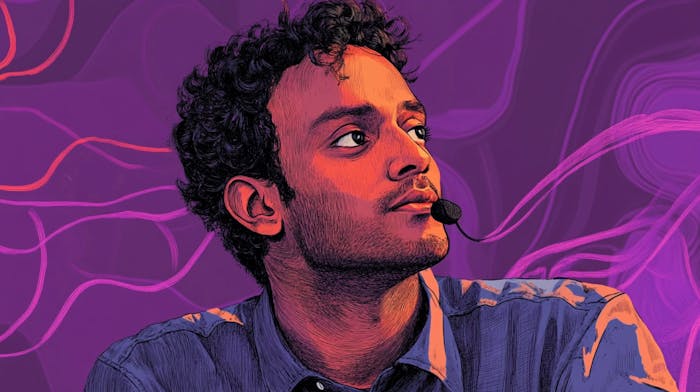
Hosting is one of the web's most competitive markets, but that hasn't slowed down Elston Baretto. Through a rugged work ethic and creative marketing strategies, Elston has scaled his hosting business, Tiny Host, to over $20,000 in MRR.
I sat down with him to learn how he did it:
1. What’s a mistake you often see new indie hackers make?
I know everyone says this, but spending too much time developing and not enough time marketing and shipping.
I see too many new indie hackers waiting until something is perfect before they release it, but that’s the worst thing you can do. You have to get the word out there as you’re building it.
2. How do you find ideas for products?
I like to focus on validated ideas, and I have two strategies for finding such ideas.
The first method is to pick a validated product and try to either improve it or adapt it for a different audience. So, if you look at Tiny Host, it’s not like hosting is a novel idea. But what we did well is reposition it for a non-technical audience by making it simpler.
The second strategy is to build things that people are searching for. That means using keyword analysis tools and then building a product for the best keyword opportunities. If you do that right, then you’ll have a product with proven demand and really easy distribution if you’re able to rank for the keywords.
3. How do you make products that stand out?
The best way I’ve found is to find negative reviews of your competitor and then improve on that. It might be pricing, it might be a lack of features, or it might be poor UX. It doesn’t really matter; what matters is that you build a better version than theirs.
Then there’s also market positioning. Niching down is very, very powerful early on. People really appreciate when you build an app that’s meant for them. For example, instead of building a social media management app, build a social media management app for people in the hospitality industry. Not saying that’s a valid idea, but there are tons of niche communities out there that you can build for.
4. How do you know you’re on the right path, besides just MRR?
Early on, I think the most important thing is the feedback and engagement from your users. So Tiny didn’t have serious MRR for a year, but the people who were constantly using it were also constantly praising it, which kept me motivated despite the lack of revenue.
You’re probably not going to be an overnight success. The best thing you can do is pick a product, distribute it to as many people as possible, and then continuously tweak it based on their feedback.
5. What are your favorite marketing strategies?
My go to is SEO. I genuinely think it’s among the most powerful marketing strategies for indie hackers, but most people give up too early. SEO is all about being patient. You will need to spend months targeting the right keywords, writing content, and collecting backlinks. But if you do it right, then it’s a super scalable strategy that can get you thousands of users for free.
If you want to speed the process up a bit, then two of my favorite tricks are YouTube videos and building related side projects.
Videos rank as well, and you don’t even need to show your face if you’re uncomfortable with doing so. You can just do a screen recording and a narration. We’ve done some videos like this, and they’ve racked up thousands of views and rank on Google, which is super cool because it’s also a super powerful way to build trust with potential customers.
Indie hackers are already familiar with building side projects, so I won’t talk too much about it. But just make sure that you’re building side projects related to your main project and that they’re targeting keywords that people are searching for.
At the end of the day, SEO isn’t rocket science. It’s just a bit of a grind. So, the earlier you start, the better off you’ll be.
6. How do you market on Reddit?
Reddit is the best way to engage with users early on, but it’s definitely tricky. If you push your product the same way that you do on Twitter or Facebook, you’ll inevitably get banned.
So, the key is to find the right subs and just be super honest about your intentions. Be transparent and say that you built this product, tell the story of why you built it, and ask for feedback. If you’re able to do that at the top of a weekly feedback thread, then you can easily pick up dozens or hundreds of early users.
The other key is to try to give something back. Think of Reddit users as your friends. You wouldn't just go up to a friend and say, “hey, download this app”. So, when I launched an app on Reddit years ago, I included a little offer code as a thank you, and I found that people really appreciated that.
7. Why do you use a free plan?
Free plans aren’t useful for every product, but for us, something we really wanted to promote was viral loops. Every website hosted on Tiny was essentially an advertising board for us. So, making a free plan really helped compound our traffic.
It also helped that we don’t have a lot of support requests, which is one of the main downsides of having a free plan. And then finally, I think we have enough of an incentive to upgrade that having the free tier for marketing purposes is still worth it. If people were just using the free plan and not upgrading, then obviously it wouldn’t make sense to have the free plan.
8. How’d you decide your pricing?
Pricing is always very difficult. When I first launched, our prices were basically the same as they are now. However, I then lowered it and lowered it and lowered it until I started to get sales, and then I slowly increased it back up to where it is now.
So, if you're launching a product for the first time, charge a bit lower than the industry standard, and then slowly increase it as you build out more features.
It’s also good to err on the side of charging more because it’s good for your brand. People won’t take you seriously if your price is too low. They'll look at you and think that you're not a well-built product.
I think, as a general rule, if people aren’t complaining about your prices, then you aren’t charging enough. So don’t be afraid to charge more.
9. Do you think everyone should learn how to code?
That’s a tough question. I think it depends on your end goal. There are tons of indie businesses that exist that don’t require coding expertise, especially now that there are no-code tools and AI. As long as you have the idea, the strategy, and the distribution, you can build a profitable business.
No-code tools and AI will only get you so far. If you want to build something that’s never been done before and make a really unique product, then you’re going to l need to learn how to code.
So, it all depends on what your goals are.
10. How do you think indie hacking will be different in five years?
I think AI is going to unlock a whole different market in the same way that YouTube unlocked media and Instagram unlocked influencers. If AI makes it so that anyone can build a product, then that’s a whole new ballgame.
My hope is that indie hackers will use these new powers to solve more unique problems. But, I’m worried that instead people will use them to quickly build copycats of successful products.
If the latter happens, then indie hacking will really become a game of skill. If anyone can build products, then instead of coding skills, the differentiator will be ideation, distribution, and salesmanship.
In any case, it’s going to be very interesting.
11. Final piece of advice?
Code less, market more, be a little lazy (Tiny still doesn’t have a password log in!), try to find a mentor who’s slightly ahead of you and can grow with you, and don’t ignore the power of a strong community. There’s no chance I’d be where I am today without the indie hacker community.
And, if you’re looking for someone to bounce ideas off of, I’m always happy to answer any more questions on X/Twitter.

Love this — most wins like this aren’t about big innovation, just spotting gaps incumbents ignore and executing consistently where others don’t bother.
This is a great breakdown, especially the emphasis on shipping early and focusing on distribution.
One thing I’ve been noticing (both in my own work and from talking to others) is that even when people know they should ship and market early, they still get stuck.
Not always because of perfectionism, but because of a lack of clarity.
Questions like:
“What exactly am I validating right now?”
“Who am I building this for today?”
“What signal am I actually looking for?”
When those aren’t clear, it’s surprisingly easy to default back to building, even if you intellectually know you shouldn’t.
Your point about “validated ideas” and niching down feels very connected to this. In a way, distribution and marketing only really work once there’s enough clarity on the problem and the audience.
Curious how you think about this:
When you say “market more than build”, how do you decide what exactly to validate at each stage?
"If people aren't complaining about your prices, you aren't charging enough." — saving this one.
The SEO advice resonates. Most people treat it like a campaign instead of infrastructure. You plant it, water it, and ignore it for 6 months. The founders who win with SEO are the ones who started before they needed it.
The negative reviews strategy for standing out is underrated. It's basically free product research — your competitors' unhappy customers are telling you exactly what to build next.
I'm early stage with CouncilIA (genuinely $0 MRR, week one). The part about Tiny not having serious MRR for a year but users constantly praising it — that's the signal I'm looking for right now. Revenue validates the business model. Engagement validates the idea.
Question for anyone who's been through this: how do you distinguish between "users love it but won't pay" vs "users love it and will pay once X"? That line feels blurry when you're in it.
This really resonated, especially the point about free plans as a growth lever rather than a revenue decision.
I use a free tier in my own business for the exact same reason — not because free users are the end goal, but because every use of the product creates visibility and trust. When the product itself becomes distribution, the math changes completely. It only works if support stays manageable and the upgrade path is clear, but when it clicks, it compounds quietly.
Also loved the emphasis on validated ideas and improving existing products instead of chasing novelty. So many founders underestimate how powerful repositioning and simplification can be, especially for non-technical audiences.
The throughline here feels like patience + feedback + distribution beats cleverness every time. Solid reminder to code less, ship earlier, and let real users shape the direction.
There's honestly no online community that this doesn't apply to. It's great Reddit advice, but it's also great IH advice, great X advice, great advice for IRL meetups, and so on. Whenever you want to get something from others (attention in these cases), accept that you'll probably have to give more than you get.
Good things come to those who give!
Great Insights about Marketing, it's the Only thing where most Founders struggle.
So interesting, thanks
I can't believe there's still room for more website hosting businesses – my developer brain would have thought this area was "solved" since the internet's been around for 30+ years, and we've had Cloud for 10+ years . It's very impressive to see a business built in this space – makes me re-evaluate my priors!
Great share
Thank you!
very good story for new indie hackers
Thank you!
I really like your point of view.
Thank you!
code less market more.
great words, cant agree more
hi!
They really are.
IS IT POSSIBLE TO RECOVER LOST CRYPTO? YES, ONLY HACKANGELS
Hey, my name is Frank, and I'm a crypto trader! I just wanted to share my incredible experience with The Hack Angels. They are truly exceptional when it comes to crypto recovery. They managed to recover my lost $1.7 million worth of Bitcoin from a scam, which I honestly thought was impossible. If you ever find yourself in a similar situation, I highly recommend reaching out to them.
You can contact them through their hotline at +1 (520) 200-2320 (available on phone/WhatsApp)
If you're in London, you can even visit them in person at their office located at 45-46 Red Lion Street, London WC1R 4PF, UK. They're super helpful and really know their stuff! Don't hesitate to reach out if you need help!
THANKS TO THE SERVICES OF THE HACK ANGELS // FOR HELPING ME RECOVER MY USDT AND BTC
I lost almost $698,000 in a bitcoin investment scam a few months ago. I was devastated and depressed, and I didn’t know what to do. When I saw a favorable review of THE HACK ANGELS RECOVERY EXPERT. I decided to contact them and voice my concerns. God is so good that I am a living testament to the fact that there are still legitimate recovery hackers out there. I will confidently recommend THE HACK ANGELS RECOVERY EXPERT to everyone I meet. I will suggest them to anyone who falls victim to any kind of online scam by using the information below.
WhatsApp; +1(520)-200,2320
If you’re in London, you can even visit them in person at their office located at 45-46 Red Lion Street, London WC1R 4PF, UK.
Love this! I think communities like Reddit and Discord also help small startups get early users fast if done genuinely.
Awesome! What helped you get that first five paying customer?
Awesome !!!!
Hi, I’m a student from India trying to build a lightweight, no-ad, secure browser specifically for low-end Android phones used by students, private users, and those in rural areas.
I have no financial resources, but I deeply understand the pain of laggy phones, bloatware, and intrusive ads.
I’m building this myself using no-code tools, and now I’m looking for someone who can guide me or partner with me to take it further.
My idea includes:
A simple WebView-based browser
Features like offline reading, voice-based interaction, and optional AI tools
No tracking, no ads — privacy-first, student-friendly
I’m not asking anyone to code everything for me — I’m asking for a little help, support, or partnership to make something real that can help others like me.
In return:
You’ll be publicly credited
You can get future equity if we grow
You’ll be part of something meaningful from Day 0
If you can spare even 2 hours to guide me, or want to collaborate, it would mean the world to me. 🙏
Let’s build something that actually matters.
And good things come to those who wait also ..keep on building
This is spot on. So many indie hackers focus on building first and marketing later, but community and distribution are just as important as the product itself. I’ve been deep in community-building lately and totally agree that most platforms aren’t designed to sustain long-term engagement. things get noisy, unfocused, and eventually, people disengage. It’s exactly why we’re building Integral, a community platform designed to actually scale without the chaos. Excited to see how indie hackers continue to evolve their approach to community + product-market fit.
Write less code and do more marketing. Thank you for sharing your story. I will take you as my mentor and learn from you. I have already followed you on x!Thanks
His words "Tiny didn’t have serious MRR for a year, but the people who were constantly using it were also constantly praising it" show one thing that marketing teams should take to their heart - that numbers don't tell you the whole story.
For us, the chase for bigger and better numbers begins before the product even debuts but honestly that's as classic a start-up mistake as it can get. Conversations are a great signal to look at especially when we are just getting started.
Hey, I like what you mentioned about SEO and the fact that it needs alot of figuring out to do. I have my own idea of starting SEO boilerplate that helps guides founders with exactly what to do step by step to improve their SEO without spending time and enegry going through youtube tutorials.
As a founder do you think this idea would benefit you to save your time ?
Hey, that's great! One week ago I created the product and now I am doing marketing on it. I am trying every possible way like YouTube videos launching a product on product hunt and today I heard about the indie hacker and here I am trying to market my product can you also provide more ways to market our product? As a developer, I think we have great development skills but where we lack is that we don't bother to market much and we don't have people with whom we can share our product like followers on Twitter and other socials. I am trying to fill these loopholes
Hey, the post is good and all but i have a doubt in my mind that keeps bugging me for some reason i've created a startup and yet to launch the product and its been 3 months we are developing and i keep changing the product with the new apps coming in market we are still in development because i addressed a major change in the whole what do you mean by spread early is there a time limit where i should force myself to complete it in that deadline?
Incredible post, thank you. Love the tip on looking at what competitors are missing. We just recently launched our AI career app and trying to be mindful on not being in constant build mode, but pivoting to "growth" mode. For pricing, how long did you allow your product to run (or what was the benchmark) before you tested out pricing changes? Our concern is changing our pricing too early. We made a concerted effort not to go too low with pricing, but we're not seeing as many users convert to paid subscriptions.
Hey, your sharing is really amazing! What you said about not just focusing on development but also starting marketing early, and finding chances from competitors' bad reviews, that's so true! I used to overlook this. Following your advice, the competitiveness of my product will surely improve. Looking forward to more useful startup tips from you!
Very inspiring post!
The story teaches us the power of creativity and community in building something awesome! That's why I am also focusing on this side a lot these days and have launched a no-code community on WhatsApp.
great article
good
nice post!!
Amazing just amazing no words
This is an insightful interview with Elston! His point about niching down in a competitive market resonates a lot, especially when it comes to creating something unique for your audience. One area that's often overlooked by IDH is intellectual property. When you're building out products or services, it's important to safeguard your brand and ideas to prevent others from copying your work.
Absolutely! Elston’s insights on niching down really highlight the importance of standing out. Protecting your intellectual property is crucial for maintaining that uniqueness and ensuring your hard work isn’t easily replicated.
This is an insightful interview! I especially appreciate the emphasis on releasing products early and marketing them before they’re perfect—a crucial mindset for indie hackers. One follow-up question: You mentioned using negative competitor reviews to improve your product. Could you expand on how you balance addressing those pain points with staying true to your product’s unique vision? Sometimes, it’s easy to get lost in trying to fix everything, which can dilute the focus of the product. How do you maintain that balance while also ensuring you’re solving real user problems?
I like your thought on focus on validated ideas. While looking for new ideas, building a product, and then validating it is also fun. but there are many validated ideas that just need polishing and improvement.
Great Share !!
Thanks a bunch for this article Stephen!
I keep self-sabotaging start-up oppurtunities I'm finding that exist from pre-validated ideas because something is repeatedly telling me 'if you're not first, you're wasting your time!'
It was really refreshing to hear that you actually seek out pre-validated ideas - a much needed challenge to my questionable solo-founder inner-monologue/decision-making acumen...
Planning to go the indie hacker route, this is invaluable advice :3
The two key methods for me are:
Improve a validated product or adapt it for a different audience.
Discover what people are searching for.
Great article.
I am wondering why you believe ideation and distribution are less prone to become comoditised than code?
Thanks for sharing!
Any tips on creating good SEO? (I have experience as dev, but not as indie hacker :) )
This comment was deleted 2 years ago