The Story Behind ParseMania - An AI that automates document processing with zero manual entry
We started building Parsemania after seeing a pattern that kept repeating across companies of all sizes.
Teams were spending most of their time doing work that felt like it should not exist anymore. Copying data from PDFs into spreadsheets. Forwarding emails just to trigger someone else to take action. Re typing invoices into accounting tools. Building fragile automations that broke every time a document format changed.
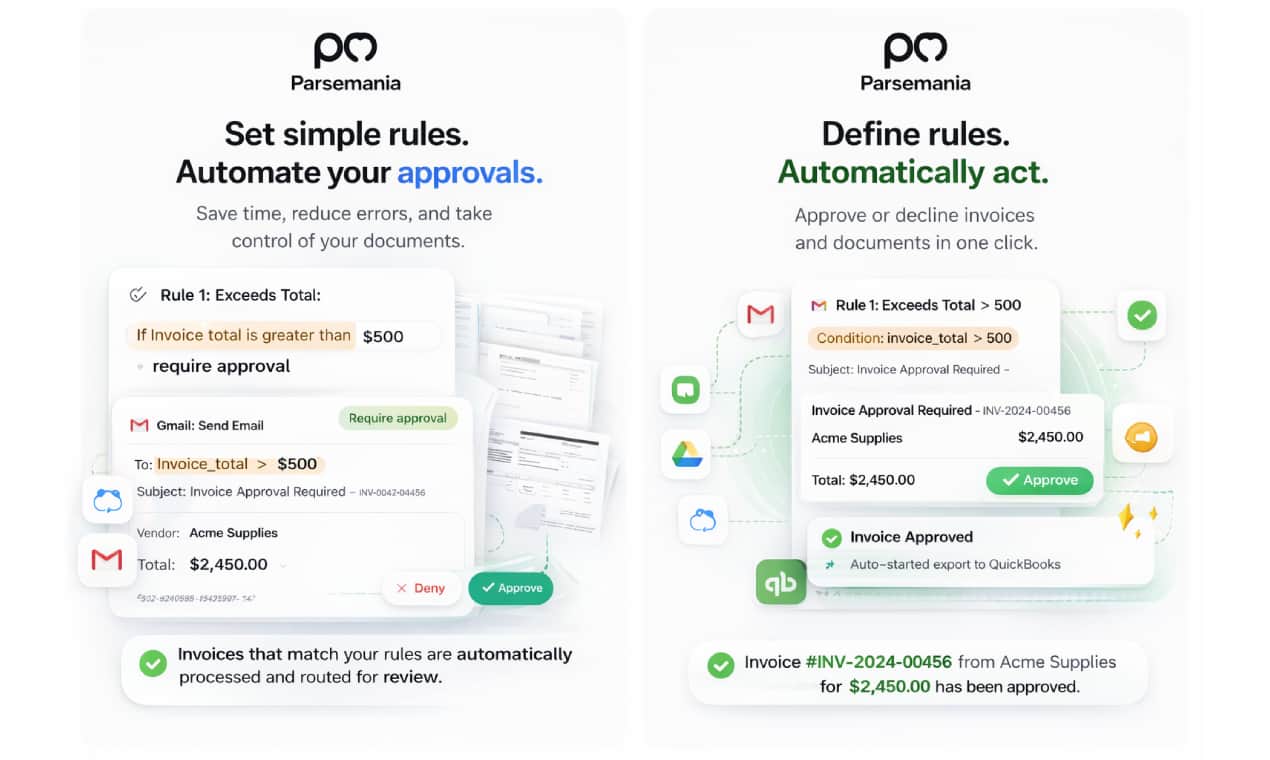
In one case, a finance team we spoke with was processing hundreds of supplier invoices every day. Everything looked modern on the surface, but behind the scenes it was still manual work. Someone had to open each file, interpret it, extract key fields, then decide what happens next. Approvals lived in email threads. Data lived in five different systems. Nothing was connected.
That is where the idea behind Parsemania came from.
We asked a simple question. What if documents were not static files at all, but living inputs that could understand themselves and trigger real actions instantly.
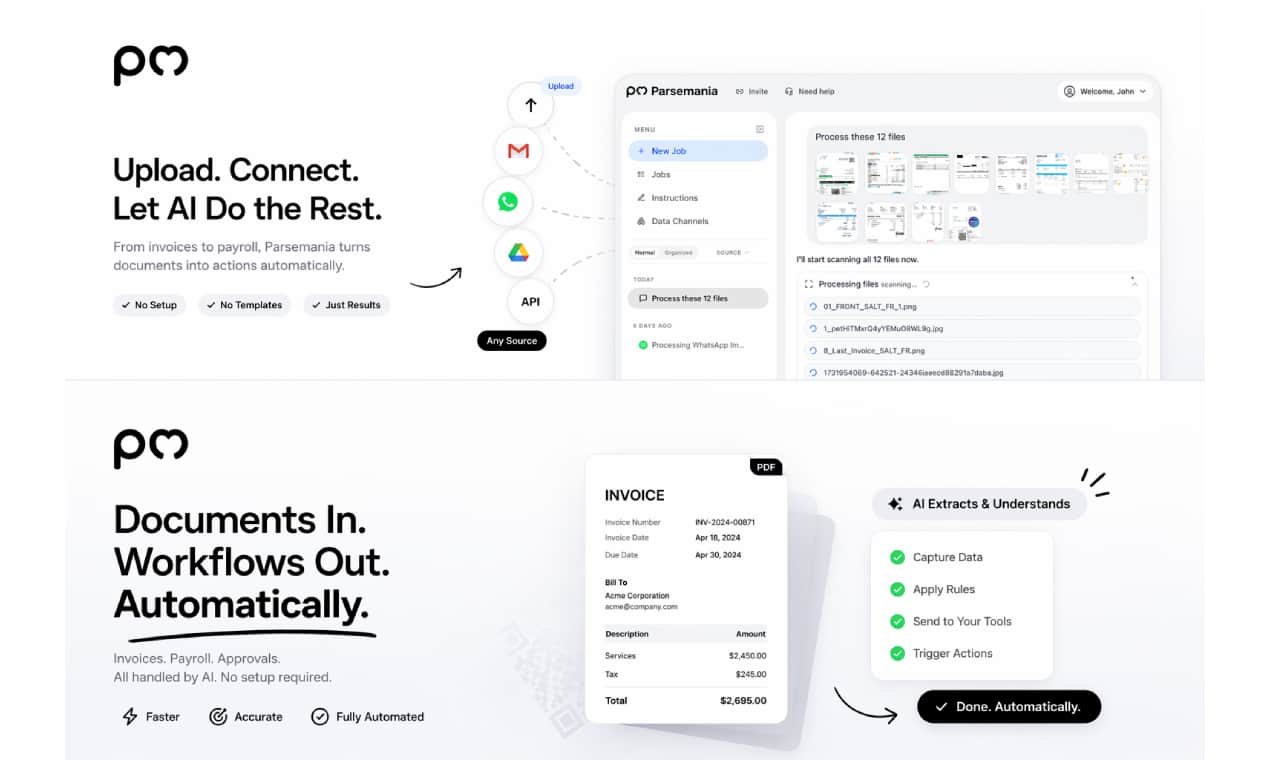
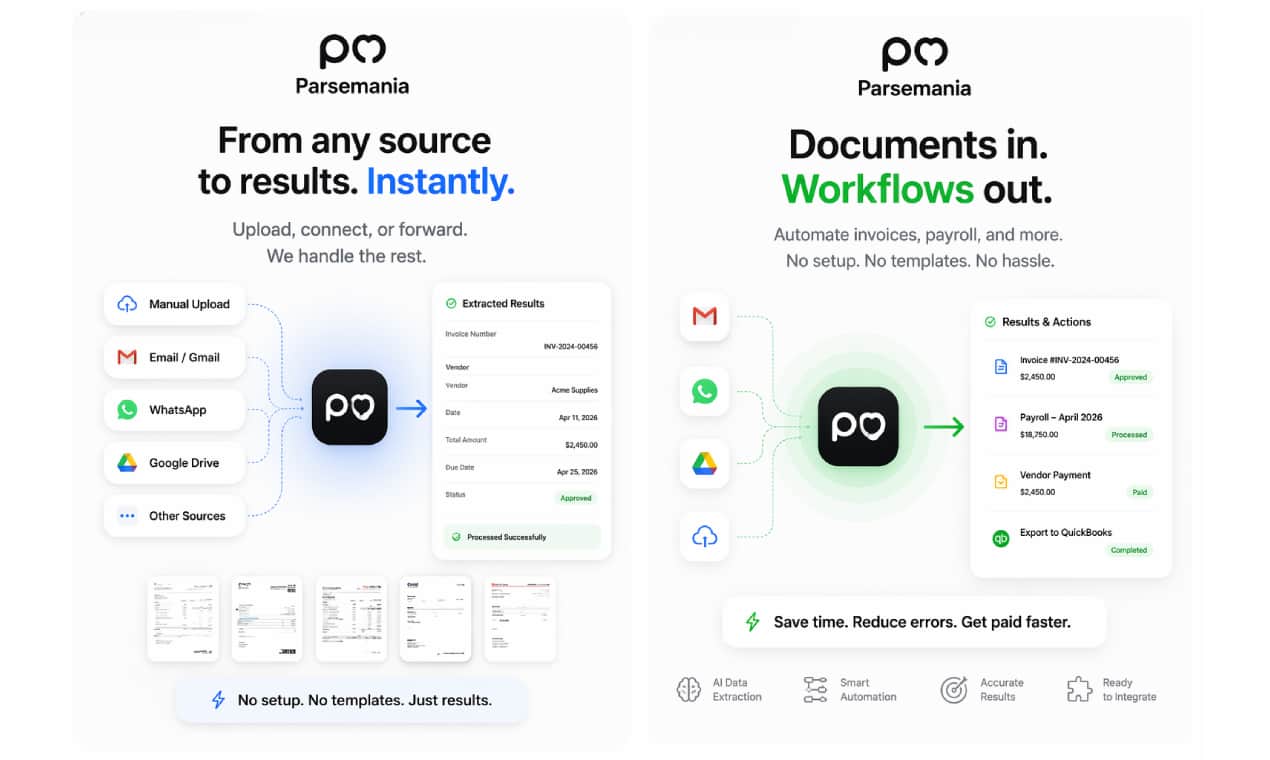
So we built a system that removes all the setup friction that usually comes with automation. No templates to design. No models to train. No workflows to configure step by step. Just connect your sources, describe what you want in plain language, and the system takes care of the rest continuously.
A document is no longer something you process. It becomes something that drives your business forward.
Today Parsemania connects tools like email, accounting systems, spreadsheets, and internal apps into one continuous flow where documents are read, understood, and acted on automatically.
What changed everything for us was realizing this was not about automation in the traditional sense. It was about removing the gap between information arriving and action being taken.
That gap is where most of the friction in companies lives.
We built Parsemania to remove it entirely.