The Top 10 AI Tools Every Programmer Needs in 2025
Artificial intelligence is now at the center of modern development. According to GitHub’s 2024 survey, over 92% of developers use AI in their daily workflows. With it, tasks are finished 55% faster, and code quality is 40% higher.
This is not about replacing developers—it’s about giving them superpowers. By 2030, AI will reshape nearly 80% of coding work, letting developers focus more on architecture, problem-solving, and creativity.
Here are the 10 essential AI tools in 2025, showing how they transform coding today and what they mean for the future.
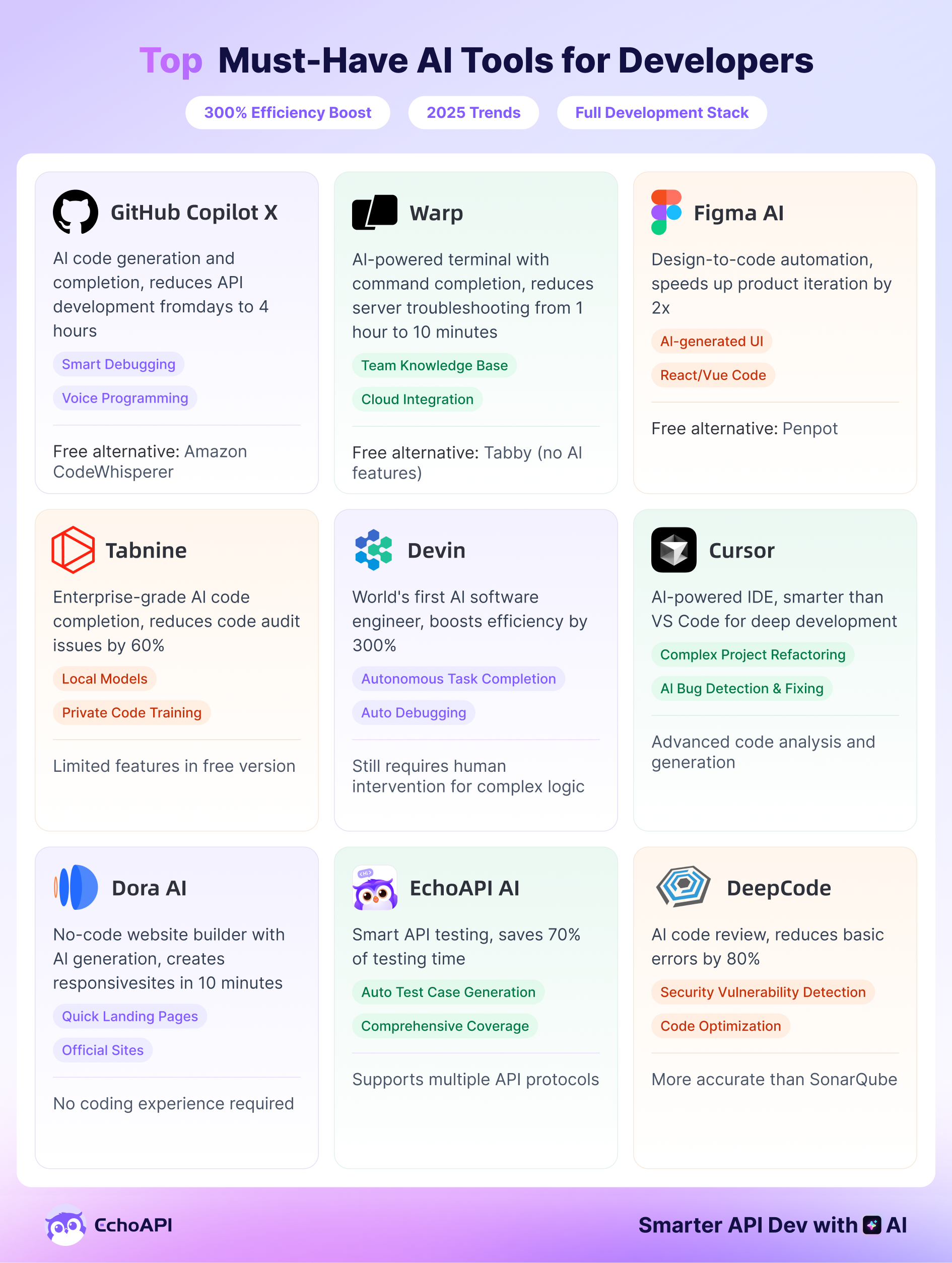
1. GitHub Copilot X: Smarter Coding
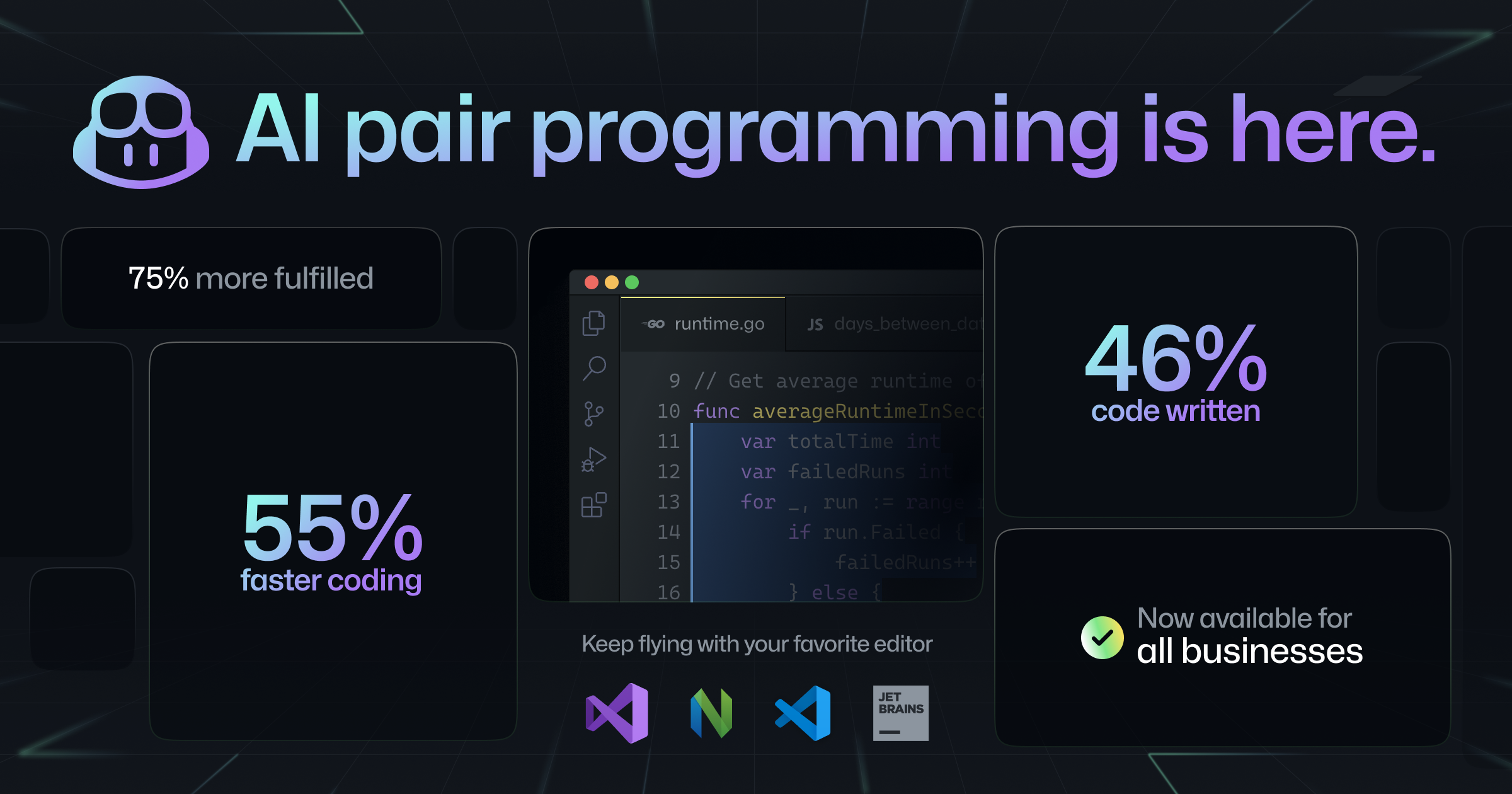
The third generation of GitHub’s AI assistant, powered by GPT-4 and fine-tuned for developers.
What makes it different:
- Understands context across multiple files and documentation
- Learns your team’s coding style in real time
- Generates code, tests, and refactoring suggestions
Impact: Teams have cut API build times from days to hours and migrated legacy codebases far faster.
2. Warp: The Next-Gen Terminal
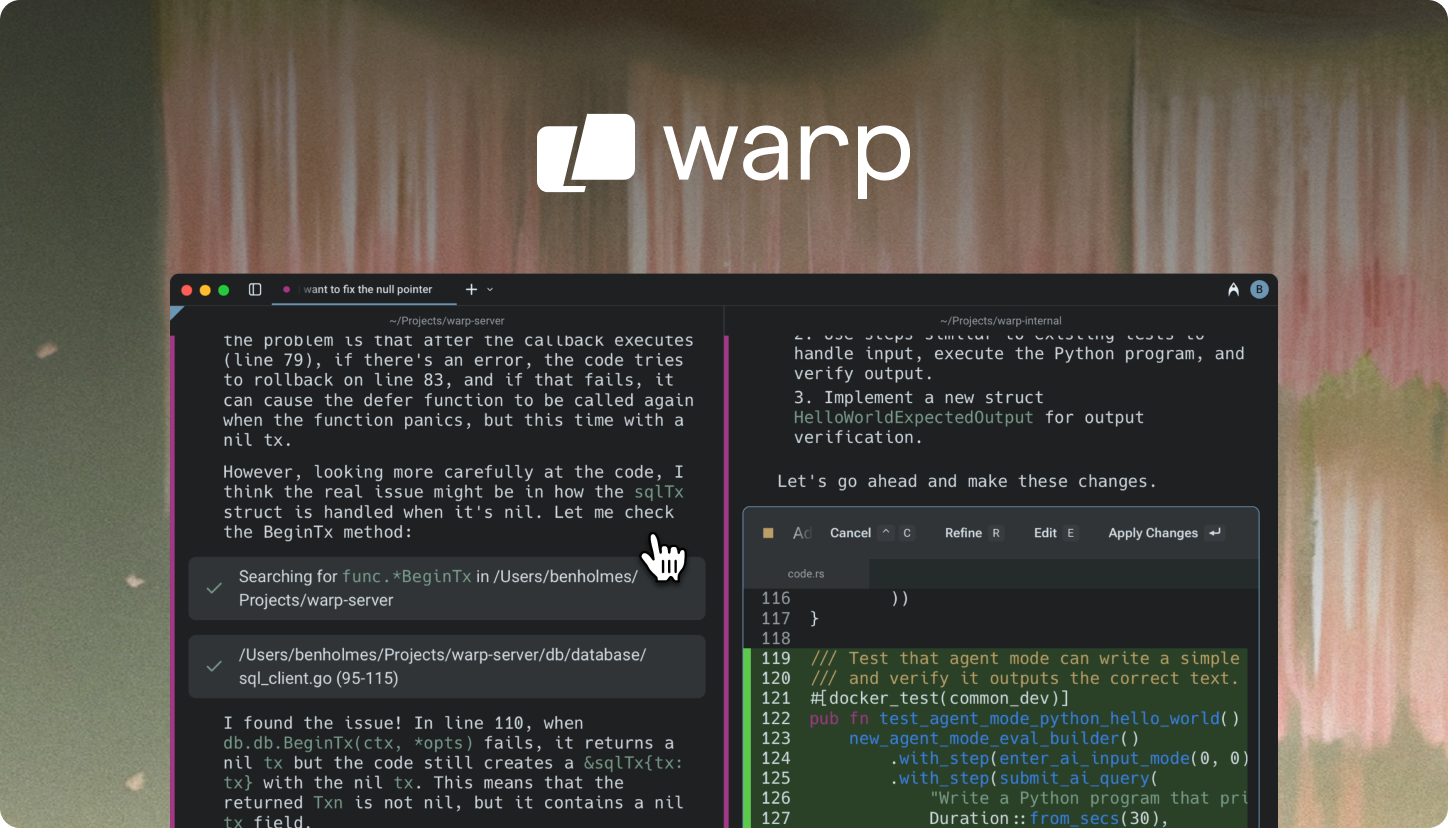
Not just a terminal—Warp rethinks command-line work.
Features:
- GPU-accelerated output (smooth even with huge logs)
- Structured data views (JSON as trees, SQL as tables)
- Smart command suggestions with risk warnings
Why teams love it: Faster DevOps debugging, safer multi-environment management, and reusable command libraries.
3. Figma AI: From Design to Code
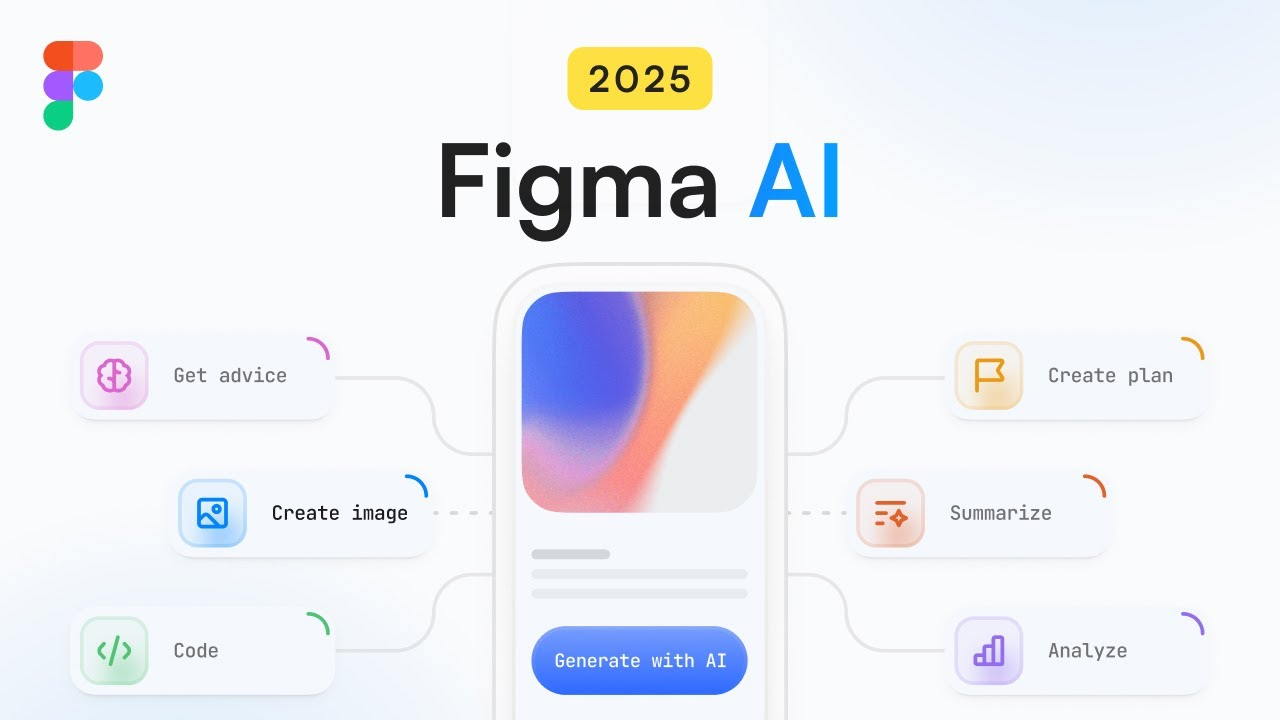
Closes the gap between designers and developers.
Capabilities:
- Converts UI designs into clean, semantic code
- Generates responsive CSS and reusable components
- Outputs for Web, iOS, and Android from the same file
Result: Faster design-dev cycles and consistent design systems. Complex animations still require manual coding.
4. Tabnine: Enterprise-Grade AI Coding
Focused on privacy and compliance, ideal for large organizations.
Advantages:
- Works fully offline—your code never leaves your servers
- Meets standards like SOC 2, ISO 27001, HIPAA
- Learns from your private codebase for domain-specific accuracy
Impact: Banks and healthcare companies report big gains in productivity while staying compliant.
5. Devin: The Autonomous Coding Agent
A leap beyond assistants—Devin can build entire projects autonomously.
What it can do:
- Understands natural language requirements
- Picks frameworks and architectures
- Generates code, docs, configs, and even fixes production bugs
Examples: Startups launched MVPs in just days; legacy systems migrated with performance boosts.
6. Cursor: An IDE for the AI Era
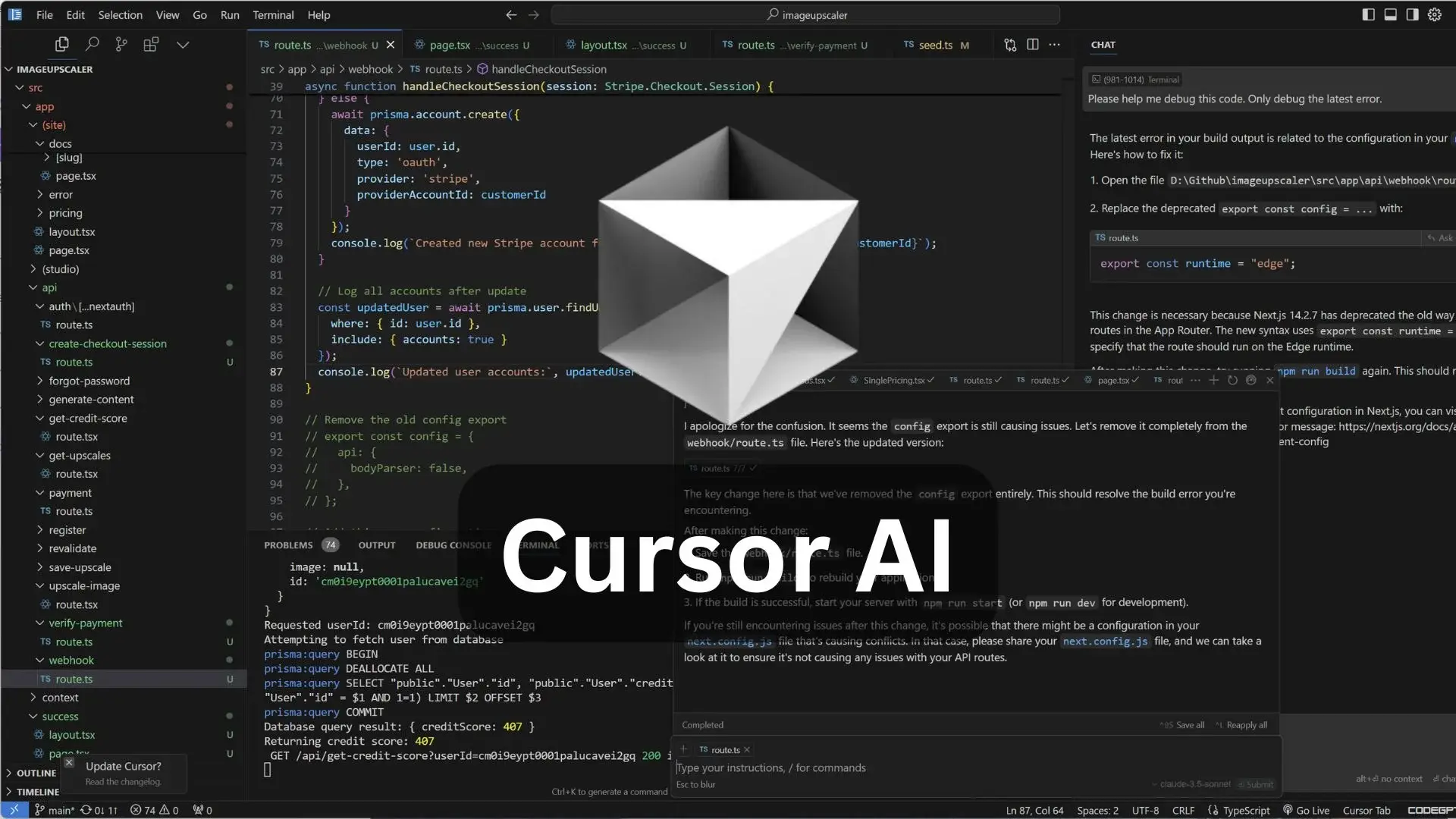
An IDE rebuilt around AI awareness.
Highlights:
- Models your whole codebase with graph neural networks
- Runs real-time quality and security checks
- Provides semantic-level refactoring suggestions
Impact: Companies report higher code quality, fewer production issues, and faster onboarding.
7. Dora AI: Visual Dev Meets AI Code
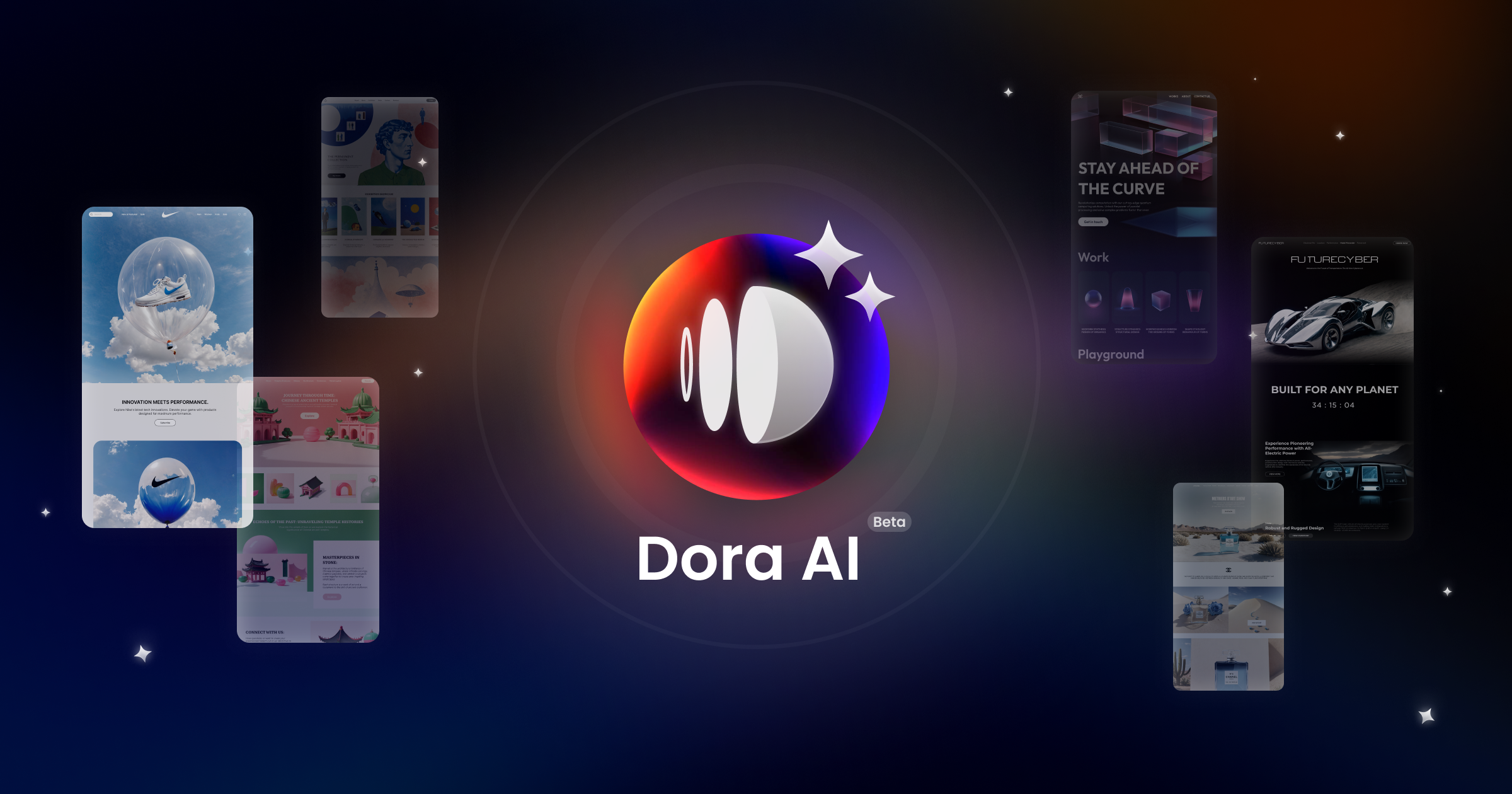
Brings together no-code style visuals and AI-driven code generation.
Strengths:
- Takes sketches, text, or design files as input
- Chooses scalable architectures automatically
- Generates cross-platform apps (Web, iOS, Android)
Perfect for prototyping and modernization, though complex customizations still need a developer’s touch.
8. EchoAPI AI: Smarter API Development
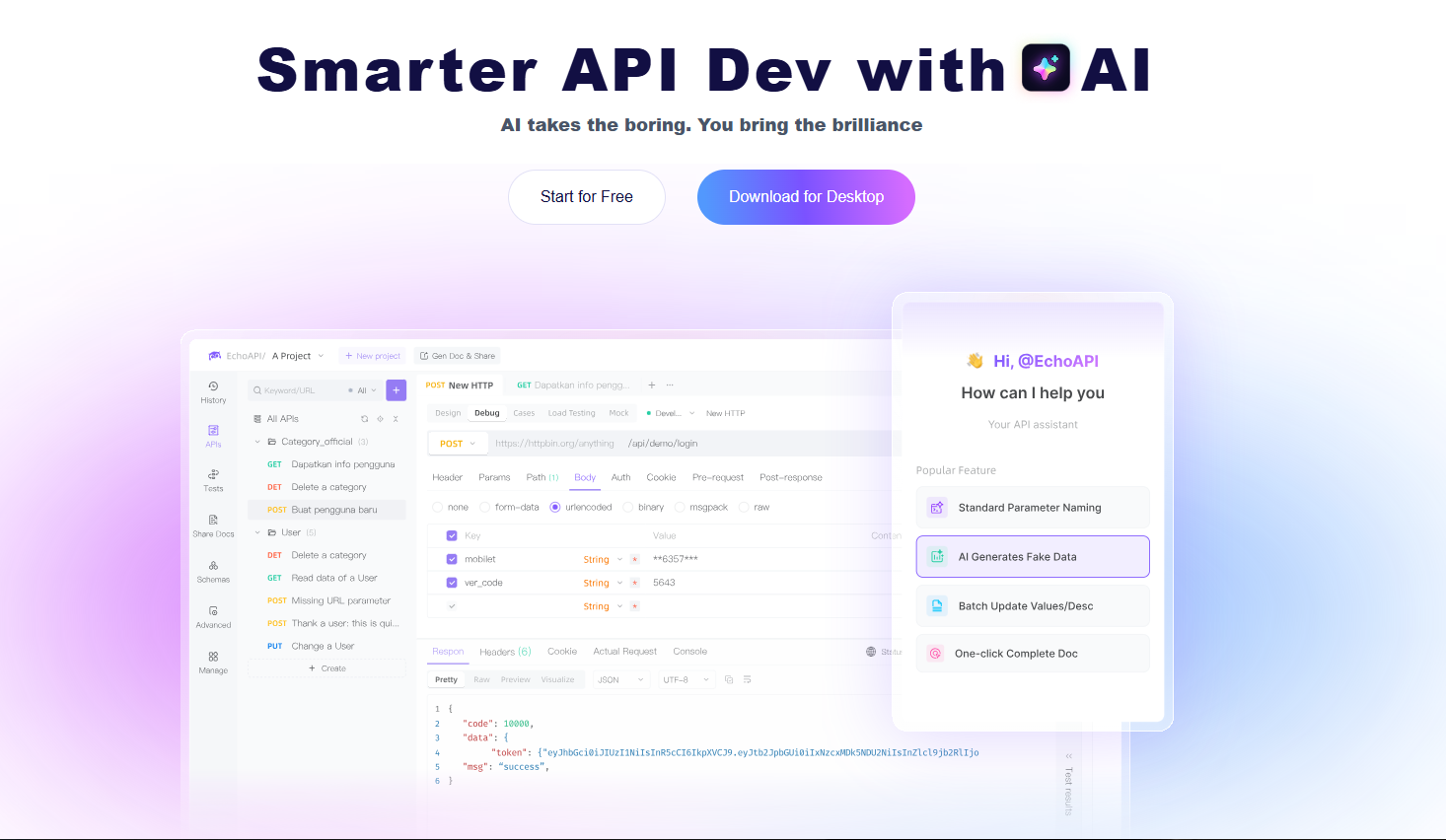
A full AI-powered API lifecycle platform.
Features:
- Turns messy notes into clean OpenAPI specs
- Auto-generates tests across performance, security, and edge cases
- Builds scripts and assertions directly from plain English
Impact: Banks improved API consistency by 95%; large e-commerce teams halved release cycles.
9. Replit AI: Cloud Dev Collaboration
A browser-based IDE reimagined for collaboration.
Key features:
- Real-time pair programming with conflict resolution
- Auto-setup for any language/framework
- One-click deployment to the cloud
Adoption: Popular in education and distributed teams, boosting onboarding and productivity.
10. DeepCode: Code Quality Reinvented
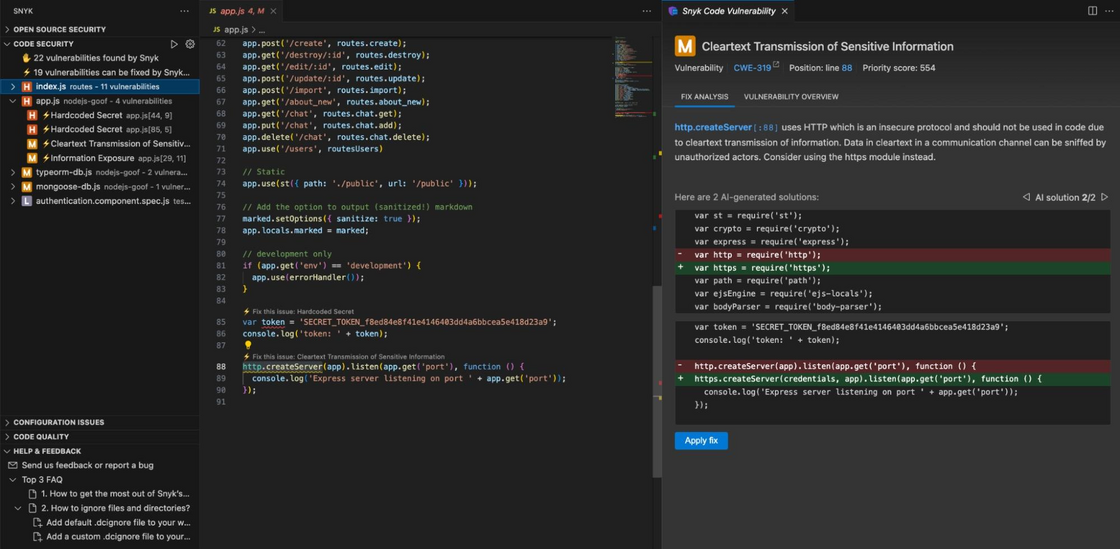
Goes far beyond traditional linters.
Why it’s different:
- Understands code intent, not just syntax
- Learns best practices from millions of repositories
- Provides instant feedback to prevent bugs early
Results: Fewer bugs, faster reviews, and millions saved in maintenance costs.
Wrapping Up: The Future of AI Development
Emerging trends:
- Deeper specialization (debugging, APIs, IDEs)
- Smarter team collaboration
- Full lifecycle coverage—from design to production
How to adopt:
- Start with small pilots
- Train teams in AI-assisted workflows
- Let processes adapt around AI tools
The next generation of AI dev tools will be more autonomous, better at design-level reasoning, and more natural to work with.
For developers, this means faster coding, higher quality, and more time to focus on what matters most: innovation.
