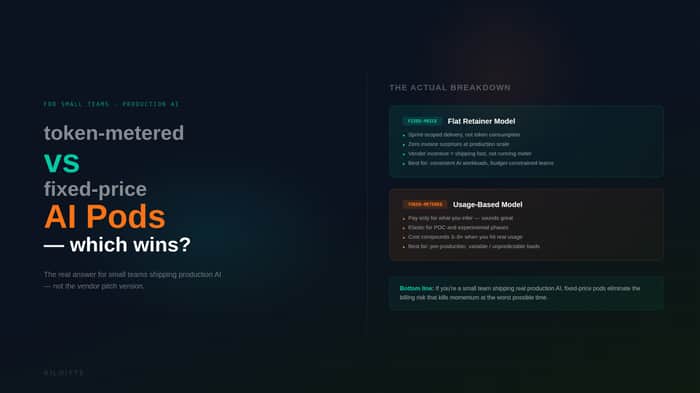
Token-metered vs fixed-price AI Velocity Pods — which is actually better for a small team shipping production AI?
writing this because i've watched a few founder friends pick the wrong model and burn 2 months figuring out why costs were unpredictable.
quick context: we work with seed-to-Series B companies on AI deployments. i've seen both models in action. here's an honest breakdown.
token-metered
good for R&D. good when you don't know what you're building yet. bad when you're trying to hit a delivery date with a fixed budget and no internal AI ops. the "flexibility" sounds great until you're explaining a $30K overage to your board.
fixed-price pods
you define the outcome. you agree a number. team delivers. CFO is happy.
the tradeoff is you need to know what you're building clearly enough to scope it. which — honestly — you probably should before writing a cheque anyway.
so i, shared this with a founder client last month and i thought it was worth repeating:
"A well-scoped fixed-price pod forces both sides to define success upfront — which is exactly where most AI projects fail anyway. Budget predictability for an SME isn't a preference, it's a survival mechanism."
— Sunil Kumar, CEO, Ailoitte
the hidden costs of token-metered that founders usually miss:
- prompt engineering bloat = token counts go up, quality doesn't
- someone needs to watch usage dashboards (that's time = money)
- no fixed accountability milestone = "done" never arrives
if you're mapping your situation:
- exploring / PoC / evolving scope = token-metered probably fine
- production deployment / fixed budget / no AI ops team = fixed-price is the smarter call
we built AI Velocity Pods for the second scenario specifically. fixed cost, 30–90 day sprint, defined deliverable.
curious what others here have seen — any founders that switched models mid-project? how painful was it?
Tags: #ai deployment, # startup-budget, # production-ai, # fixed-price-engineering
