Top 10 AI Detectors in 2025: Accurately Identify AI-Generated Text
In an era where AI-generated content is becoming the norm across industries—from academia to marketing—AI detectors play an essential role in maintaining content authenticity. Whether you're a student, educator, publisher, or SEO professional, being able to discern AI-written text from human writing can save time and uphold standards. This article explores the 10 best AI detectors available in 2025, highlighting their features, accuracy, and use cases. Among them, uPass AI stands out with its dual capability as both an AI detector and an undetectable AI rewriter.
1. uPass AI – Best Overall AI Detector and Undetectable AI Rewriter

uPass AI is one of the most comprehensive tools on the market. Unlike most other platforms, uPass AI provides both an advanced AI detector and a humanizer that helps rewrite AI-generated text into human-like content. It supports multiple detection engines simultaneously, offering detailed reports that assess your text against standards used by platforms like Turnitin, GPTZero, and Originality. ai.
Multi-detector analysis: Results from several detectors in one scan.
Built-in undetectable AI rewriter: Humanizes AI-generated text with 90%+ human scores.
User-friendly UI: Clear and actionable feedback.
Free plan available: Offers 300 words for AI detection and rewriting.
If you're looking for a versatile tool that not only detects but also helps you bypass AI detectors, uPass AI is the top choice.
2. GPTZero – Trusted by Educators

Developed to assist educators in identifying AI-generated academic work, GPTZero has become one of the most recognized AI detectors. It evaluates sentence structure, burstiness, and perplexity to differentiate between human and machine-written content.
Focus on academic integrity
Real-time results
Detailed statistical analysis
While it’s reliable, GPTZero tends to flag legitimate human writing occasionally, especially if it's concise or overly structured.
3. Originality .ai – For SEO and Content Agencies
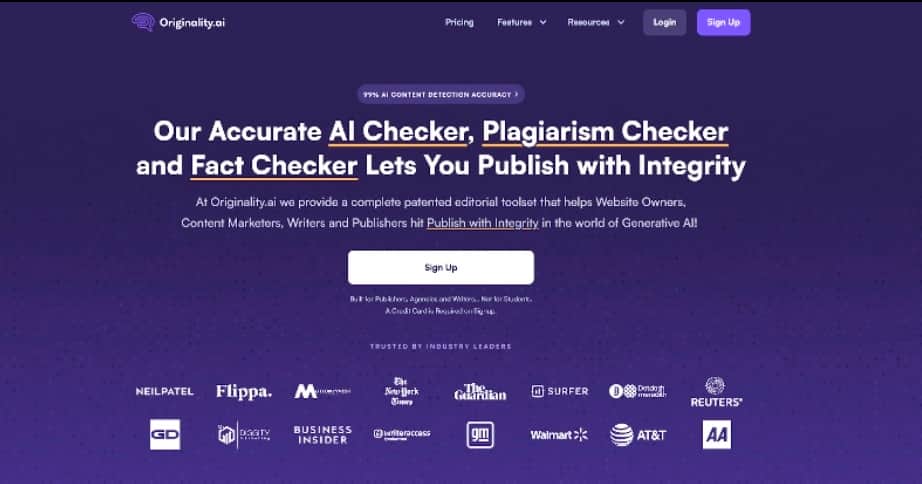
Originality .ai is a go-to for digital marketers, publishers, and SEO experts. It supports team collaboration and includes both AI detection and plagiarism checks, making it ideal for content agencies managing multiple writers.
High detection accuracy
Chrome extension available
Detailed dashboard for team use
Its scans are fast and informative, and it’s frequently updated to keep up with evolving language models.
4. Copyleaks – Turnitin Alternative for Enterprises

Copyleaks caters to both educators and enterprises. It specializes in identifying paraphrased and translated AI content, something that traditional detectors often miss.
Supports multiple languages
API integrations for LMS and CMS
AI Grading tools included
It’s particularly useful for multilingual institutions or global teams that deal with diverse content formats.
5. ZeroGPT – Lightweight and Fast

If you need a free, no-frills AI detector for quick checks, ZeroGPT is a solid pick. It’s straightforward, providing immediate detection percentages and a breakdown of AI vs human content.
Simple interface
Free usage with generous limits
Minimal technical jargon
Though not as detailed as some premium tools, it works well for surface-level screening.
6. Writer AI Content Detector – For Marketing Teams
Writer is best known as a writing assistant, but its AI content detector is a hidden gem for marketing and content operations teams. It integrates seamlessly into workflows to screen drafts before publication.
Built-in to Writer platform
Helps refine tone and clarity
Good for collaborative environments
While its detection depth isn’t on par with GPTZero or uPass AI, it adds value through contextual suggestions.
7. Crossplag – Balanced for AI and Plagiarism Detection
Crossplag combines the benefits of AI detection and plagiarism scanning, making it particularly useful in academic settings. Its focus is on ensuring both originality and human authorship.
Detailed score analysis
Multilingual support
Built for institutions
Its dashboard also allows batch uploads, making it efficient for large-scale review processes.
8. Sapling AI Detector – Enterprise-Ready NLP Tool
Sapling is an enterprise NLP platform that includes an AI detector as part of its larger suite. It’s used by customer support teams, HR departments, and enterprise content creators to ensure human-like communication.
Enterprise-grade NLP tools
Focused on business communication
Helps maintain brand tone
It’s less suitable for casual or educational users but great for professional environments.
9. Winston AI – Built for Educators and Institutions
Winston AI is tailored to meet the demands of teachers and academic institutions. Its primary aim is to flag AI-generated essays and academic submissions.
Supports various document formats
Offline scanning available
Clear and easy-to-read reports
It's particularly good at identifying texts generated by ChatGPT, Claude, and similar tools.
10. Kazan SEO AI Detector – SEO-Centric Tool
Kazan SEO provides a lightweight AI detection solution designed for SEOs and content strategists. It analyzes content from an algorithmic perspective to determine if it might be flagged by Google or other platforms.
SEO-specific analysis
Integration with SEO scoring tools
Focus on algorithm safety
Its detection model is practical for web content audits but less suited for academic checks.
Final Thoughts
Choosing the right AI detector depends on your specific needs. Whether you’re a student submitting academic work, a marketer checking SEO blogs, or an editor verifying submissions, there's a suitable tool for you. uPass AI remains the standout option for users who not only need to detect AI-generated content but also need to bypass AI detection using its undetectable AI rewriter.
As AI-generated content continues to blur the lines of authorship, tools like these will become indispensable. Use them wisely to ensure transparency, originality, and compliance in all your written communications.

