Top 5 Automated Inspection & Testing Apps Revolutionizing Quality Control
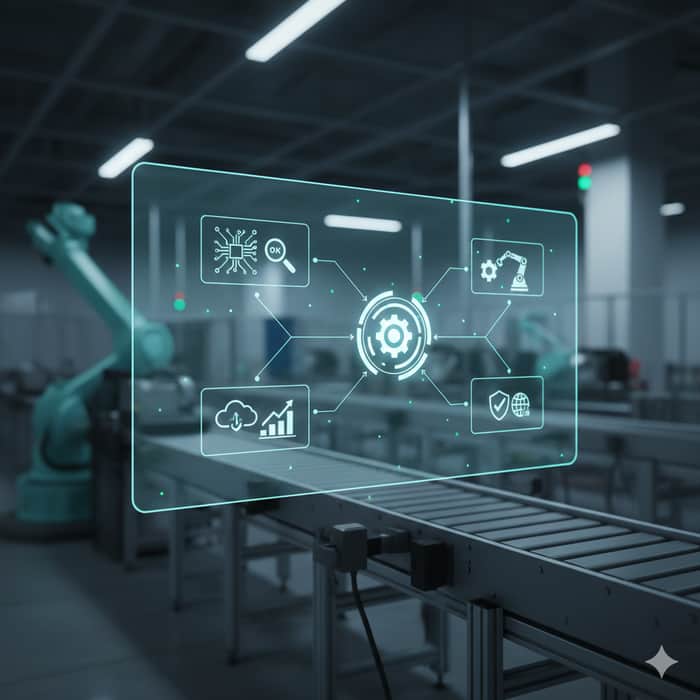
Boost quality control with AI and automation. Discover the 5 best apps for visual inspection, PCB testing, and mobile app QA in manufacturing. Learn key features, use cases, and how to build your own.
Introduction
Quality is not just a goal; it's a non-negotiable imperative. The shift from manual, human-dependent inspection to automated, data-driven systems is revolutionizing quality control across manufacturing, electronics, and logistics. Automated inspection and testing apps, powered by Artificial Intelligence (AI) and machine learning, are at the forefront of this transformation. These sophisticated systems offer unparalleled speed, accuracy, and consistency, enabling businesses to detect defects, ensure compliance, and optimize production lines with minimal human intervention. This article explores the leading platforms in this space and provides a roadmap for developing a custom automated inspection solution.
Overview of Automated Inspection and Testing
Automated inspection and testing refer to the use of computer-based systems, often integrated with cameras, sensors, and AI, to examine products or components for defects, deviations, or non-conformities without direct human involvement. These systems can analyze visual data, measure dimensions, verify assembly, and perform functional tests at speeds and accuracies far beyond human capability. The core technologies driving this field include machine vision, deep learning, and robotic process automation (RPA), which together create a robust framework for 24/7 quality assurance.
Importance of AI and Automation in Quality Control
The integration of AI elevates automated inspection from simple rule-based checking to intelligent analysis. Traditional systems struggle with complex or variable defects, but AI models, trained on thousands of images, can learn to identify subtle anomalies, classify defect types, and even adapt to new variations over time. This leads to:
-
Higher Accuracy: Drastic reduction in false positives and missed defects.
-
Increased Throughput: Inspection at production line speeds.
-
Cost Savings: Lower labor costs and reduced waste from faulty products.
-
Data-Driven Insights: Continuous collection of quality data for process improvement.
Here Are The Top 5 Automated Inspection & Testing Apps
HeadSpin
The HeadSpin "app" is not a single downloadable program but a comprehensive, cloud-based SaaS platform accessible via a web browser. Its core functionality is delivered through this web interface, where users can remotely access and control a global grid of real mobile devices. While it may offer mobile apps for on-the-go monitoring, the primary application is the web portal, which serves as the command center for scheduling tests, analyzing AI-driven performance data, and reviewing session recordings from anywhere in the world.
-
Key Features: It offers real-time testing on thousands of real devices across the globe, AI-driven performance analysis, and automated testing of audio, video, and network connectivity.
-
Use Cases: Ideal for testing mobile apps used for field service reporting, inventory management, or controlling IoT devices on the factory floor. It ensures these companion apps are reliable and performant.
-
Strengths and Differentiators: Its global device infrastructure and data science capabilities help pinpoint complex issues related to location, network conditions, and device fragmentation that other tools miss.
Jidoka
The Jidoka application is a purely web-based, no-code platform. Users interact with it entirely through their internet browser, with no complex software to install or manage on local machines. The application interface is designed for simplicity, allowing quality engineers to drag-and-drop images to create projects, train AI models with a few clicks, and manage inspections. Once trained, the inspection models can be deployed to edge devices on the factory floor, but the central management and model creation all happen within the streamlined web app.
-
Overview: This SaaS platform allows users to build and deploy computer vision models for defect detection simply by uploading images of "good" and "bad" products.
-
AI Visual Inspection Capabilities: Its no-code interface enables quality engineers to train robust models that can handle complex backgrounds and identify a wide range of defects, from scratches and dents to misassembled parts.
-
Industry Applications: Highly versatile, it is used in automotive, pharmaceutical, textile, and food and beverage industries for tasks like surface inspection, packaging verification, and assembly checks.
Cognex In-Sight
The application for Cognex In-Sight is a hybrid ecosystem. The intelligence is embedded directly into the rugged, standalone "smart camera" hardware deployed on the production line. To configure these cameras, users run the In-Sight Explorer software, a powerful Windows-based desktop application on a PC. This PC application is used to develop, debug, and deploy the inspection jobs (combining both traditional vision tools and deep learning) to the camera, which then executes the inspection autonomously without needing a continuous PC connection.
-
Deep Learning and Smart Camera Integration: The system uses deep learning for complex tasks like classifying objects and reading poorly marked codes, while traditional vision tools handle precise measurements and guidance.
-
Inspection Technologies: It excels at OCR (Optical Character Recognition), presence/absence checks, and part location, even in challenging lighting conditions.
-
Benefits for Manufacturing: Known for its ruggedness and reliability, the In-Sight platform is designed for high-speed production environments, reducing downtime and ensuring consistent quality in electronics, automotive, and consumer goods manufacturing.
Mirtec AOI Systems
The Mirtec application is a tightly integrated hardware and software system. The primary application is a specialized Windows-based software suite installed on a industrial PC that is directly connected to the high-resolution 3D cameras and lighting controllers of the AOI machine. This is not a cloud service but a robust, localized application designed for the high-speed, real-time demands of a Surface-Mount Technology (SMT) production line. It provides the interface for programming inspection criteria, monitoring results, and generating detailed reports.
-
Automated Optical Inspection Technology: Their systems are engineered for high-speed, high-accuracy inspection of Printed Circuit Boards (PCBs) and assemblies.
-
3D Profiling and High-Resolution Imaging: A key differentiator is their advanced 3D inspection capability, which can measure component height, coplanarity, and solder paste volume with exceptional precision, going beyond 2D image analysis.
-
Electronics Manufacturing Use Cases: Primarily used to detect soldering defects, missing or misoriented components, and board shorts/opens during the SMT (Surface-Mount Technology) assembly process.
Averroes ai
The Averroes ai platform is a modern, AI-powered application built on a flexible architecture. It is primarily offered as a cloud-based SaaS solution, accessible through a web browser for centralized model management, data analytics, and dashboard viewing. However, recognizing the needs of real-time production, its inspection "brains" are deployed as lightweight software agents on edge computing devices located directly on the factory floor. This allows for high-speed inference while leveraging the cloud for continuous learning and centralized oversight.
-
AI-Powered Visual Inspection: It leverages state-of-the-art computer vision algorithms that can be trained with minimal data, accelerating the deployment process.
-
Speed and Precision: The platform is built for real-time analysis, capable of inspecting thousands of units per hour with sub-pixel accuracy, catching even the most minute defects.
-
Versatile Industry Applications: Its flexibility allows it to be deployed in diverse settings, from inspecting machined metal parts for aerospace to verifying the integrity of pharmaceutical blister packs.
Automated Inspection and Testing App Development Pricing and Timeline
For businesses with unique processes, an off-the-shelf solution may not suffice. Developing a custom automated inspection app allows for tailoring to specific needs, but requires careful planning around budget and schedule.
Cost Breakdown of Automated Inspection App Development
The cost can vary widely, typically ranging from $50,000 for a basic Minimum Viable Product (MVP) to $300,000+ for a full-featured, enterprise-grade application. Key cost drivers include:
-
AI/ML Model Development: The most complex and variable cost, depending on the type of defects and required accuracy.
-
Hardware Integration: Costs associated with connecting to cameras, sensors, PLCs, and robotic systems.
-
Platform (iOS, Android, Web): While many industrial systems are web-based, companion apps for field technicians are crucial. This is where robust Android App Development Services are often sought, given the prevalence and affordability of Android devices in industrial settings.
-
UI/UX Design: Creating an intuitive interface for operators and quality managers.
-
Backend Infrastructure: For data storage, analytics, and user management.
Typical Development Timelines
A standard project follows a phased approach:
-
Discovery & Planning (2-4 weeks): Requirement gathering, feasibility analysis, and tech stack selection.
-
UI/UX Design (3-6 weeks): Wireframing and prototyping the application.
-
Core Development (12-20 weeks): Building the backend, frontend, and AI models.
-
Testing & QA (4-8 weeks): Rigorous testing for functionality, performance, and accuracy.
-
Deployment & Support (Ongoing): Launching the app and providing maintenance.
Factors Influencing Cost and Time
-
Complexity of Defects: Simple color checks are cheaper than classifying ten different types of cosmetic scratches.
-
Data Availability: The need to collect and label thousands of images adds time and cost.
-
Real-time Requirements: High-speed production lines demand more optimized and expensive software architecture.
-
Team Location and Structure: Many companies choose to Hire App Developers from India to access a deep pool of talent at a competitive cost, which can significantly reduce development expenses without compromising on quality.
Automated Inspection And Testing App Development Services
In the context of automated inspection, Android apps serve as powerful mobile interfaces for monitoring production stats, reviewing defect images on the go, and receiving real-time alerts. Specialized Android App Development Services focus on creating robust, secure, and offline-capable applications that can integrate with central inspection systems, providing flexibility and mobility to quality control processes.
Hire App Developers from India
For businesses looking to develop a custom inspection solution, the global talent pool offers a strategic advantage. To Hire App Developers, it has become a popular model for accessing highly skilled professionals in AI, machine learning, and mobile app development. These developers often bring experience from global projects, offering a cost-effective path to building a sophisticated application without sacrificing expertise or innovation.
Expert App Devs: Your Partner in App Development
Navigating the complexities of building an automated inspection system requires a partner with technical depth and industry insight. This is where a company like Expert App Devs proves invaluable experience. As a specialist in end-to-end application development, we can manage the entire project lifecycle,from conceptualizing the AI model and developing a scalable backend to creating intuitive mobile interfaces for Android. Partnering with an experienced firm ensures that your custom solution is built on a solid technological foundation, delivered on time, and aligned with your specific quality control objectives.
Best Fit for Different Industries:
-
Electronics: Cognex In-Sight and Mirtec AOI are industry standards.
-
General Manufacturing (Auto, Pharma, Food): Jidoka and Averroes ai offer great flexibility.
-
App-Driven Field Operations: HeadSpin is essential for QA of the mobile component.
Conclusion
The adoption of automated inspection and testing is no longer a luxury but a necessity for maintaining a competitive edge. Platforms like HeadSpin, Jidoka, Cognex, Mirtec, and Averroes ai offer powerful, ready-made solutions for a wide range of quality control challenges. However, for businesses with unique workflows or highly specific requirements, investing in a custom-developed application is the path to true optimization. By understanding the development costs, timelines, and leveraging global talent pools,including the option to Hire App Developers from India, companies can successfully build a bespoke inspection system. As AI continues to evolve, the future of automated inspection points towards even greater adaptability, predictive quality analytics, and fully autonomous self-correcting production lines, making now the time to invest in this transformative technology.
