Top 5 BlaBlaCar Clone App Development Companies
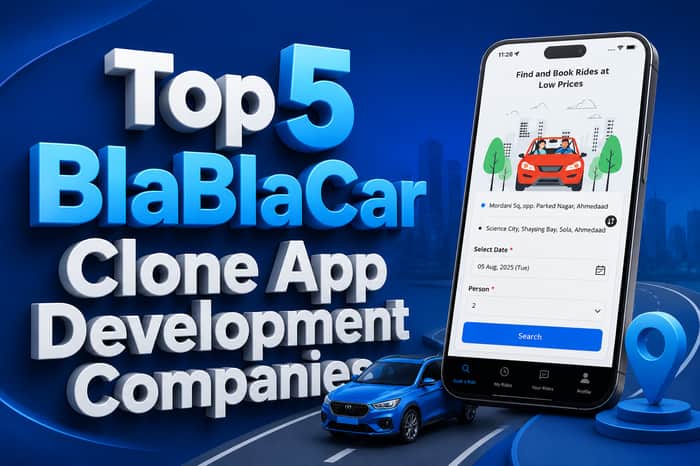
The rise of shared mobility has created new opportunities for entrepreneurs looking to build digital transportation businesses. Carpooling platforms connect passengers who need affordable transportation with drivers who have available seats, helping users share travel costs while making better use of existing vehicles.
BlaBlaCar is one of the best-known examples of this business model. Its success has encouraged entrepreneurs to explore BlaBlaCar-style ride-sharing platforms with customized features, regional pricing, multiple payment methods, real-time tracking, driver verification, and flexible business models.
For startups, however, developing a carpooling application from scratch can require considerable time, technical expertise, and investment. A BlaBlaCar clone app can provide an alternative approach by offering a ready-made or customizable foundation that can be adapted to a specific market.
In this article, we explore five BlaBlaCar clone app development companies and the features, services, and factors businesses should consider before selecting a development partner.
What Is a BlaBlaCar Clone App?
A BlaBlaCar clone app is a ride-sharing or carpooling platform designed around a similar business concept to BlaBlaCar. It allows drivers to publish upcoming journeys while passengers can search for suitable rides, reserve available seats, and communicate with drivers.
A typical platform can include separate experiences for passengers and drivers, along with an administrative dashboard for managing users, rides, payments, commissions, complaints, and reports.
Modern carpooling solutions can also include features such as:
- Ride publishing and ride search
- Route and destination selection
- Seat availability management
- Online seat booking
- Real-time GPS tracking
- Driver and passenger profiles
- Ratings and reviews
- In-app chat or calling
- Online payment integration
- Wallet functionality
- Push notifications
- Driver verification
- Booking history
- Cancellation management
- Commission management
- Admin analytics
- Multi-language and multi-currency support
The objective is not simply to reproduce another application's interface. A successful clone app should adapt the underlying business model to the target audience while providing a unique brand, user experience, pricing structure, and feature set.
Why Start a Carpooling Business With a Clone App?
Building a ride-sharing platform from the ground up can involve planning, UI/UX design, backend development, mobile application development, testing, deployment, and ongoing maintenance.
A pre-built clone solution can reduce the amount of initial development work. For example, some providers offer white-label applications that can be customized with a business's logo, branding, payment methods, languages, currencies, and other requirements.
The current market also provides evidence of continuing interest in carpooling technology. Industry-focused development resources highlight affordability, reduced travel costs, better vehicle utilization, and environmental benefits as important reasons for the popularity of shared transportation.
However, entrepreneurs should evaluate a provider carefully rather than selecting a company only because it advertises a "clone script."
Top 5 BlaBlaCar Clone App Development Companies
1. V3Cube
V3Cube is a prominent option for businesses looking for a ready-made or white-label clone app solution. The company has been operating since 2005 and focuses heavily on on-demand and clone application development.
Its BlaBlaCar clone solution is designed around peer-to-peer carpooling and ride sharing. The platform can support features such as ride publishing, ride discovery, booking, real-time tracking, in-app communication, payments, wallet functionality, and multiple stopover points.
V3Cube's website also states that it has launched more than 1,900 applications and offers ready-to-launch solutions across multiple categories, including carpooling applications.
Key strengths
- Ready-made BlaBlaCar-style carpooling solution
- iOS and Android applications
- Website and admin panel
- Ride publishing and booking
- Real-time tracking
- Online payments
- Wallet functionality
- White-label customization
- Multi-language and multi-currency capabilities
- Licensed source-code options
- Ongoing support and updates
V3Cube can be particularly suitable for entrepreneurs who want to launch a branded ride-sharing business without spending the same amount of time developing every component from scratch.
2. BlaBlaCarClone
BlaBlaCarClone.com focuses specifically on carpooling and ride-sharing software. Its solution is positioned as a white-label platform that allows entrepreneurs to launch a branded P2P ride-sharing business.
The company highlights features including ride publishing, ride discovery, profiles, payments, wallets, real-time tracking, in-app calling, and multiple stopover points. It also promotes iOS and Android applications alongside website and admin-panel functionality.
Key strengths
- Specialized carpooling solution
- White-label application
- Passenger and driver functionality
- Ride publishing
- Ride booking
- Real-time tracking
- Wallet and payment options
- Admin management
- Website support
- Branding customization
For entrepreneurs who want a highly focused carpooling product rather than a broader on-demand application portfolio, a specialized provider can be worth considering.
3. OnDemandClone
ondemandclone.com offers BlaBlaCar-style app development focused on intercity ride sharing and carpooling. Its platform is designed around connecting drivers and passengers through a ride-sharing marketplace.
The company's solution includes route search, ride matching, seat availability management, payment integration, commission automation, chat, ratings and reviews, and analytics dashboards. It also describes its platform as scalable across Android, iOS, and web environments.
Key strengths
- Intercity ride-sharing focus
- Intelligent ride matching
- Seat management
- Secure payment integration
- Commission automation
- In-app communication
- Ratings and reviews
- Analytics dashboards
- Android, iOS, and web support
OnDemandClone may be a useful choice for businesses that want to develop a customized ride-sharing marketplace with a stronger focus on scalability and intercity transportation.
4. PeppyOcean
PeppyOcean is another company offering a BlaBlaCar-style clone application. Its solution is positioned for entrepreneurs who want to create a branded carpooling business using a ready-made application foundation.
5. AppScrip
AppScrip is another technology provider with experience in marketplace and mobility application development. Its published material on BlaBlaCar clone development discusses the carpooling business model, mobile applications, ride-sharing functionality, and the reasons entrepreneurs may consider entering the shared mobility market.
This comparison is a starting point rather than a formal industry ranking. Features, pricing, timelines, and customization options can change according to the selected package and project requirements.
Essential Features of a BlaBlaCar Clone App
Choosing a development company is only one part of the process. Entrepreneurs should also understand which features are necessary for a successful carpooling platform.
1. User Registration
Passengers and drivers should be able to create accounts using email, phone numbers, or supported social-login methods.
A profile can include:
- Name
- Profile image
- Contact details
- Rating
- Travel preferences
- Verification status
- Ride history
2. Driver Ride Publishing
Drivers should be able to publish a journey by entering information such as:
- Starting location
- Destination
- Travel date
- Departure time
- Available seats
- Price per seat
- Vehicle information
- Stopover locations
This feature forms the foundation of a peer-to-peer carpooling marketplace.
3. Ride Search
Passengers should be able to search available rides based on their preferred route and travel date.
Filters can include:
- Departure time
- Price
- Number of seats
- Driver rating
- Vehicle type
- Pickup location
- Drop-off location
4. Seat Booking
Once a passenger finds a suitable ride, they should be able to select available seats and complete the booking process.
Automatic seat availability updates can help prevent double bookings.
5. GPS and Route Tracking
Location technology can help users understand pickup points, routes, and estimated travel progress.
Real-time tracking can also improve transparency between passengers and drivers.
6. Online Payments
A reliable payment system is essential for monetizing a ride-sharing platform.
Depending on the target market, businesses can integrate:
- Credit and debit cards
- Digital wallets
- Bank-based payment methods
- Local payment gateways
- Other supported online payment options
7. Ratings and Reviews
After a completed trip, passengers and drivers can rate each other.
A transparent rating system can encourage responsible behavior and help users select trusted members of the community.
8. Communication
In-app chat or calling can allow passengers and drivers to coordinate pickup locations and travel details without unnecessarily exposing personal contact information.
9. Notifications
Push notifications can inform users about:
- New bookings
- Booking confirmations
- Ride cancellations
- Payment updates
- Driver arrival
- Schedule changes
- Messages
10. Admin Dashboard
The administrator should have centralized control over the marketplace.
An admin panel can provide:
- User management
- Driver management
- Ride management
- Booking management
- Payment monitoring
- Commission management
- Reviews and complaints
- Promotional management
- Reports and analytics
How Much Does a BlaBlaCar Clone App Cost?
The development cost depends heavily on the type of solution selected.
A basic ready-made clone may require a lower initial investment because the underlying application has already been developed. A highly customized solution can cost considerably more because additional design, backend functionality, integrations, testing, and development are required.
Important cost factors include:
Platform Selection
Developing Android only, iOS only, or both platforms affects the overall budget.
UI/UX Design
A simple interface generally requires less design work than a completely customized user experience.
Feature Set
Advanced functions such as AI-based matching, automated pricing, advanced analytics, video verification, sophisticated route optimization, and complex commission systems can increase development costs.
Third-Party Integrations
Payment gateways, maps, SMS providers, identity verification, analytics, cloud services, and other APIs may add development and recurring costs.
Customization
Changing the application according to a specific business model can require additional development.
Deployment
App Store and Google Play deployment, server configuration, domain setup, security configuration, and production testing should also be considered.
Instead of selecting a company based solely on the lowest quotation, businesses should compare the complete package and calculate the total cost of ownership.
How to Choose the Right BlaBlaCar Clone Development Company
Before signing a contract, evaluate potential providers using several criteria.
Check Their Portfolio
Look for real examples of mobility, carpooling, taxi, marketplace, or on-demand applications.
Request a Live Demo
A live demo can help you evaluate the actual booking flow, interface, admin panel, and application performance.
Verify Feature Coverage
Create a feature checklist before comparing proposals. This prevents important requirements from being overlooked.
Ask About Source Code
Clarify whether you receive licensed source code, full ownership, or access under specific licensing conditions.
Understand Customization
Ask which features can be changed and whether customization is included in the quoted price.
Review Support Terms
Clarify:
- Bug-fix support
- Maintenance
- Updates
- App-store support
- Server support
- Technical assistance
Check Scalability
The application should be capable of supporting increasing numbers of users, rides, cities, and transactions.
Consider Security
The provider should follow appropriate practices for protecting user accounts, payment information, location data, and business data.
Revenue Models for a Carpooling App
A BlaBlaCar-style platform can use several monetization strategies.
Commission Per Booking
The platform can charge a percentage or fixed fee for every completed booking.
Subscription Plans
Frequent drivers or business users can be offered monthly or annual plans.
Featured Rides
Drivers or partners can pay to promote their rides.
Advertising
Relevant businesses can advertise services to users through the platform.
Premium Services
Additional services such as priority support, verified profiles, corporate accounts, or advanced visibility can be offered as paid features.
The best model depends on the target market, competition, user behavior, and operating costs.
Final Thoughts
The growing interest in shared mobility creates opportunities for entrepreneurs to build regional, national, and international carpooling platforms. A BlaBlaCar clone app can provide a practical starting point for businesses that want to enter this market without developing every component from scratch.
Among the companies discussed, V3Cube stands out for its dedicated clone-app approach and BlaBlaCar-style carpooling solution, while BlaBlaCarClone focuses specifically on white-label carpooling technology. OnDemandClone emphasizes intercity ride sharing and intelligent matching, PeppyOcean provides customizable clone-app development, and AppScrip brings broader marketplace and mobility development experience.
Ultimately, the best development partner depends on your budget, target geography, required features, customization needs, launch timeline, and long-term growth strategy.
Before choosing a provider, compare live demos, feature lists, source-code terms, scalability, security, maintenance, and total ownership costs. A well-planned BlaBlaCar-style platform should do more than imitate an existing service—it should provide a better experience tailored to the needs of your target users and market.
