Top 5 Marine Equipment Inspection Apps for Digital Vessel Maintenance
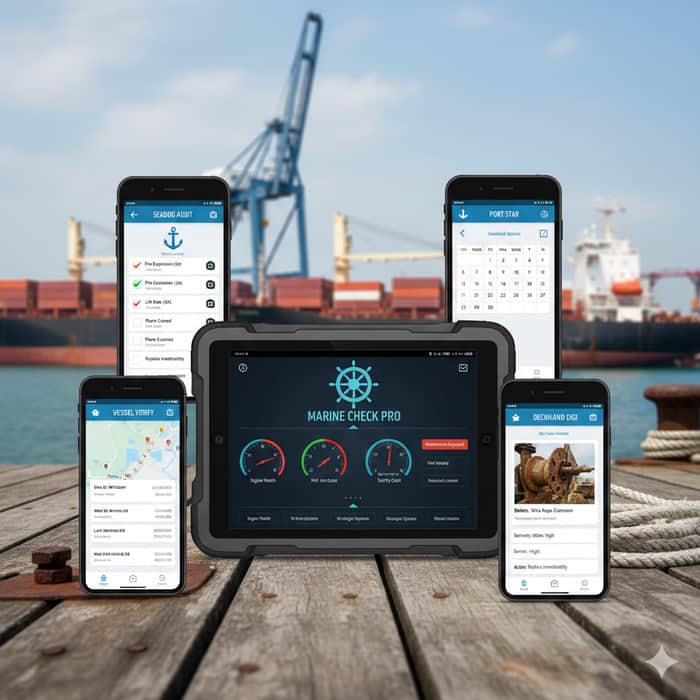
Find the best marine equipment inspection app for your fleet. Compare DNV ShipManager, SERTICA, and IRT V2, analyze ROI, and explore custom development options.
1. Introduction: The Shift to Digital Vessel Maintenance
For decades, the vital task of inspecting marine equipment—from engine room components to lifesaving apparatus—was dominated by paper-based checklists and clipboards. This analog approach, while traditional, created significant bottlenecks: handwritten forms were prone to error, data was siloed, and the delay between inspection, reporting, and corrective action often stretched into weeks. The maritime industry, facing ever-tightening regulatory scrutiny and pressure for operational efficiency, recognized the need for change.
The Value Proposition of Mobile Inspection Apps is now clear: moving inspections to dedicated mobile platforms allows immediate, accurate data capture at the source. This digital shift doesn't just replace paper; it fundamentally changes the maintenance workflow, offering real-time visibility, faster compliance reporting, and immediate issue resolution, which are essential for maintaining a modern, safe, and efficient global fleet.
2. Defining Digital Excellence
A modern marine inspection application must deliver more than just a digital form. It must be built to function reliably in the harsh, often isolated operational environment of a vessel.
Key Features Defining Modern Inspection Apps
High-performing apps share several non-negotiable features:
-
Offline Functionality and Data Synchronization: Crew members must be able to complete detailed inspections deep within the vessel (like engine rooms or cargo holds) where connectivity is non-existent. The app must securely store all data locally and automatically synchronize it with shore offices the moment a stable connection is re-established.
-
Photo, Video, and Voice Note Evidence Capture: A simple "Fail" or "Pass" is insufficient. Inspectors need to capture rich media evidence (timestamped and geotagged) to clearly document non-conformities, reducing ambiguity and speeding up the corrective action process ashore.
-
Customizable Checklists and Template Libraries: The app must support customization to handle diverse vessel types (tankers, bulkers, LNG carriers) and different inspection regimes (PSC, ISM, internal audits, Vetting, SIRE 2.0).
-
Non-Conformity (NC) and Corrective Action (CA) Tracking: Findings must be automatically logged, categorized, and workflowed, creating an auditable trail that links the initial observation to the root cause analysis and final close-out.
-
Integration with Planned Maintenance Systems (PMS): Seamless integration is crucial. Inspection findings that require maintenance must automatically generate work orders in the vessel’s PMS, eliminating manual data entry and ensuring immediate scheduling.
3. Top 5 Marine Equipment Inspection Apps
The market offers several powerful solutions, often linked to broader fleet management suites:
-
App 1: DNV ShipManager QHSE Mobile Inspection App: This app’s core strength is its tight Integration with the full DNV ShipManager QHSE suite. It allows users to handle QHSE reporting, incidents, and audits online or offline, ensuring that inspection data flows directly into the safety and quality management system, providing holistic compliance visibility across the entire fleet.
-
App 2: SERTICA Inspection App (by RINA): The SERTICA platform is a comprehensive fleet management solution, and its inspection app is frequently highlighted for its focus on SIRE 2.0 compliance and audit management. It helps vessels standardize inspection responses to meet the stringent requirements of oil major vetting programs.
-
App 3: IRT V2 (MariApps Marine Solutions): Known as the Inspection Reporting Tool, IRT V2 emphasizes mobility and real-time data accuracy for QHSE. It is built on the robust smartPAL platform and is designed for an intuitive user interface, allowing inspectors to capture detailed findings, including audio commentary, on the move.
-
App 4: TAMS Remote Vessel Inspection: TAMS focuses on leveraging technology to enable remote audits and shore-to-ship collaboration. Its inspection capabilities are enhanced by features that support live video feeds or remote guidance during physical inspections, reducing the need for costly physical travel by auditors.
-
App 5: Marine Vessel Inspection Audit (JRS Innovation): This app is often praised for its simplicity and versatility across all vessel types and instant PDF report generation. It is particularly valuable for smaller operations or third-party surveyors needing a standalone, user-friendly tool to quickly document inspections and generate professional reports for clients.
4. Operational Impact and Target Users
Digital inspection tools are not just IT investments; they are operational tools designed to enhance safety and regulatory performance across multiple user groups.
Who is it For: Identifying the Core User Base
-
Ship Staff (Captains, Chief Engineers, Safety Officers): These are the primary users who benefit from streamlined, efficient data capture and automatic linkage to maintenance routines.
-
Shore Management (Superintendents and Fleet Managers): These users gain immediate, standardized, and auditable data for trend analysis, risk assessment, and resource allocation.
-
Third-Party Auditors and Surveyors: The apps provide a consistent methodology for collecting and presenting evidence, leading to faster, less subjective, and more professional audit outcomes.
The ROI of Digitalization: Where Digital Inspection is Helpful
-
Ensuring Regulatory and Vetting Compliance (e.g., SIRE 2.0, PSC): The ability to instantly generate verifiable reports, complete with time-stamped evidence, significantly strengthens a vessel’s readiness for Port State Control (PSC) or critical vetting inspections.
-
Reducing Documentation Time and Administrative Burden: Crew time is freed up from transcribing handwritten notes and shuffling paperwork, allowing them to focus on core operational duties.
-
Enabling Predictive and Condition-Based Maintenance: Standardized data collection allows fleet management systems to trend component wear and fault patterns, moving maintenance planning away from fixed schedules toward predictive models.
-
Improving Fleet-Wide Data Standardization and Safety Culture: Consistent checklists and reporting fields enforce a single standard of inspection quality across all vessels, fostering a proactive safety culture based on transparent, high-quality data.
5. Understanding the Investment: Licensing and Costing
The investment in a robust marine inspection system typically involves several components, as detailed pricing is usually hidden behind customized quotes.
Common Pricing Models
-
Per-Vessel Licensing: A recurring annual fee charged per vessel in the fleet, often scalable with the size of the operation. This is common for smaller and medium-sized fleets.
-
Per-User Licensing: Charging based on the number of active crew members or shore staff who need access to the platform.
-
Enterprise Licensing: A custom negotiated fee covering an entire fleet and often bundling multiple software modules (Technical, Procurement, QHSE) into a single subscription.
Factors Influencing Total Cost of Ownership (TCO)
TCO extends beyond the license fee. It must account for: initial data migration from legacy systems, integration with existing shore-based ERP or accounting systems, crew training and deployment, and ongoing technical support for the mobile devices and the application itself. Complex integrations, especially with proprietary systems, significantly increase TCO.
6. Going Bespoke: Custom App Development
While the top-tier solutions are comprehensive, they may not fit every unique operation.
Custom Marine Equipment Inspection App Development: When Off-the-Shelf Isn’t Enough
Vessel operators should consider a bespoke solution when:
-
Criteria for Choosing a Bespoke Solution: They have highly specialized assets (e.g., drilling rigs, advanced research vessels) with unique inspection points not covered by standard templates, or if their corporate governance demands a proprietary data environment.
-
Unique Integration Needs (IOT, Proprietary Systems): If the inspection app needs to ingest data directly from onboard IoT sensors (for condition monitoring) or integrate deeply with an existing, non-standard proprietary management system.
Mobile App Development Services for Maritime: Key Considerations
Developing a custom app is a significant project. When seeking Mobile App Development Services, companies must understand the commitment. A moderate-to-complex inspection app typically costs between $50,000 and $120,000 and takes 4 to 6 months to develop an initial version. For efficient cross-platform development, many look to Flutter App Developers for Hire. Ultimately, Partnering with Expert App Devs ensures the necessary domain knowledge is applied with all the requirements in budget and timeline. The key considerations for successful development are:
- Required Expertise: The development partner must possess expertise in maritime regulations, cloud infrastructure (for sync and storage), and industrial-grade UX/UI design to ensure the app is usable by engineers in a demanding environment.
7. Conclusion: Navigating the Digital Future
The era of paper-based inspections is rapidly receding. The adoption of powerful mobile inspection apps is now a prerequisite for achieving operational excellence, maximizing asset reliability, and meeting strict regulatory standards.
Summary of Top App Strengths
Leading platforms like DNV ShipManager, SERTICA, and IRT V2 offer deep integration into comprehensive fleet management ecosystems, making them ideal for large operators focused on total system synergy. Simpler, versatile tools like the JRS Innovation app serve as excellent solutions for third-party auditors and smaller, agility-focused fleets.
Final Recommendations
The choice of solution rests on the complexity of the fleet and the existing technology infrastructure. For companies already using a major PMS suite, selecting the integrated mobile tool is often the most seamless path. For those starting their digital journey, prioritizing core features—especially offline functionality and easy NC/CA tracking—will provide the quickest return on investment and build the foundation for a data-driven safety culture.

Nice breakdown of how digital inspection tools are reshaping vessel maintenance. What really stood out to me here is how offline functionality plus rich media capture (photos, videos, voice notes) can drastically cut down the gap between onboard reality and shore-side decisions — especially when connectivity is limited at sea.
I’ve noticed that in other industries (like construction and aviation), the ability to integrate inspection findings directly into maintenance workflows or PMS systems can be a game changer for predictive upkeep and compliance tracking. Curious — for people here building or exploring inspection tools, do you think core integration with existing systems (ERP/PMS) matters more early on, or should the focus be on best-in-class field experience first?