Top 5 Marketing Priorities for 2026: Where Budgets Are Actually Moving
Marketing is returning to fundamentals: trust, measurable revenue impact, and defensible ROI.
AI reshapes discovery. Privacy limits tracking. CFO scrutiny increases. In 2026, marketing must prove business impact, not activity.
Based on expert insight and market signals, five priorities define budget allocation.
Full breakdown (with data and expert commentary) → Serpstat blog.
1. AI as Core Infrastructure
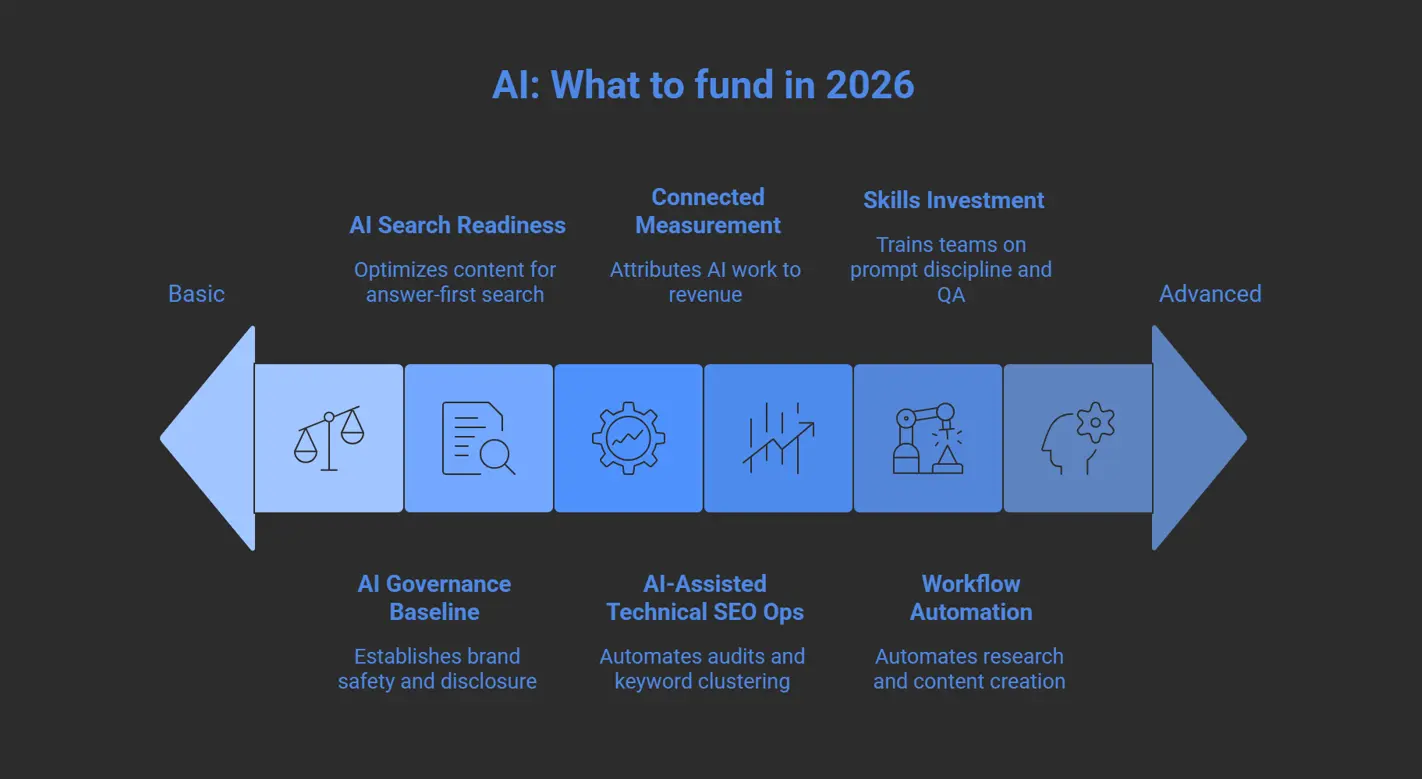
AI is no longer experimental. It supports research, creative iteration, SEO operations, and campaign optimization.
Together governance is no longer optional. Brand safety policies, disclosure standards, hallucination controls, and IP risk management must be embedded into workflows, not handled reactively.
According to research from McKinsey & Company, trust, effectiveness, and generative AI are defining priorities for European marketing leaders. Globally, AI ranks as the top focus area for 68% of CMOs.
Budget impact
AI shifts from pilot spend to baseline infrastructure. That changes planning:
- Tool consolidation becomes strategic;
- ROI must link to pipeline, revenue, retention;
- AI search visibility requires structured content and credibility signals.
Automation increases speed. Governance protects trust. High-performing teams treat both as essential.
Where digital marketing budgets are going in 2026
Expert insight
Volodymyr, PMM at Leafio AI, noted that AI visibility previously received limited attention because teams lacked measurement tools. Now that analysis is possible, companies are moving quickly to operationalize it.
Artem Melikyan, SEO Tech Lead at Netpeak, observed that in the second half of 2025, AI platforms and LLM-driven touchpoints began to significantly influence marketing strategy and budget distribution.
2. Distribution Across Organic and Paid Channels
What it looks like in 2026
Creating content is easier than ever. Capturing attention is not.
In a recent public Q&A, Sam Altman pointed out that as product creation becomes simpler, distribution and user attention become the real constraints.
Discovery is multi-surface: search, AI answers, social, video, creators, communities. Paid reach remains volatile.
Winning teams build a resilient system across three layers:
-
Strong organic foundations (technical performance, structured content, authority);
-
disciplined paid media with structured testing;
-
lifecycle infrastructure that converts traffic into revenue.
SEO now includes AI-era visibility: entities, proof-based pages, structured assets. Structured content, entity signals, case studies, expert assets, and proof-based pages increasingly influence how brands surface inside AI assistants and LLM-driven interfaces.
Presence across search environments becomes as important as classic rankings.
Budget implications
-
Depth beats spreading across too many channels;
-
creative testing becomes mandatory as paid volatility rises;
-
organic visibility reduces long-term dependency on ads;
-
misalignment between marketing, sales, and finance creates waste.
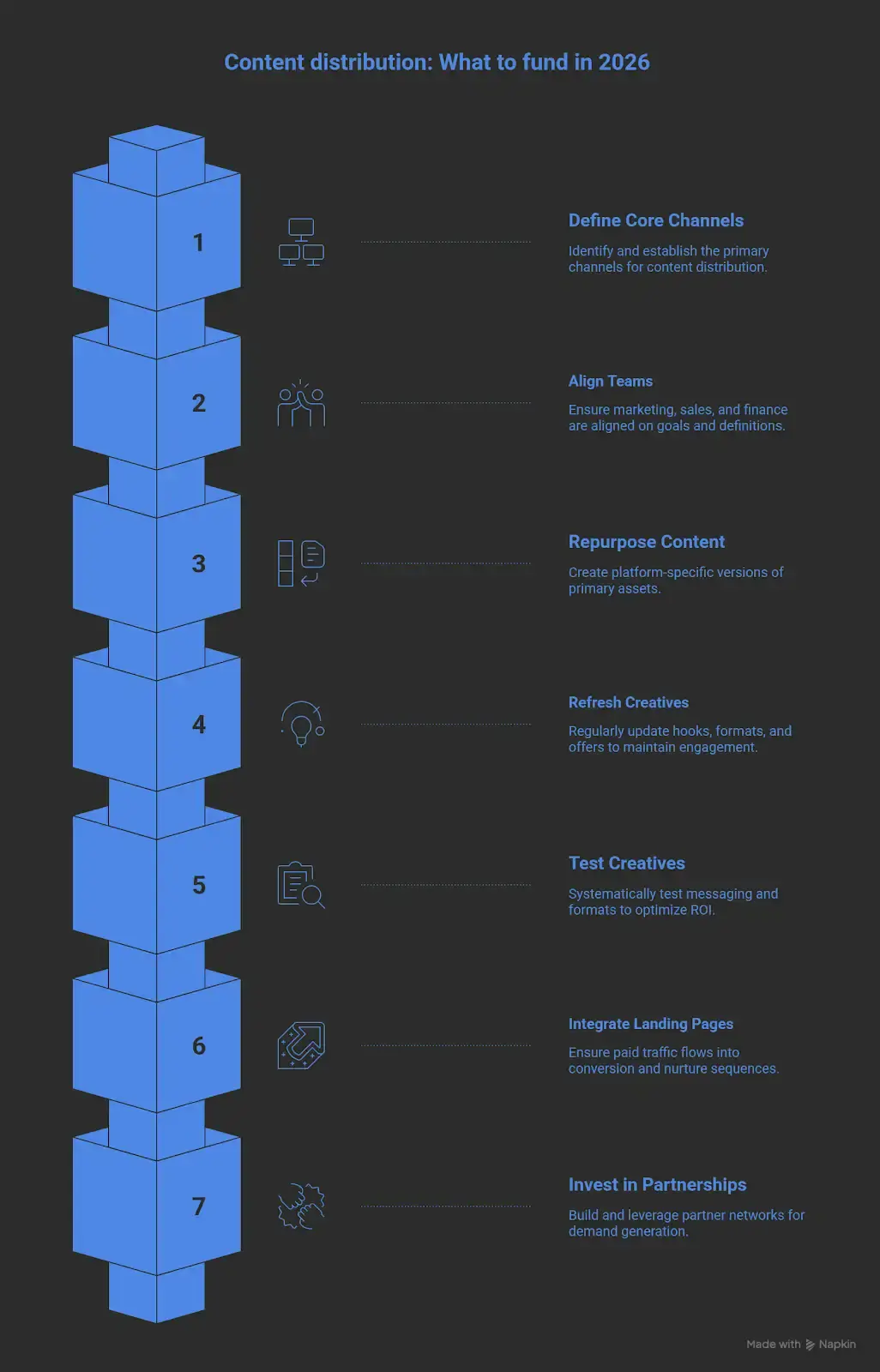
Where budgets move in 2026
-
Focus on a few core channels with defined roles;
-
align around shared revenue metrics and regular scale/hold/stop reviews;
-
build systematic content repurposing instead of duplicating assets;
-
refresh creatives predictably;
-
scale based on marginal ROI, not CTR;
-
integrate paid traffic into lifecycle systems;
-
invest in partnerships and referral ecosystems.
Integrated marketing is no longer experimental, it’s an operational necessity.
Expert insight
Artem Melikyan, SEO Tech Lead at Netpeak,has noted that integrated marketing models, where SEO, PPC, branding, and product teams operate as one system from planning through analysis, are no longer progressive experiments but operational necessities.
Serhii Solovyov, CEO of Solve Marketing, has observed that partnership channels often outperform paid traffic during demand slowdowns, reinforcing the value of diversified, relationship-driven distribution.
3. Conversion Optimization: Growth Without Buying More Traffic
What CRO means in 2026
CRO now covers the full journey: pricing clarity, onboarding, activation, checkout friction, lifecycle messaging, retention.
When marketing reaches 8–10% of revenue, even small inefficiencies materially impact profit.
Why this reshapes digital marketing budgets
-
CRO is the most controllable lever.
In unstable markets, you cannot control demand cycles, but you can control how efficiently traffic converts and retains. Improving conversion lifts performance without proportional budget increases. -
Finance scrutiny is intensifying.
Executive teams are no longer persuaded by traffic growth alone. Revenue per visitor, CAC payback, and retention curves carry more weight than impressions or clicks. -
Small inefficiencies scale into large losses.
As budgets grow, leakage becomes expensive. A poorly optimized onboarding sequence or unclear pricing page can quietly undermine paid and organic acquisition efforts.
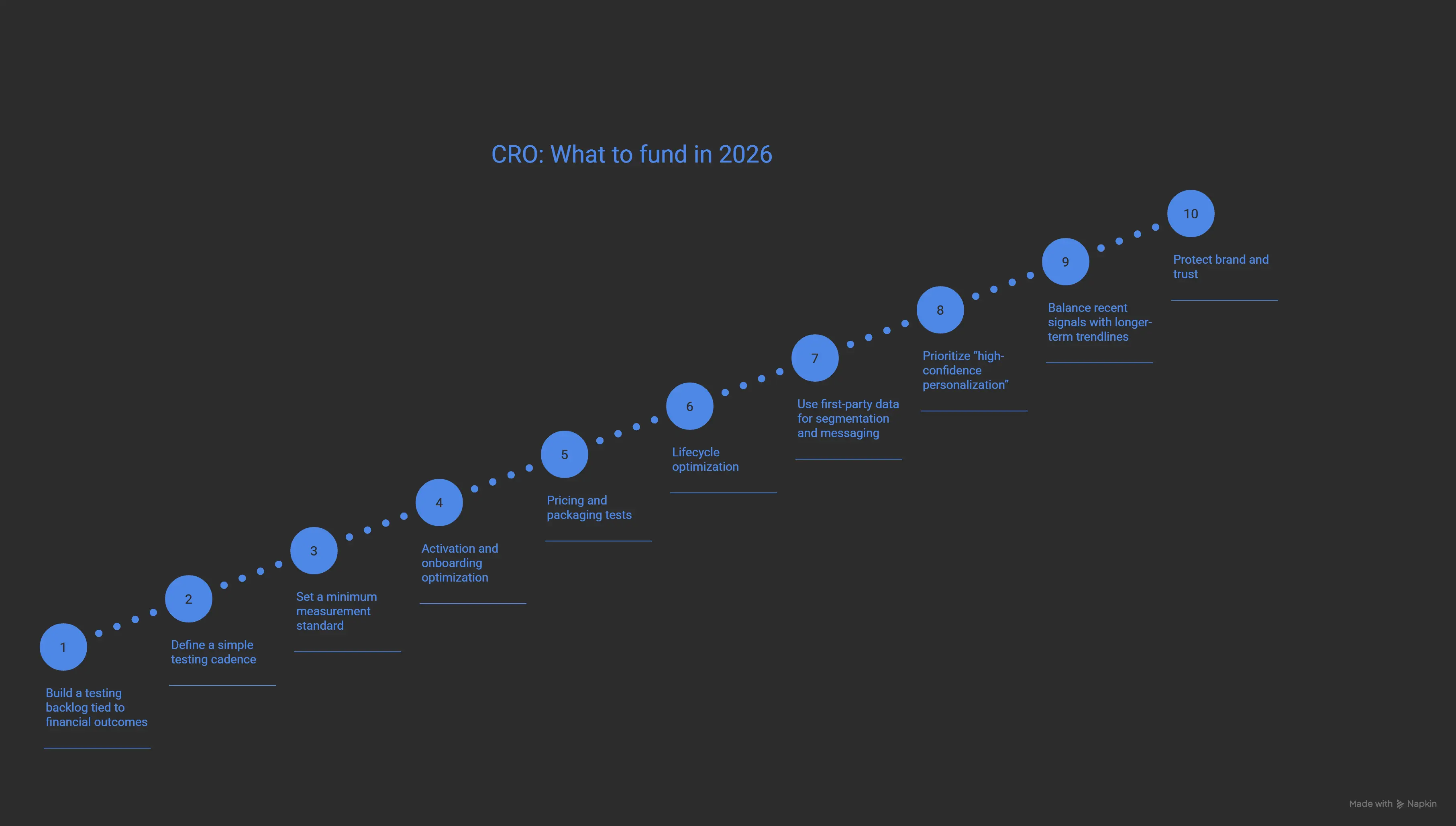
Investment focus in 2026
-
financially grounded testing backlogs;
-
structured experimentation cadence;
-
activation and time-to-value optimization;
-
pricing and packaging clarity tests;
-
lifecycle automation and segmentation using first-party data;
-
balance short-term signals with cohort analysis.
Expert insight
Artem Melikyan, SEO Tech Lead at Netpeak, has emphasized that the coming year is less about aggressive scaling and more about adaptive execution. Teams that respond quickly to behavioral shifts will outperform those simply increasing spend.
4. Data Analytics and Attribution
What it is in 2026
Marketing measurement is shifting from chasing perfect user-level data to actionable, decision-ready insights. Rising privacy rules, fragmented signals, and platform limitations are driving teams to lean on first-party data, server-side tagging, privacy-compliant matching, and modeled attribution.
Adoption trends, industry signals, and strategic implications
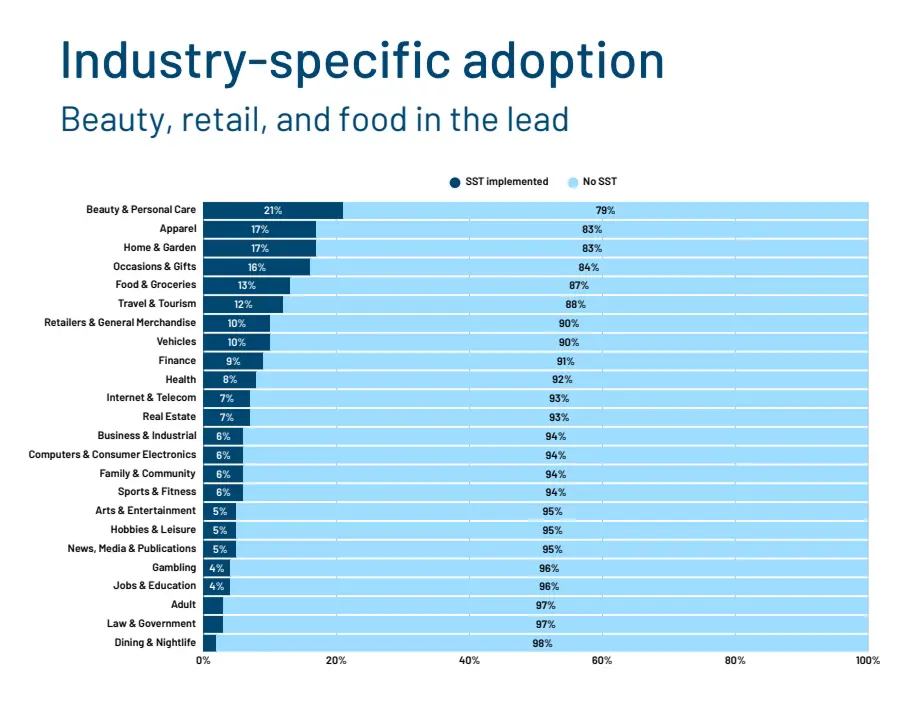
Jentis: Server-side Tracking Report 2026
Attribution in 2026 is not a single source of truth, but a defensible system that supports budget decisions.
Why it matters for budgets
-
You can’t scale what you can’t prove. Finance and leadership demand clear ROI per channel, not just activity stats.
-
Attribution is harder than ever. Fragmented signals across cookies, devices, and walled gardens make channel ROI debates longer and louder.
-
Discovery spans multiple surfaces. Visibility isn’t only Google rankings: brands must track search, AI answers, social, video, and communities to fund the right levers.
Where to invest your digital marketing budget in 2026
-
Upgrade first-party data capture: improve email flows, preference centers, and value exchanges to grow reliable audiences.
-
Implement server-side tracking: align consent mode, enforce event governance, and QA processes.
-
Connect CRM, website, and product data to create a minimum viable customer view linking touchpoints to pipeline, revenue, and retention.
-
Unified monitoring: track brand demand, organic visibility, paid efficiency, and key discovery surfaces in one dashboard.
-
Blended attribution: align to 1–2 executive-friendly KPIs. Don’t scale channels that can’t demonstrate a plausible path to business impact.
-
Stay agile: if market conditions shift, adjust quickly using customer insights and data-driven signals.
Expert insight
Artem Melikyan, SEO Tech Lead at Netpeak, noted that channels and tactics without clear business impact or adaptability will receive less attention, as teams prioritize transparency and defensible measurement in 2026.
5. Community as Owned Distribution
What it is in 2026
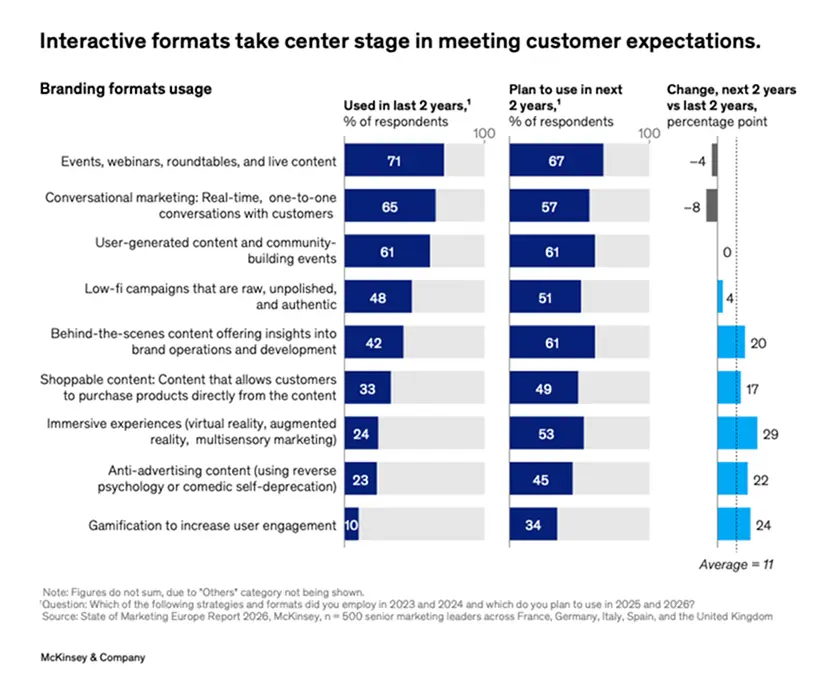
Community is no longer optional, it’s owned distribution and a trust engine. As AI mediates more interactions, people value transparency and real dialogue. A strong community keeps a brand human across longer decision cycles.
It also acts as a feedback system: objections, language, product gaps, and use cases surface naturally through conversation. Interactive formats now outperform passive content.
Why it matters for budgets
-
Trust scales growth. Real communities cut through AI noise.
-
Paid reach is unstable. Owned audiences reduce dependency on algorithms.
-
It improves economics. Retention, referrals, UGC, and faster learning loops lower CAC over time.
-
It creates compounding distribution. Members amplify content organically.
Where to invest in 2026
-
Choose one core hub (LinkedIn, Slack/Discord, Telegram, Reddit, etc.);
-
seed interactive and UGC-driven formats;
-
convert recurring questions into content and product improvements;
-
build lightweight tagging for insight capture;
-
implement advocacy and referral mechanics;
-
measure retention, engagement, referrals — not only leads.
Expert insight
María Sierra, Content manager at Pasquino Comunicación notes that UGC outperformed trend-driven formats, and in 2026 the focus shifts toward reactivating communities while deprioritizing underperforming social platforms.
Conclusion
Marketing in 2026 centers on practical measurement, connected data, and disciplined experimentation. Brand and performance must function as one integrated growth system, not competing silos.

The shift toward AI-visible content and community-as-distribution is the right read for 2026 most founders are still treating both as optional extras. Notion for the content and knowledge layer and Androva.ai for the channel execution has been the setup that kept distribution consistent without it becoming a separate full-time job.