Top Benefits of Using eCommerce Data Analytics Services for Online Retailers.
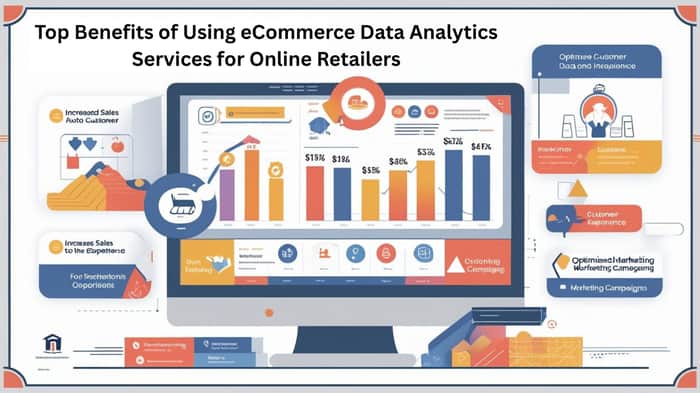
eCommerce data analytics has become a valuable ally for online merchants in the current digital era, when each click and scroll represents a possible sales opportunity. Nowadays, selling goods isn't the only goal; you also need to understand your clients, streamline your business processes, and make better judgments. Services for eCommerce data analytics are useful in this situation.
Data analytics may provide insights that increase sales, enhance client retention, and strengthen your competitive edge, regardless of whether you manage a multi-category e-store or a niche online boutique. Let's examine the main advantages of using eCommerce data analytics for your online store.
Source: https://www.retailgators.com/ecommerce-data-analytics.php
-
A better understanding and personalization of customers
A thorough grasp of consumer behaviour is essential to effective eCommerce. Online shops can use data analytics services to examine:
• Browsing patterns
• Purchase history
• Abandoned carts
• Product preferences
• Device and demographic data
Businesses can use this data to provide individualized shopping experiences, including targeted advertisements, personalized emails, and product suggestions. greater average order values, greater conversion rates, and improved customer satisfaction are all results of a more customized experience.
For instance, analytics systems can send a targeted email with a running shoe discount to a client who often looks at the shoes but hasn't bought any, encouraging them to do so. -
Enhanced Inventory Management
Your bottom line may suffer if you overstock or run out of inventory. Retailers may get up-to-date information on demand projections, seasonal trends, and inventory levels via data analytics. Better stock planning, less dead stock, prompt replenishment, and improved warehouse operations are all made possible by this.
Using historical data, seasonal patterns, and industry trends, predictive analytics systems also assist in predicting future demand. Better inventory turnover and lower holding costs result from this. -
Increase in Sales and Conversion Rates
Every type of traffic is different. eCommerce analytics assist in determining which goods convert the best and which marketing initiatives and channels are producing the most return on investment. Businesses may use these information to improve landing pages, optimize product listings, optimize ad spend, and remove sales funnel bottlenecks.
Additionally, businesses may experiment with website layouts, call-to-actions, or pricing tactics and select the most successful versions using data-driven A/B testing. -
Improved Pricing Techniques
A sale may be made or lost based on pricing. Retailers may create dynamic pricing models by using competitive price analytics to track market rates, rival pricing, and consumer behavior.
Benefits include:
• Real-time price adjustments
• Better profit margins
• Improved customer satisfaction with fair pricing
• Maximized revenue during high-demand periods
As an example, analytics can recommend optimal price points to maintain competitiveness and preserve profit margins during periods of high shopping demand. -
Enhancement of Customer Loyalty and Retention
A While gaining new clients is vital, keeping current ones is much more economical. Analytics assist in tracking important retention indicators like:
• Repeat purchase rate
• Average order frequency
• Customer lifetime value (CLV)
Retailers may use this data to create automatic re-engagement efforts, loyalty programs, or special offers for loyal consumers. Additionally, predictive analytics may notify companies about high-risk clients before they leave. -
Optimized Advertising Spend and Marketing
Marketing is guessing without facts. A data-driven marketing strategy is made possible by eCommerce analytics services, which monitor:
• Campaign performance
• Channel ROI (Facebook, Google Ads, Email, etc.)
• Click-through rates (CTR)
• Customer acquisition costs
For optimum effect, retailers may devote funds to high-performing channels, customize messaging for distinct audiences, and iteratively improve their tactics. -
Better Product Development and Merchandising
Product-level analytics show what’s hot and what’s not. Using these insights, businesses can:
• Identify high-performing product categories
• Remove underperforming items
• Upsell or bundle related products
• Understand which features customers value most
Data from product reviews and returns also guide future product development and sourcing decisions. -
Mobile Commerce Optimization
With a growing number of customers shopping via mobile devices, understanding mobile user behavior is crucial. Analytics can highlight:
• Mobile vs. desktop conversion rates
• Most-used devices and OS
• Time spent on mobile vs. desktop
• Mobile bounce rates
This allows online retailers to fine-tune their mobile experience, improve responsiveness, and streamline the checkout process on smaller screens. -
Enhanced Customer Support and Experience
Analytics doesn’t just power sales—it can improve post-purchase service too. By integrating analytics with customer support platforms, businesses can:
• Track common issues or complaints
• Measure response times
• Monitor satisfaction ratings
• Identify FAQs and automate responses
This data ensures that support teams are proactive, faster, and more helpful—resulting in better customer satisfaction. -
Data-Informed Decision Making in Multiple Teams
The potential of eCommerce analytics to dismantle silos is one of its underappreciated benefits. Every department, including marketing, operations, and finance, has access to real-time, actionable data through dashboards and visualization tools.
This fosters a culture of cooperative, evidence-based decision-making, which lowers uncertainty and improves team cohesion toward common objectives. -
Reduced Cart Abandonment
Cart abandonment is a major challenge in eCommerce. Analytics services can reveal patterns such as:
• Most abandoned products
• Drop-off points in checkout flow
• Device-specific issues
• Timing and frequency of abandonment
Armed with this knowledge, retailers can test different solutions: faster checkouts, guest purchase options, or automated reminders with discounts. -
Fraud Detection and Risk Management
Security is a growing concern for online retailers. Advanced analytics tools monitor user behavior, transaction data, and historical patterns to detect:
• Suspicious activities
• Chargeback trends
• Unusual purchase volumes
This enables faster fraud detection, reducing losses and protecting your store's reputation.
Final Thoughts
eCommerce data analytics services are being used for more than merely reporting historical performance. Today, the focus is on building an agile, forward-thinking company that can change course in response to real-time data.
The advantages of eCommerce analytics are too great to be disregarded, ranging from improving consumer comprehension and sales to lowering risks and operating more efficiently.
Investing in the best data analytics solution might be the best move you make in 2025, regardless of whether you're operating a successful online retail business or just starting out.
