Top IPTV Providers 2026: Best Services & Guide
Discover the top IPTV providers in 2026. Compare features, streaming quality, device support, pricing factors, reliability, and legal considerations.
👉 Get Started Now
Choosing among the top IPTV providers can be difficult because there are hundreds of services available online, and they can vary significantly in streaming quality, channel selection, device compatibility, reliability, customer support, and pricing.
IPTV, or Internet Protocol Television, delivers television programming through an internet connection rather than traditional cable, satellite, or terrestrial broadcasting. With the right service and a stable internet connection, viewers can watch live television, on-demand content, movies, series, sports, and other programming across compatible devices.
However, not every IPTV service offers the same experience. Some providers focus on live television, while others emphasize video-on-demand libraries, international channels, sports, or compatibility with popular streaming devices.
This guide explains how to evaluate the top IPTV providers, what features matter most, how to compare services, and what users should consider before purchasing an IPTV subscription.
What Is IPTV?
IPTV stands for Internet Protocol Television. Instead of receiving television signals through conventional cable or satellite infrastructure, IPTV uses an internet connection to transmit video content.
Traditional television typically relies on:
Cable networks
Satellite signals
Terrestrial broadcasting
Dedicated television infrastructure
IPTV uses internet-based delivery.
👉 Start Your Free Triaz
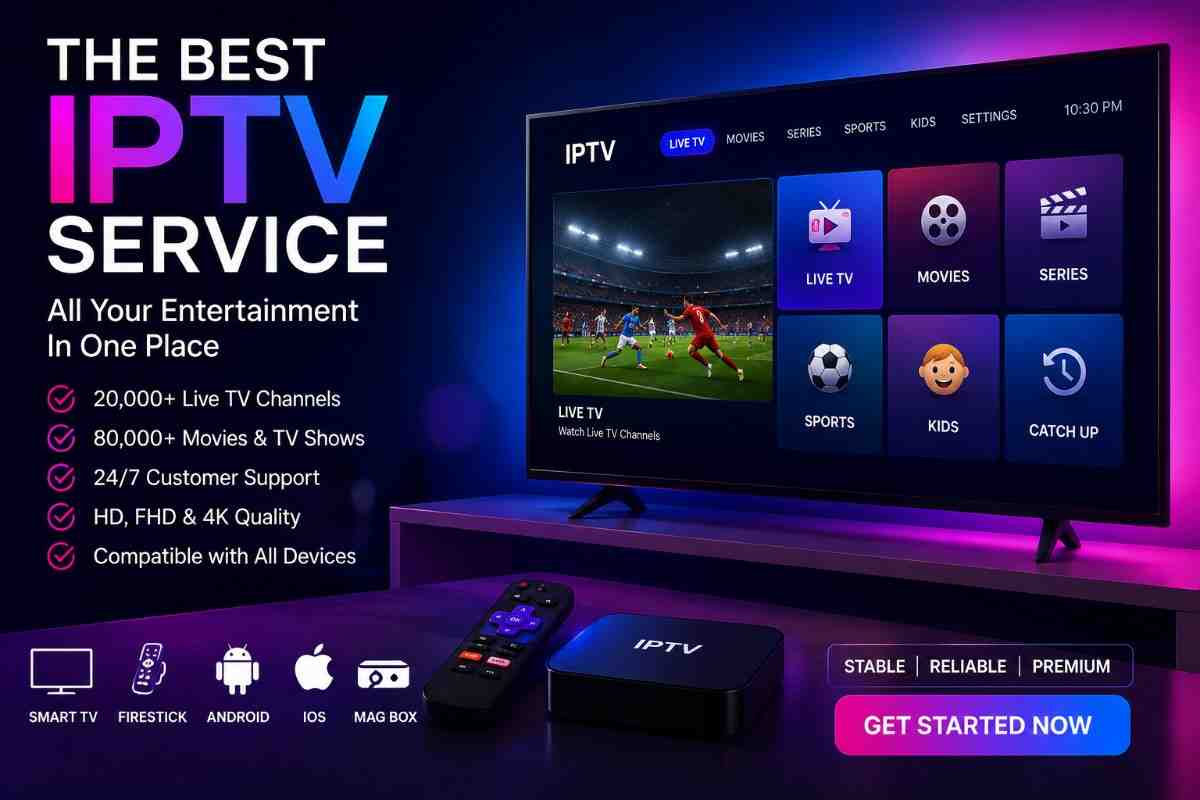
Depending on the service, IPTV can provide:
Live TV channels
Video-on-demand
Movies
TV series
Catch-up television
Sports programming
International channels
News
Entertainment
Children's programming
Music channels
One of the biggest advantages of IPTV is flexibility. Users can potentially watch content on televisions, smartphones, tablets, computers, and compatible streaming devices.
👉 Activate Today
Why Are More People Searching for Top IPTV Providers?
The popularity of IPTV has increased as consumers have become more comfortable with internet-based entertainment.
Several factors contribute to this growth.
1. Flexible Viewing
IPTV can allow users to watch television from different compatible devices rather than being tied to a traditional television setup.
2. Multiple Content Categories
A good IPTV platform may provide access to several types of programming through one interface.
3. Device Compatibility
Many IPTV solutions can work with devices such as:
Smart TVs
Android TV devices
Fire TV devices
Apple devices
Android smartphones
iPhones
Windows computers
Mac computers
Streaming boxes
Compatibility varies by provider and application, so users should check supported devices before subscribing.
4. On-Demand Entertainment
Some services combine live television with video-on-demand libraries, allowing viewers to select content whenever they want.
5. Internet-Based Convenience
For households that already have reliable high-speed internet, IPTV can provide an alternative way to consume television programming.
How to Choose the Top IPTV Providers
The best IPTV provider for one person may not be the best option for another. Instead of choosing a service based solely on the number of advertised channels, consider several important factors.
1. Channel Selection
Channel availability is one of the first things buyers usually examine.
However, a large channel count does not necessarily mean a better service.
A provider advertising thousands of channels may include many channels that you never watch.
Instead, identify your priorities.
For example:
Do you primarily watch local television?
Are international channels important?
Do you follow sports?
Do you watch news?
Are entertainment channels important?
Do you need children's programming?
Do you want movie channels?
A provider with fewer but more relevant channels may offer better value than a provider advertising an enormous channel list.
2. Streaming Quality
Video quality directly affects the viewing experience.
Depending on the provider and content source, IPTV streams may be available in different resolutions, including:
SD
HD
Full HD
4K
Not every channel will necessarily be available in the highest resolution.
Users should also understand that streaming quality depends on more than the IPTV provider.
It can be affected by:
Internet speed
Wi-Fi performance
Device capabilities
Network congestion
Server capacity
Distance from content infrastructure
Video source quality
Therefore, a provider advertising 4K content does not automatically guarantee uninterrupted 4K streaming.
3. Reliability and Stability
Reliability is arguably one of the most important characteristics of a quality IPTV service.
A provider may advertise thousands of channels, but if streams frequently stop working, buffer, or disappear, the service may provide poor value.
Before subscribing, look for information about:
Service uptime
Stream stability
Server infrastructure
Maintenance policies
Customer support
Refund policies
Trial availability
A short trial can be useful when legitimately offered because it allows customers to evaluate real-world performance before making a longer commitment.
4. Device Compatibility
A provider should support the devices you actually intend to use.
Popular options can include:
Smart TVs
Many modern Smart TVs support IPTV applications through their respective app ecosystems.
Fire TV Devices
Fire TV devices are widely used for streaming and can support compatible IPTV applications.
Android TV
Android TV and Google TV devices can provide access to compatible IPTV players and streaming applications.
Smartphones and Tablets
Some services support Android and iOS devices, allowing users to watch while traveling or away from home.
Computers
Depending on the provider, IPTV can also be accessed through compatible software or web-based players on Windows and macOS.
Before purchasing, verify the provider's current device support rather than assuming that every IPTV application works everywhere.
IPTV Provider vs IPTV Player: What's the Difference?
This is an important distinction for beginners.
An IPTV provider supplies the television content or service subscription.
An IPTV player is an application used to play or organize IPTV streams.
For example, a provider may give customers login credentials or a playlist, while a separate IPTV player displays that content.
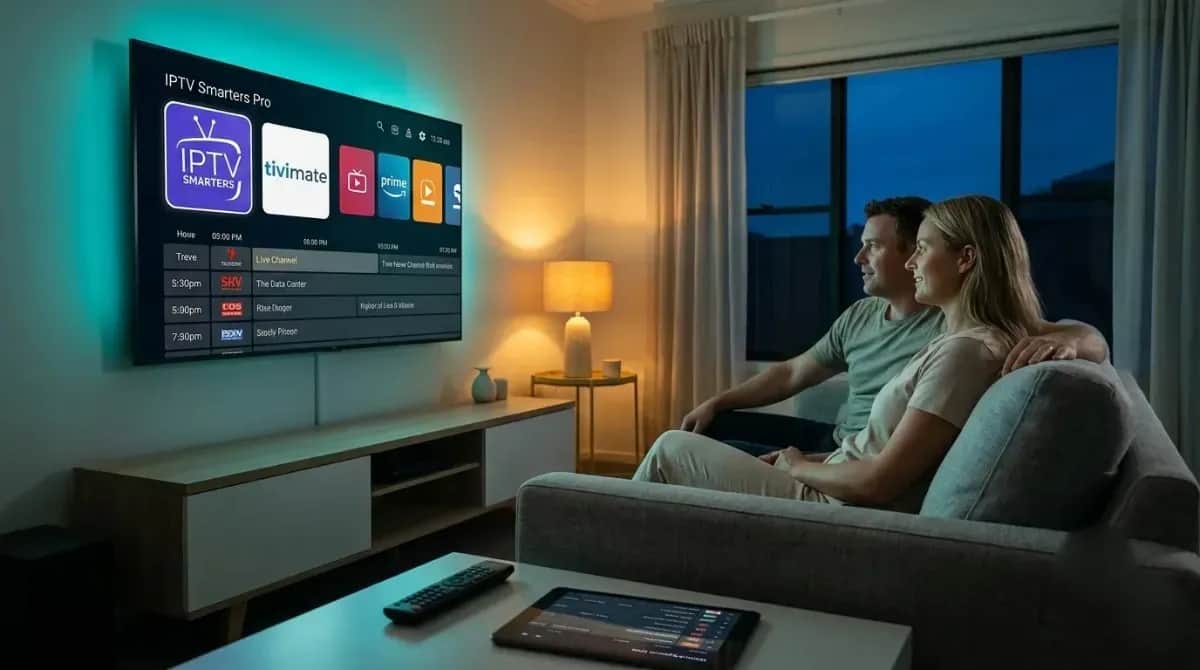
Popular IPTV player applications may support features such as:
Electronic Program Guide (EPG)
Favorites
Categories
Multiple playlists
Catch-up functionality
Parental controls
Search
Recording on supported platforms
However, an IPTV player generally does not automatically provide television channels.
The availability of content comes from the IPTV service or content source.
Key Features to Look for in Top IPTV Providers
When comparing IPTV services, create a checklist based on your actual requirements.
Live TV
A strong IPTV service should provide dependable access to the live channels it is authorized to distribute.
Video on Demand
A VOD library can provide additional entertainment beyond live television.
Electronic Program Guide
An EPG helps users understand what is currently playing and what is scheduled next.
A well-organized EPG can make IPTV much easier to navigate.
Catch-Up TV
Some services provide catch-up functionality, allowing users to watch selected programs after the original broadcast.
Availability varies by provider and channel.
Multi-Device Support
If your household uses several devices, check whether the provider supports them.
Also check whether simultaneous connections are permitted under the subscription terms.
Customer Support
Good customer support can be especially important during setup or troubleshooting.
Look for providers that clearly explain:
Contact methods
Support hours
Setup instructions
Refund policies
Subscription terms
Technical requirements
Internet Speed Requirements for IPTV
A stable internet connection is essential for IPTV streaming.
The exact bandwidth requirement depends on resolution, compression, network conditions, and the platform being used.
As a general guideline:
Streaming QualityRecommended Internet SpeedSD5 Mbps+HD10 Mbps+Full HD15 Mbps+4K25 Mbps+
These figures are practical guidelines rather than universal requirements.
A household streaming multiple devices simultaneously may need significantly more bandwidth.
For example, if one person is watching a 4K stream while another is gaming and a third is using video conferencing, the connection needs enough capacity to handle all activities.
Wi-Fi vs Ethernet for IPTV
Network quality can make a major difference.
Wi-Fi
Wi-Fi is convenient and works well when the router is close to the streaming device.
However, performance may be affected by:
Walls
Distance
Wireless interference
Other connected devices
Router limitations
Ethernet
Ethernet provides a wired connection and can often deliver more consistent performance.
For a stationary Smart TV or streaming box, Ethernet may be preferable when buffering is a recurring problem.
How Much Do IPTV Providers Cost?
Pricing varies considerably across the IPTV market.
Instead of focusing only on the cheapest subscription, evaluate the overall value.
Factors that can affect pricing include:
Subscription duration
Number of supported devices
Content library
VOD availability
Streaming resolution
Customer support
Additional features
Geographic availability
A provider offering a very inexpensive subscription may not necessarily provide the reliability or content you need.
Likewise, a more expensive service is not automatically better.
The goal should be to find a legitimate provider that offers appropriate content, dependable service, transparent terms, and suitable device compatibility.
Monthly vs Long-Term IPTV Subscriptions
IPTV providers may offer several subscription periods.
Common options include:
Monthly
Quarterly
Semi-annual
Annual
Monthly Plans
Monthly subscriptions can reduce commitment and allow users to evaluate the service.
Longer Plans
Longer subscriptions may provide lower effective monthly costs, but they also involve greater financial commitment.
For a new provider, a shorter subscription or legitimate trial may be safer than immediately purchasing a long-term plan.
Free IPTV vs Paid IPTV
Many people search for free IPTV services because they want to reduce entertainment costs.
However, free IPTV sources can present several concerns.
They may have:
Unreliable streams
Frequent downtime
Limited content
Excessive advertising
Poor video quality
Security risks
Unclear licensing
Some legitimate broadcasters offer free streaming services, while others provide free ad-supported television.
Therefore, "free IPTV" should not automatically be treated as equivalent to a professional paid service.
Are IPTV Services Legal?
This is one of the most important questions consumers should ask.
IPTV technology itself is legal.
The legal issue concerns the content being distributed.
A legitimate IPTV service should have the necessary rights or licenses to distribute the programming it provides.
Warning signs can include:
Unrealistic channel claims
Premium channels offered for extremely low prices
Lack of company information
No clear terms and conditions
No licensing information
Anonymous payment methods
Unclear refund policies
Aggressive promises to bypass restrictions
Consumers should research a provider before purchasing.
The safest approach is to use services that clearly operate within applicable copyright and broadcasting laws.
How to Identify a Trustworthy IPTV Provider
There is no single feature that guarantees a provider is trustworthy.
Instead, look for multiple positive signals.
Transparent Website
A professional provider should clearly explain its service, pricing, terms, and support options.
Clear Contact Information
A legitimate business should provide an appropriate way for customers to contact support.
Refund Policy
Review the refund terms carefully before making a payment.
Privacy Policy
A privacy policy should explain how customer information is handled.
Terms of Service
Read the terms before purchasing a subscription.
Legal Information
Where relevant, the provider should explain its licensing and distribution rights.
Common Mistakes When Choosing IPTV Providers
Consumers often make decisions based on marketing claims rather than actual service quality.
Here are some common mistakes to avoid.
Mistake 1: Choosing the Largest Channel Number
More channels do not automatically mean more value.
Focus on the channels you actually watch.
Mistake 2: Buying the Longest Subscription Immediately
A long-term plan may appear cheaper, but it creates greater risk if the service does not meet expectations.
Mistake 3: Ignoring Device Compatibility
Always verify compatibility with your exact television, streaming box, phone, or computer.
Mistake 4: Ignoring Internet Requirements
A weak connection can create buffering regardless of the provider.
Mistake 5: Assuming 4K Means Everything Is 4K
Providers may advertise 4K availability while only selected content is actually available in 4K.
Mistake 6: Ignoring Legal Status
Consumers should verify that their chosen provider is authorized to distribute the content offered.
Best IPTV Features for Sports Fans
Sports viewers often have different requirements from general entertainment users.
Important features can include:
Live sports channels
Reliable live streaming
Sports-specific categories
Electronic Program Guide
Catch-up options
HD or 4K availability
Multiple device compatibility
Sports broadcasts are particularly sensitive to buffering and delays.
Therefore, network stability and stream reliability can be more important than having the largest possible channel list.
IPTV for Movies and Entertainment
Movie and entertainment viewers may prioritize video-on-demand libraries.
When comparing services, consider:
VOD size
Movie categories
TV series availability
Search functionality
Subtitle support
Multiple audio options
HD and 4K availability
Content organization
A clean interface can make a large VOD library significantly easier to use.
IPTV for International Channels
One of IPTV's major attractions is international programming.
Depending on licensing and availability, users may search for channels from:
United States
United Kingdom
Canada
Australia
France
Germany
Spain
Italy
India
Middle Eastern countries
Asian markets
If international content is important, check the exact country and channel list rather than relying on a general claim such as "global channels."
Setting Up an IPTV Service
The setup process depends on the provider and application.
A typical process may look like this:
Step 1: Choose a Legitimate Provider
Research the service and verify that it offers the content legally.
Step 2: Select a Subscription
Choose a plan that matches your usage.
Step 3: Install a Compatible IPTV Player
Use an application supported by your device.
Step 4: Enter Your Credentials
The provider may give you login details or another supported configuration method.
Step 5: Load the Playlist
Follow the provider's setup instructions.
Step 6: Configure the EPG
If supported, an EPG can make channel navigation easier.
Step 7: Test Streaming
Check several channels and content categories.
How to Reduce IPTV Buffering
Buffering can occur for several reasons.
Try the following troubleshooting steps.
Check Your Internet Speed
Run a speed test on the same network used by your streaming device.
Restart Your Router
A simple router restart can sometimes resolve temporary connectivity issues.
Use Ethernet
If possible, connect a stationary streaming device through Ethernet.
Reduce Network Congestion
Pause large downloads or other high-bandwidth activities while streaming.
Lower Video Quality
If your connection struggles with 4K, switching to HD may provide a smoother experience.
Update Your IPTV Application
An outdated application can sometimes create compatibility problems.
Contact the Provider
If only one service consistently buffers while other streaming platforms work normally, the provider may need to investigate its infrastructure.
How to Compare Top IPTV Providers
A structured comparison makes choosing easier.
FeatureWhy It MattersChannel SelectionDetermines whether your preferred programming is availableStreaming QualityAffects picture clarityReliabilityHelps reduce interruptionsDevice SupportEnsures compatibilityEPGMakes channel navigation easierVODProvides on-demand entertainmentCatch-UpHelps watch previously aired programsCustomer SupportHelps resolve setup and technical issuesPricingDetermines overall valueRefund PolicyReduces financial riskLegal RightsHelps ensure responsible use
Top IPTV Providers: What Should You Prioritize?
There is no universal ranking that applies to every viewer.
Instead, prioritize features according to your needs.
For Families
Focus on:
Multiple devices
Parental controls
Family programming
Reliable streaming
Easy navigation
For Sports Fans
Focus on:
Sports channels
Reliable live streams
Low buffering
HD/4K where available
EPG
For Movie Fans
Focus on:
VOD library
Movie quality
Search
Subtitles
Series availability
For International Viewers
Focus on:
Country-specific channels
Language options
International programming
Device support
IPTV Security and Privacy Tips
Online streaming services can involve account information, payment details, and personal data.
Users should therefore take basic security precautions.
Use Strong Passwords
Avoid reusing passwords across multiple services.
Check Website Security
Before entering payment or account information, ensure that you are using the provider's legitimate website.
Avoid Suspicious Applications
Only install applications from reputable sources whenever possible.
Read Privacy Policies
Understand how your information may be collected and processed.
Be Careful With Unofficial Streaming Links
Unknown websites can expose users to malicious advertisements, phishing attempts, or unwanted software.
Why Customer Support Matters
Technical issues can occur with any internet-based service.
Good customer support can make troubleshooting much easier.
Look for providers that offer:
Setup documentation
Frequently asked questions
Email support
Ticket systems
Live chat where appropriate
Device-specific instructions
Avoid relying solely on social media claims when evaluating customer support.
The Importance of a Free Trial
A legitimate trial can be valuable because it lets you test the service before committing.
During a trial, evaluate:
Channel availability
Streaming stability
Video quality
EPG accuracy
VOD performance
Device compatibility
Customer support
Do not judge a service solely by the trial landing page. Test the actual viewing experience.
Questions to Ask Before Buying IPTV
Before purchasing a subscription, ask:
Is the provider legally authorized to distribute its content?
Does it support my device?
Are my preferred channels available?
Is an EPG included?
Does the service offer VOD?
Are multiple devices supported?
What are the refund terms?
How can I contact customer support?
Does the subscription automatically renew?
What internet speed is recommended?
These questions can prevent many common purchasing mistakes.
Top IPTV Providers: A Practical Buyer Checklist
Use the following checklist before choosing an IPTV service:
Content
Preferred channels available
Relevant regional programming
Sports availability if required
Movies and series if required
VOD library
Technology
Compatible device
Stable streaming
Suitable resolution
EPG support
Catch-up support where required
Business
Clear pricing
Transparent subscription terms
Refund policy
Customer support
Privacy policy
Legal
Content distribution rights are clear
Provider information is transparent
No suspicious promises
No unexplained premium content claims
Future of IPTV in 2026 and Beyond
The television industry continues to move toward internet-based distribution.
Several trends are likely to remain important.
Higher Resolution
4K streaming is becoming increasingly common, while future services may continue improving picture quality.
Better Personalization
Streaming platforms increasingly use recommendations and personalized interfaces.
Multi-Device Viewing
Consumers expect to move between televisions, phones, tablets, and computers.
Cloud-Based Features
Cloud technologies can enable features such as catch-up viewing, recording, synchronization, and personalized content management.
Hybrid Television
Traditional broadcast television and internet streaming are increasingly being combined into connected TV experiences.
FAQ'S
1. What are the top IPTV providers?
The top IPTV providers are services that offer a strong combination of legitimate content availability, reliable streaming, compatible devices, useful features, transparent pricing, and customer support. The best option depends on your location and viewing requirements.
2. Is IPTV legal?
IPTV technology is legal. However, a provider must have appropriate rights to distribute the television content it offers. Users should verify the licensing and legal status of a service before subscribing.
3. What internet speed is best for IPTV?
For HD streaming, around 10 Mbps or more is a practical starting point. Full HD may require around 15 Mbps, while 4K streaming can benefit from 25 Mbps or more. Actual requirements vary by stream and network conditions.
4. Can I watch IPTV on a Smart TV?
Yes, many IPTV services and compatible IPTV players work with supported Smart TVs. Compatibility depends on the television operating system, application, provider, and region.
5. How do I choose the best IPTV provider?
Compare channel availability, streaming stability, device compatibility, VOD, EPG, pricing, customer support, refund policies, privacy practices, and legal content rights. Avoid choosing solely based on the advertised channel count.

