Top IPTV Services Guide: How IPTV Works in 2026
Learn how IPTV works, choose reliable streaming services, and discover quality entertainment solutions with nigma.tv for a better TV experience.
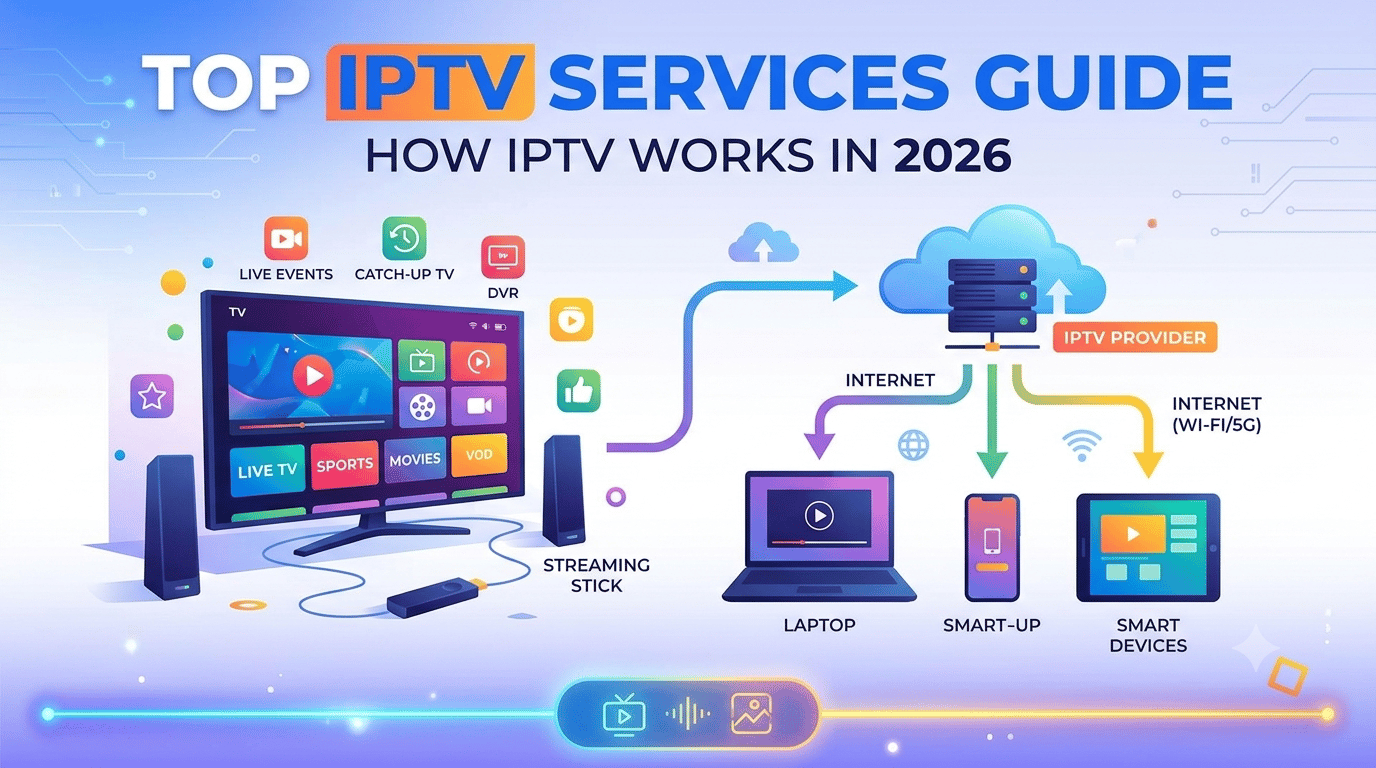
If you've spent any time browsing YouTube ads, Reddit threads, or Facebook Marketplace lately, you've probably run into the term "IPTV." Someone is always promising 40,000 channels, every sports package on earth, and a price that's a fraction of your cable bill. It sounds too good to be true—and in many cases, it is.
IPTV itself isn't sketchy. It's simply a technology for delivering television content over the internet, and it's the same method used by many legitimate streaming platforms. The key difference lies in whether a provider has the proper rights to distribute the content it offers. That's why, when comparing providers or searching for the best IPTV USA options, it's important to focus on transparency, licensing, service quality, and customer support rather than bold marketing claims.
This guide explains what IPTV really is, how licensed services differ from unlicensed ones, and the practical signs of a trustworthy provider. You'll also learn the red flags to watch for so you can make an informed decision before subscribing to any IPTV service.
What Is IPTV, Exactly?
IPTV stands for Internet Protocol Television. Instead of receiving channels through a satellite dish or a coaxial cable running into a cable box, your TV signal travels over the internet — the same pipe that delivers your email, your Netflix, and this article.
Practically speaking, IPTV works like this:
A provider encodes live TV channels and video-on-demand content into data streams.
Those streams sit on servers, distributed to keep up with demand.
You connect through an app or set-top box using a login (often an M3U playlist link or "Xtream Codes" credentials).
The app pulls the stream and plays it on your TV, phone, or computer.
None of that is inherently illegal or shady. In fact, you're probably already using IPTV without calling it that. Services like YouTube TV, Hulu + Live TV, and DirecTV Stream all deliver live channels over the internet — they're IPTV services in the technical sense, just wrapped in a legitimate storefront and a licensing agreement.
The term "IPTV service" gets a bad reputation because it's also become code, in certain corners of the internet, for a specific kind of business: one that streams cable and satellite channels — including premium movie channels, regional sports networks, and pay-per-view events — without having paid the broadcasters or rights holders for permission to redistribute them.
Licensed IPTV vs. Unlicensed Resellers: The Core Difference
This is the part most "best IPTV" roundups skip entirely, because it's the part that matters most.
Licensed IPTV Services
A licensed IPTV or streaming provider has done a few non-negotiable things:
Negotiated carriage agreements with individual networks (ESPN, HBO, local affiliates, etc.), the same way traditional cable companies do.
Registered as a business with a public legal name, address, and often a stock ticker or parent company you can look up.
Paid for the infrastructure and rights that let them legally show you live sports, news, and premium channels.
That's why services like YouTube TV, Hulu + Live TV, Fubo, and Sling TV can advertise openly, run TV commercials, and partner directly with the leagues and studios whose content they carry. Their prices reflect the actual cost of licensing that content — which is precisely why they tend to cost somewhere between $40 and $80+ a month.
Unlicensed IPTV Resellers
An unlicensed reseller does the opposite. Typically, someone captures broadcast streams (often from a legitimate subscription or an illicit feed), repackages them, and resells access at a steep discount — because they aren't paying content owners anything close to what a real license would cost.
These services usually:
Advertise an enormous, oddly specific channel count ("40,000+ channels!") that no licensed provider could plausibly carry.
Undercut every legal competitor's price by 70–90%.
Operate through anonymous websites, resold "reseller panels," or messaging apps like WhatsApp and Telegram instead of a standard customer support system.
Avoid stating who owns or operates the company.
This model is why regulators, broadcasters, and industry groups — including the Alliance for Creativity and Entertainment (ACE), which represents major studios and networks — have spent years pursuing legal action against IPTV reseller networks in the US, UK, and Europe. Subscribing to one of these doesn't just carry legal and ethical baggage for the content owners losing revenue; it also puts you, the subscriber, in a genuinely unstable position, which brings us to the next section.
What Legitimate IPTV-Style Options Actually Look Like
If your goal is simply to cut the cord without losing live TV, there are fully licensed IPTV-style services worth comparing instead:
YouTube TV — broad local channel coverage, cloud DVR, multiple simultaneous streams.
Hulu + Live TV — combines Hulu's on-demand library with live channels.
Fubo — originally sports-focused, now a broader live TV bundle.
Sling TV — flexible, à la carte channel packages at a lower entry price.
DirecTV Stream — closer to a traditional cable channel lineup, delivered over the internet.
These all cost more than the "40,000 channels for $15" offers you'll find advertised — because they're paying for what they carry. That price gap isn't a coincidence; it's the actual cost of doing this legally, made visible.
Frequently Asked Questions
Is IPTV illegal?
No. IPTV is a technology, not a business model. Licensed IPTV services (YouTube TV, Hulu + Live TV, etc.) are entirely legal. What's illegal, or exists in a legal grey area, is unlicensed redistribution of copyrighted broadcast content over IPTV infrastructure.
How can I tell if an IPTV service is legal?
Check whether the provider discloses which networks it has licensed, whether it has verifiable company information, and whether its pricing is realistic for the content it claims to offer. If any of these are missing or vague, treat it as a red flag.
Why are unlicensed IPTV services so much cheaper?
Because they aren't paying broadcasters, leagues, or studios for the right to redistribute their content. Licensing costs are the single biggest expense for any legal TV provider, so skipping that expense is how these services can undercut legitimate prices so dramatically.
Can I get in legal trouble for using an unlicensed IPTV service?
It depends on your country's laws, but in a growing number of jurisdictions, regulators and rights holders have pursued both operators and, in some cases, subscribers. At minimum, you have no consumer protections if the service disappears or malfunctions.
What happens if my IPTV subscription suddenly stops working?
With unlicensed resellers, this is common — often due to legal takedowns, server issues, or the operator shutting down entirely. Because these services rarely offer standard refund policies, subscribers are frequently left with no recourse.
Do I need a VPN to use IPTV safely?
A VPN is a legitimate privacy tool for any internet activity, but if a service specifically instructs you to use a VPN to access or stabilize their content, that's usually a sign they're aware their content delivery isn't authorized.
Are IPTV apps safe to download?
Apps from official app stores (Apple App Store, Google Play, Amazon Appstore) go through a review process. Apps distributed as sideloaded APK files from unofficial websites don't, and some have been found to include unwanted or malicious code.
What's the difference between IPTV and streaming services like Netflix?
Technically, both deliver video over the internet. The distinction people usually mean is that IPTV typically refers to live, channel-based TV delivery, while services like Netflix are on-demand libraries. Live TV streaming services (YouTube TV, Hulu + Live TV) sit in both categories.
How many channels does a legitimate IPTV service typically offer?
It varies by package, but legitimate US live TV services generally offer somewhere between 40 and 200 channels depending on the tier. Claims of tens of thousands of channels are a strong indicator that a service is aggregating unlicensed international feeds.
Is it worth switching from cable to a licensed IPTV service?
For many households, yes — licensed options can lower costs, add flexibility across devices, and remove the need for a set-top box or long-term contract. The savings just won't be as dramatic as what unlicensed resellers advertise, because you're paying for content that's actually licensed.
Conclusion
IPTV is simply a way of delivering television over the internet — the same category that includes fully legal, well-known services you already recognize. The risk isn't the technology; it's the growing number of unlicensed resellers using that same technology to redistribute content they never paid for, wrapped in marketing that looks identical to a legitimate streaming service.
Before subscribing to anything marketed as an "IPTV service," run it through the checklist in this guide: verifiable licensing, realistic pricing, real company information, and a track record that doesn't include a trail of vanished subscriptions. If a deal looks too good to explain, it usually is — and the explanation is almost always the same one: somebody isn't paying for what they're selling.
If you're ready to cut the cord, start by comparing licensed live TV streaming options against your actual channel needs and budget — that comparison alone will save you far more headaches than chasing the cheapest number you can find.

