Top Uber Alternatives Businesses Should Know in 2026
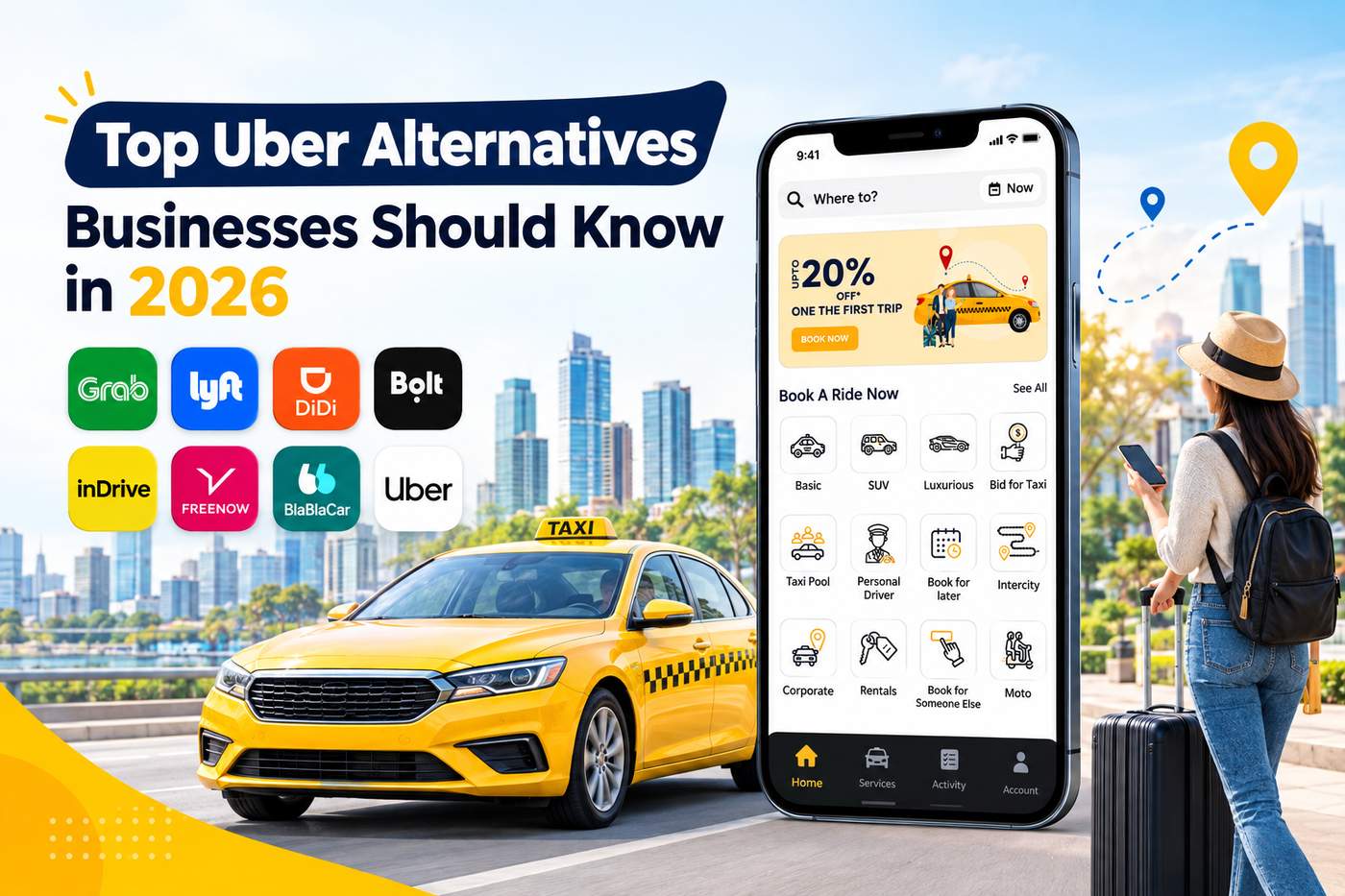
The global ride-hailing industry has expanded far beyond a single platform. While Uber remains one of the most recognized names in app-based transportation, businesses and entrepreneurs can now explore a wide range of ride-hailing platforms and business models operating across different countries and markets.
These alternatives demonstrate that successful ride-hailing businesses can compete through different approaches, including local market knowledge, competitive pricing, driver-focused features, scheduled rides, carpooling, motorcycle transportation, corporate mobility, and flexible booking models.
For entrepreneurs planning to enter the ride-hailing market in 2026, studying these platforms can provide useful insights into customer expectations, revenue models, app features, and opportunities for differentiation.
This article explores some of the major Uber alternatives businesses should know in 2026 and explains what entrepreneurs can learn from their approaches.
What Are Uber Alternatives?
Uber alternatives are ride-hailing platforms that provide transportation services through mobile applications and digital booking systems.
Depending on the market, these platforms may offer:
* Taxi booking
* Private car rides
* Motorcycle rides
* Carpooling
* Airport transfers
* Scheduled rides
* Corporate transportation
* Intercity transportation
* Delivery services
* Multiple vehicle categories
Some alternatives operate internationally, while others focus primarily on specific countries or regions.
For businesses, the important point is that the ride-hailing market is not based on one universal model. Different regions have different transportation requirements, regulations, pricing structures, and customer preferences.
Why Businesses Are Exploring Uber Alternatives
The growth of alternative ride-hailing platforms reflects changing expectations in the transportation industry.
1. Local Market Opportunities
Local ride-hailing companies can design their services around regional transportation habits.
For example, a market may have strong demand for motorcycles, compact vehicles, taxis, carpooling, or scheduled transportation. A locally focused platform can build its services around those requirements.
2. Flexible Pricing Models
Ride-hailing businesses can experiment with different pricing approaches, including:
* Distance-based fares
* Time-based pricing
* Fixed fares
* Zone-based pricing
* Subscription plans
* Corporate pricing
* Driver bidding
* Promotional pricing
The appropriate model depends on the target market and business strategy.
3. Driver-Centric Features
Drivers are a critical part of any ride-hailing marketplace. Platforms can differentiate themselves through features such as transparent earnings, flexible working hours, incentive programs, driver subscriptions, and improved trip management.
4. Specialized Transportation
Not every customer needs the same transportation service. Businesses can focus on specific categories such as airport transportation, luxury rides, motorcycles, carpooling, women-focused transportation, corporate mobility, or intercity trips.
5. Technology Differentiation
Modern ride-hailing apps can incorporate technologies such as artificial intelligence, automated support, real-time tracking, digital payments, route optimization, and intelligent driver matching.
Top Uber Alternatives Businesses Should Know in 2026
1. Lyft
Lyft is a major ride-hailing platform operating primarily in the United States and Canada. It provides transportation services through a mobile application and has expanded beyond basic ride booking into areas such as bikes, scooters, and other mobility services.
For entrepreneurs, Lyft demonstrates how a ride-hailing platform can expand its transportation ecosystem rather than relying exclusively on standard car rides.
Business takeaway: Build multiple mobility options around your core transportation service when market demand supports expansion.
2. Bolt
Bolt operates across numerous international markets and offers services including ride-hailing, micromobility, and other transportation-related solutions.
Its international presence demonstrates how a transportation platform can adapt its services to different geographic markets.
Business takeaway: Regional expansion requires more than translating an app. Pricing, regulations, vehicle categories, payment methods, and customer expectations may all need localization.
3. DiDi
DiDi is a major mobility platform with operations and partnerships across multiple markets. Its services have included ride-hailing, taxi services, and other mobility solutions.
The platform provides an example of how large-scale transportation technology can support different service categories.
Business takeaway: A scalable backend and flexible service architecture can make it easier to introduce additional transportation products.
4. Grab
Grab began as a transportation-focused platform and developed into a broader digital services ecosystem in Southeast Asia.
Its growth demonstrates the potential of combining transportation with other on-demand services.
Entrepreneurs interested in building a multi-service application can study this approach when considering how transportation could become the foundation for additional services.
Business takeaway: A ride-hailing platform can potentially become a broader on-demand ecosystem when there is genuine customer demand for additional services.
5. inDrive
inDrive is known for its alternative approach to ride pricing, including a model where passengers and drivers can negotiate or agree on fares in applicable markets.
This model provides an interesting example of how pricing mechanisms can become a major differentiating feature.
Business takeaway: A flexible fare or bidding mechanism can create a different marketplace experience from conventional fixed-price booking.
6. Cabify
Cabify is a mobility platform with a strong presence in Spanish-speaking markets and has offered private transportation and other mobility solutions.
Its regional focus demonstrates that businesses do not necessarily need to pursue worldwide expansion from the beginning.
Business takeaway: Establishing a strong position in selected markets can be a practical approach before expanding into additional regions.
7. BlaBlaCar
BlaBlaCar focuses primarily on long-distance carpooling and shared transportation rather than traditional city-based ride-hailing.
Its model demonstrates that transportation businesses can target specific use cases instead of directly copying conventional taxi-booking platforms.
Business takeaway: A specialized transportation niche can create a distinct value proposition.
8. Careem
Careem became widely recognized across the Middle East and surrounding markets and expanded beyond transportation into multiple digital services.
Its development demonstrates the potential for a mobility platform to evolve into a broader super-app model.
Business takeaway: Businesses can consider adding complementary services once the core transportation operation is established.
9. Yango
Yango provides ride-hailing and related digital services across various international markets.
Its presence demonstrates the importance of technology, localization, and partnerships when expanding a mobility platform across different regions.
Business takeaway: International transportation businesses need technology infrastructure capable of supporting different operational environments.
10. Local and Regional Taxi Apps
Alongside major international platforms, many markets have strong local taxi applications.
These businesses can compete by offering:
* Local driver networks
* Regional payment options
* Local-language support
* Market-specific pricing
* Existing taxi partnerships
* Faster customer support
* Specialized vehicle categories
For entrepreneurs, these regional platforms can be especially useful examples because they demonstrate how a focused business can address local transportation requirements.
Key Features Businesses Should Consider
If you are planning to launch your own ride-hailing platform, studying existing alternatives can help identify common customer and driver requirements.
Passenger App
A modern passenger application may include:
* User registration
* Location detection
* Pickup and destination selection
* Fare estimation
* Vehicle selection
* Real-time driver tracking
* Ride scheduling
* Multiple payment methods
* Promo codes
* Digital receipts
* Ride history
* Ratings and reviews
* Emergency assistance
* Customer support
Driver App
The driver application can include:
* Driver registration
* Document verification
* Online/offline status
* Trip requests
* Navigation
* Earnings dashboard
* Trip history
* Incentives
* Wallet management
* Ratings
* Support
* Withdrawal requests
Admin Panel
The administrative system provides centralized control over the platform.
Typical functions include:
* Driver management
* Customer management
* Trip management
* Fare configuration
* Commission management
* Service-area management
* Promotional campaigns
* Payment management
* Reports and analytics
* Content management
* Customer support
Add Bidding to Differentiate Your Ride-Hailing App
Traditional ride-hailing platforms commonly use predefined pricing mechanisms. However, entrepreneurs can also consider a bidding-based transportation model.
With a bidding system:
1. A passenger enters the pickup and destination.
2. The passenger can submit an expected fare where supported.
3. Nearby drivers receive the request.
4. Drivers can accept or submit their available fare.
5. The passenger reviews available offers.
6. The passenger selects a suitable driver.
7. The trip begins after confirmation.
This approach can be useful in markets where customers and drivers prefer greater flexibility around pricing.
However, bidding should be designed carefully because excessive price negotiation can create uncertainty for both passengers and drivers.
Revenue Models for an Uber Alternative
A ride-hailing business can generate revenue through several channels.
Commission Per Ride
The platform keeps a percentage of the fare generated from completed trips.
Driver Subscription
Drivers pay a fixed subscription fee to access the platform instead of—or alongside—a conventional commission structure.
Passenger Subscription
Frequent riders can receive benefits through a recurring membership program.
Corporate Accounts
Businesses can use the platform for employee transportation and business travel.
Cancellation Fees
A platform may charge cancellation fees under clearly defined circumstances.
Advertising
Relevant businesses can promote services within the application where appropriate.
Premium Services
Luxury vehicles, airport transfers, scheduled rides, or other specialized services can use separate pricing structures.
A combination of revenue models can provide greater flexibility, but businesses should ensure pricing remains transparent.
How to Start Your Own Ride-Hailing Business in 2026
Launching a transportation platform requires more than developing an application.
Step 1: Select Your Target Market
Choose a country, city, or specific customer segment.
Research:
* Transportation demand
* Existing competitors
* Local regulations
* Vehicle availability
* Payment preferences
* Driver supply
* Customer expectations
Step 2: Select a Business Model
Determine whether your platform will focus on:
* Traditional taxi booking
* Private rides
* Ride bidding
* Carpooling
* Motorcycle transportation
* Corporate transportation
* Airport transfers
* Multi-service transportation
Step 3: Build the Technology
Your technology stack generally needs three major components:
Customer App + Driver App + Admin Panel
Depending on the business model, additional fleet, dispatcher, corporate, or partner panels may also be required.
Step 4: Recruit Drivers
A ride-hailing marketplace cannot operate effectively without sufficient driver availability.
Create a structured onboarding process covering documentation, verification, training, vehicle requirements, and payment information.
Step 5: Launch in a Focused Area
Instead of attempting to cover a whole country immediately, businesses can initially focus on one city or service area.
This makes it easier to build supply and demand density, monitor operations, and collect customer feedback.
Step 6: Expand Gradually
Once the operating model works consistently, businesses can expand into additional locations and service categories.
Why a White-Label Taxi App Can Be an Option
Developing a transportation platform completely from scratch can require significant time and technical resources.
A white-label or ready-made taxi application can provide an alternative starting point.
Depending on the solution, businesses may receive:
* Passenger application
* Driver application
* Admin dashboard
* Dispatch functionality
* Payment integration
* GPS and mapping
* Fare management
* Notification systems
* Reporting tools
The exact features, customization options, infrastructure, ownership model, and ongoing costs vary by provider.
Businesses should evaluate security, scalability, source-code ownership, customization, third-party integrations, maintenance, and support before selecting a solution.
Future Trends for Ride-Hailing Businesses in 2026
Technology is continuing to influence how transportation platforms operate.
AI-Powered Ride Matching
AI can be used to analyze transportation data and improve driver-passenger matching and operational decisions.
Voice-Based Booking
Voice interfaces can make it possible for customers to request transportation using natural-language commands.
Electric Vehicle Integration
Ride-hailing businesses can support EV fleets and provide vehicle-specific management features.
Smart Fleet Management
Fleet operators can use analytics to monitor vehicle utilization, maintenance, driver activity, and operating costs.
Automated Customer Support
AI-powered support systems can handle common questions and assist with basic booking or account-related requests.
Multi-Service Platforms
Transportation businesses can potentially expand into food delivery, courier services, grocery delivery, home services, and other on-demand categories.
The right expansion strategy depends on the market rather than simply copying another platform.
Final Thoughts
The ride-hailing industry in 2026 offers businesses multiple paths to enter the market. Platforms such as Lyft, Bolt, DiDi, Grab, inDrive, Cabify, BlaBlaCar, Careem, and Yango demonstrate different approaches to transportation, pricing, geographic expansion, and service diversification.
For entrepreneurs, the key lesson is not simply to reproduce an existing application. A successful Taxi Booking platform needs a clear target market, sustainable business model, reliable technology, sufficient driver supply, convenient passenger experiences, and an approach that fits local transportation requirements.
Whether you plan to launch a traditional taxi booking service, bidding-based platform, carpooling application, or broader multi-service solution, studying established and regional alternatives can help you identify opportunities and define your own value proposition.
FAQs
1. What are the main alternatives to Uber in 2026?
Major ride-hailing alternatives include Lyft, Bolt, DiDi, Grab, inDrive, Cabify, BlaBlaCar, Careem, and Yango, along with numerous local and regional taxi platforms.
2. Can I start my own Uber alternative app?
Yes. Businesses can develop a customized ride-hailing platform using a white-label solution or build an application from scratch, depending on their budget, technical requirements, and business model.
3. What features does a ride-hailing app need?
Common features include booking, GPS tracking, fare calculation, driver matching, digital payments, ride history, ratings, notifications, customer support, and administrative management.
4. How does a ride-hailing app make money?
Common revenue sources include ride commissions, driver subscriptions, passenger memberships, corporate accounts, cancellation fees, premium services, and advertising.
5. Is a bidding model suitable for a taxi app?
A bidding model can be suitable for markets where passengers and drivers prefer flexible pricing. However, the model should be designed with clear rules to avoid excessive fare uncertainty.
6. What is a white-label taxi app?
A white-label taxi app is a pre-built transportation software solution that can be customized and launched under a business's own brand.
7. Should a new ride-hailing business launch nationwide?
Not necessarily. Starting in a focused city or service area can make it easier to build driver supply, attract customers, test operations, and optimize the business model before expanding.
8. Can an Uber alternative include multiple services?
Yes. A platform can potentially combine transportation with services such as food delivery, courier delivery, grocery delivery, or other on-demand services, depending on the target market.
9. What should businesses consider before launching a ride-hailing app?
Businesses should evaluate local regulations, driver availability, customer demand, competitors, payment methods, insurance requirements, technology infrastructure, pricing, security, and customer support.
10. What is the biggest opportunity for ride-hailing businesses in 2026?
Opportunities can come from market specialization, localized services, flexible pricing, AI-powered features, fleet solutions, EV integration, corporate mobility, and carefully selected multi-service expansion.

