Uber Clone in the Philippines: A New Startup Opportunity
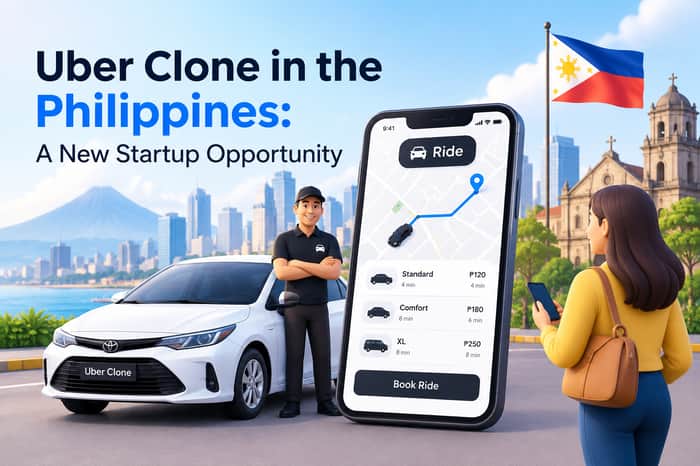
The Philippines has a growing demand for convenient, app-based transportation. From daily commuters and business travelers to tourists and delivery customers, people increasingly expect transportation services to be fast, reliable, and easy to access from their smartphones.
For entrepreneurs, this shift creates an attractive opportunity to enter the mobility market without building a transportation platform entirely from scratch. An Uber Clone can provide a ready-made technological foundation for launching a branded ride-hailing business, while allowing companies to customize the platform according to local market requirements.
But launching a successful ride-hailing business is about more than simply replicating an existing app. Entrepreneurs need to consider their target customers, driver acquisition strategy, pricing model, technology, operations, and long-term expansion plans.
Why the Philippines Is an Attractive Market for Ride-Hailing Startups
Transportation is an essential part of everyday life in the Philippines, particularly in highly populated urban areas. Commuters often look for alternatives that can make their daily journeys more predictable and convenient.
This creates opportunities for businesses that can offer:
- Convenient smartphone-based ride booking
- Transparent fare information
- Multiple transportation options
- Easy driver-partner onboarding
- Cashless and digital payment options
- Real-time ride tracking
- Reliable customer support
- Business transportation services
For B2B entrepreneurs, the opportunity extends beyond individual passengers. Companies can build partnerships with hotels, travel agencies, corporate offices, restaurants, event organizers, and other businesses that regularly require transportation.
Instead of competing only on the number of rides, a startup can differentiate itself through specialized services, better customer experiences, corporate accounts, or location-specific transportation solutions.
What Is an Uber Clone?
An Uber Clone is a ready-made taxi booking app solution that enables businesses to launch their own branded ride-hailing platform. It connects passengers with nearby drivers, allowing users to book taxis, track rides in real time, view fares, make payments, and rate their trips.
The platform typically includes separate passenger and driver apps along with an admin dashboard for managing bookings, drivers, payments, pricing, and overall operations. For entrepreneurs, an Uber clone provides a customizable foundation to start and grow a taxi booking business without developing the entire platform from scratch.
Rather than spending months or years designing every component from the ground up, businesses can start with an existing platform architecture and modify important elements such as:
- Brand identity
- Application design
- Ride categories
- Pricing rules
- Commission structures
- Payment methods
- Service areas
- Driver requirements
- Promotions
- Admin controls
The goal isn't to copy another company's branding or proprietary technology. Instead, a professionally developed Uber clone app provides similar business functionality while giving the entrepreneur ownership of their own brand and operating model.
How an Uber Clone App Can Support a B2B Startup
For B2B entrepreneurs, the biggest advantage of an Uber clone app is flexibility.
A business can use the platform as the technological foundation for a focused transportation company instead of trying to build an enormous marketplace immediately.
For example, a startup could focus on:
Corporate Transportation:
Companies can provide employees with convenient transportation through corporate accounts, scheduled rides, centralized billing, and ride management.
Hotel and Tourism Transportation:
Hotels and travel businesses can integrate transportation services into their customer experience by offering airport transfers, city rides, and scheduled bookings.
Airport Transportation:
A startup can specialize in airport pickups and drop-offs, offering scheduled booking options and dedicated driver services.
Local Ride-Hailing:
Instead of attempting to serve the entire country, entrepreneurs can initially target a specific city or service area and gradually expand.
This focused approach can help startups validate their business model before investing heavily in expansion.
Essential Features for a Philippines-Focused Ride-Hailing Platform
A successful platform needs to serve three primary stakeholders: passengers, drivers, and administrators.
Passenger App
The passenger application should make booking a ride simple and intuitive. Important features can include:
- User registration and login
- Pickup and destination selection
- Fare estimation
- Ride category selection
- Driver information
- Real-time GPS tracking
- Multiple payment options
- Ride scheduling
- Trip history
- Ratings and reviews
- Digital receipts
- Promotional offers
- Customer support
The booking experience should be designed around speed. A customer should be able to request a ride without navigating through unnecessary screens.
Driver App
Drivers are equally important because they directly influence service availability and customer satisfaction.
A driver application can include:
- Driver registration
- Document submission
- Profile management
- Online/offline availability
- Ride request notifications
- Navigation support
- Earnings dashboard
- Trip history
- Incentive management
- Ratings and reviews
- Wallet or payout information
An easy-to-use driver interface can help businesses improve driver adoption and reduce operational friction.
Admin Dashboard
The admin panel provides the business with centralized control over the platform.
Administrators can manage:
- Customers
- Drivers
- Ride requests
- Service zones
- Vehicle categories
- Pricing
- Commissions
- Promotions
- Payments
- Complaints
- Reports
- Analytics
A strong administrative dashboard is particularly important for B2B operators because it transforms raw platform activity into useful business information.
Localization Matters More Than Simply Replicating Features
One of the most important considerations when launching an Uber clone app in the Philippines is localization.
A platform designed for another market may not automatically fit local customer and business expectations. Entrepreneurs should consider local transportation patterns, preferred payment methods, language requirements, driver onboarding procedures, pricing strategies, and service availability.
The application can also be designed to support multiple ride categories. Depending on the business model, these could include standard cars, premium rides, larger vehicles, motorcycles, or other locally relevant transportation services.
Localization allows the business to create a product that feels purpose-built for its customers rather than simply another generic ride-hailing application.
Revenue Opportunities for Entrepreneurs
A ride-hailing business can generate revenue through several channels.
Commission on Completed Rides
The platform can charge a percentage of each completed ride. This creates a scalable revenue model because platform earnings increase as ride volume grows.
Booking or Service Fees
Businesses can apply additional booking or platform fees depending on their pricing strategy and market positioning.
Corporate Accounts
B2B transportation contracts can create recurring revenue. Companies may pay for employee transportation, client transfers, business travel, or scheduled mobility services.
Premium Services
Entrepreneurs can introduce premium transportation categories with higher fares, such as executive cars or specialized airport transportation.
Advertising and Promotions
Once the platform develops a substantial user base, businesses can create promotional partnerships with hotels, restaurants, retailers, travel companies, and other local businesses.
The strongest model may combine several revenue streams rather than depending entirely on ride commissions.
Uber Clone App Development: Build or Buy?
One of the first decisions an entrepreneur needs to make is whether to develop a ride-hailing platform from scratch or use a ready-made solution.
Custom development provides maximum control but can require significant time, technical expertise, and investment. Businesses also need to manage product design, backend infrastructure, mobile applications, testing, security, updates, and ongoing maintenance.
With Uber clone app development, entrepreneurs can begin with an existing technological foundation and customize it for their business requirements.
This approach can reduce development complexity and allow companies to focus more resources on market research, driver acquisition, partnerships, customer acquisition, and business operations.
However, businesses should carefully evaluate the software provider before making a decision. Scalability, source-code ownership, customization capabilities, security, technical support, integrations, and future updates should all be considered.
A Practical Launch Strategy
Launching across the entire Philippines from day one may not be the most practical approach for a new company.
A more controlled strategy is to start with a defined market.
Step 1: Identify a specific opportunity
Research customer pain points and identify a transportation segment where your company can compete effectively.
Step 2: Select your target location
Start with one city or service zone where demand can be measured and operations can be managed efficiently.
Step 3: Build the platform
Customize your Uber clone app with the required passenger, driver, and admin functionality.
Step 4: Recruit drivers
Create an attractive driver onboarding and incentive strategy to ensure sufficient ride availability.
Step 5: Establish partnerships
Approach hotels, companies, travel businesses, restaurants, and other organizations that can generate recurring transportation demand.
Step 6: Launch and measure
Monitor bookings, cancellations, driver activity, customer retention, average ride value, and acquisition costs.
Step 7: Expand strategically
Once the initial market demonstrates sustainable demand, expand into additional locations and service categories.
The Future of Ride-Hailing in the Philippines
The next generation of mobility platforms will likely go beyond simple point-to-point taxi booking. Entrepreneurs can build platforms that combine transportation with scheduled mobility, corporate travel, delivery services, fleet management, and other on-demand offerings.
Artificial intelligence can also support areas such as demand forecasting, driver allocation, route optimization, fraud detection, customer support, and personalized promotions.
This means an Uber clone should not be viewed simply as a copy of an existing ride-hailing application. It can serve as the technological starting point for building a differentiated mobility business.
Final Thoughts
The Philippines presents an interesting opportunity for entrepreneurs exploring the ride-hailing and mobility sector. A well-planned Uber Clone can help businesses enter the market with a ready-made technological foundation while retaining the flexibility to develop their own brand, pricing strategy, service categories, and customer experience.
The key to success is not simply launching another taxi booking app. Entrepreneurs need to identify a clear market opportunity, localize the platform, build a reliable driver network, establish B2B partnerships, and continuously improve the customer experience.
With the right strategy and a scalable Uber clone app, businesses can turn a transportation concept into a sustainable digital mobility platform and gradually expand as market demand grows.
FAQs
1. What is an Uber Clone?
An Uber Clone is a ready-made taxi booking app that helps businesses launch their own branded ride-hailing platform.
2. Why launch an Uber Clone in the Philippines?
It allows entrepreneurs to target the growing demand for convenient, app-based taxi and transportation services in the Philippines.
3. Can an Uber Clone support B2B businesses?
Yes. It can support corporate transportation, hotel transfers, airport rides, employee travel, and other B2B mobility services.
4. What features does an Uber Clone app include?
Common features include ride booking, GPS tracking, fare calculation, driver management, payments, ratings, notifications, and an admin dashboard.
5. Can I customize an Uber Clone for the Philippines?
Yes. Businesses can customize branding, pricing, payment options, ride categories, service areas, and other platform features.
6. How does an Uber Clone generate revenue?
Revenue can come from ride commissions, booking fees, premium rides, corporate accounts, and business partnerships.
7. Can I launch an Uber Clone in one city first?
Yes. Starting in a specific city can help businesses test demand, build a driver network, and expand gradually.
