Uber Clone Saudi Arabia: Turning Taxi Services Into a Digital Business
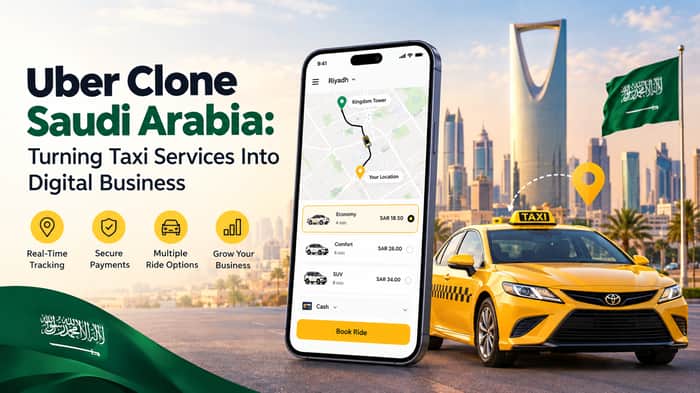
Saudi Arabia is rapidly embracing digital transportation solutions, creating new opportunities for entrepreneurs and traditional taxi businesses. As customers increasingly prefer booking rides through smartphones, taxi operators can move beyond conventional services by launching their own digital platforms.
An Taxi App Saudi Arabia solution provides a practical way to enter the ride-hailing market with a ready-made foundation that can be customized for local business requirements. Instead of developing an application completely from scratch, entrepreneurs can use an Uber-like platform with essential ride-booking features and adapt it to their brand, services, pricing model, and target customers.
The Growing Demand for Digital Taxi Services in Saudi Arabia
Transportation habits are changing across Saudi Arabia. Customers increasingly expect convenient booking, transparent pricing, digital payments, driver tracking, and quick access to transportation.
Traditional taxi services can still serve customers effectively, but app-based platforms offer additional convenience. A passenger can request a ride, view driver information, track the vehicle, and receive trip details through a mobile application.
For taxi companies, this digital transformation can provide opportunities to:
- Reach more customers through mobile platforms
- Reduce dependence on traditional booking methods
- Manage drivers from a centralized dashboard
- Improve customer communication
- Offer multiple ride categories
- Track bookings and business performance
- Introduce digital payment options
- Expand services into new locations
An Uber Clone can bring these capabilities together into one scalable platform.
What Is an Uber Clone Saudi Arabia Solution?
An Uber Clone is a customizable ride-hailing application inspired by the core functionality of popular taxi-booking platforms.
It typically includes separate interfaces for passengers, drivers, and administrators. Each user receives tools designed around their specific responsibilities.
For example, passengers can search for available rides and book transportation, while drivers can accept trip requests and manage their availability. Administrators can oversee users, drivers, bookings, payments, commissions, and platform settings.
For businesses operating in Saudi Arabia, the platform can be customized with:
- Local currency support
- Arabic and English language options
- Location-based services
- Flexible fare configuration
- Multiple vehicle categories
- Digital payment integration
- Driver management
- Business accounts
- Promotional offers
- Real-time trip tracking
This allows a company to create a branded taxi-booking ecosystem rather than simply operating through an existing third-party platform.
Why Turn a Taxi Business Into a Digital Platform?
For traditional taxi operators, digital transformation can create a significant difference in how services are delivered.
1. Convenient Ride Booking
Customers do not need to depend only on phone calls or physical taxi stands. They can request a ride directly from their smartphones.
The app can display available vehicle options, estimated fares, driver information, and booking status.
2. Better Driver Management
A dedicated driver application can help operators manage their fleet more efficiently.
Drivers can update their availability, receive trip requests, navigate to pickup locations, and review completed rides.
The administration panel can provide an overview of active and inactive drivers.
3. Wider Customer Reach
A mobile application can make a taxi company accessible beyond its existing customer base.
Businesses can promote their app through digital marketing, social media, search engines, referral programs, and local partnerships.
4. Multiple Revenue Opportunities
A digital taxi platform can support several revenue models.
The business may generate income through:
- Commission on completed rides
- Booking fees
- Surge or dynamic pricing
- Driver subscription plans
- Corporate transportation packages
- Advertising opportunities
- Premium ride categories
- Cancellation charges
The right combination depends on the company's target market and operating model.
Essential Features of an Uber Clone in Saudi Arabia
A successful ride-hailing platform requires more than a simple booking screen. It should provide a smooth experience across passenger, driver, and administration interfaces.
Passenger App
The passenger application can include:
- User registration and login
- Profile management
- Location detection
- Pickup and destination selection
- Fare estimation
- Vehicle selection
- Ride booking
- Driver information
- Real-time driver tracking
- In-app communication
- Multiple payment options
- Ride history
- Ratings and reviews
- Digital receipts
- Promo codes
- Cancellation options
- Customer support
These features help create a convenient booking experience.
Driver App
The driver application can include:
- Driver registration
- Document submission
- Profile management
- Online/offline status
- Trip request notifications
- Ride acceptance and rejection
- Navigation integration
- Passenger details
- Earnings dashboard
- Trip history
- Ratings
- Wallet management
- Support functionality
Driver usability is especially important because drivers interact with the application throughout their working day.
Admin Panel
The administration dashboard provides centralized control over the platform.
Administrators can manage:
- Customers
- Drivers
- Vehicles
- Bookings
- Payments
- Commissions
- Locations
- Pricing
- Promotions
- Complaints
- Reports
- Notifications
- Platform settings
Analytics can also help business owners understand booking volume, revenue trends, driver activity, popular service areas, and customer behavior.
Arabic and English Language Support
A ride-hailing platform targeting Saudi Arabia should consider the needs of both Arabic- and English-speaking users.
Providing multilingual functionality can improve accessibility and make the platform easier to use for different customer groups.
The interface, notifications, booking information, and support content can be structured to support multiple languages.
This can be particularly valuable for businesses serving local residents, international workers, business travelers, and visitors.
Digital Payments and Pricing Flexibility
Digital payment functionality is an important part of modern ride-hailing applications.
Depending on the business model and available payment providers, the platform can support suitable online payment methods alongside cash payments.
The business can also configure different pricing structures based on factors such as:
- Base fare
- Distance
- Time
- Vehicle category
- Waiting time
- Service area
- Peak demand
- Special promotions
Flexible pricing allows operators to adapt their business model as customer demand changes.
GPS, Maps, and Real-Time Tracking
Location technology is at the center of a ride-hailing application.
GPS and mapping functionality can help determine the customer's pickup location, identify nearby drivers, calculate routes, and provide navigation assistance.
Real-time tracking allows passengers to see the driver's location after a booking has been accepted.
For drivers, navigation tools can help them reach pickup and drop-off locations efficiently.
These capabilities can contribute to a more transparent and reliable ride experience.
Advanced Features for a Competitive Taxi Platform
Once the core application is established, businesses can introduce advanced functionality to differentiate their platform.
Scheduled Rides
Customers can book rides for a future date and time. This can be useful for airport transfers, business meetings, appointments, and planned travel.
Multiple Ride Categories
A platform can offer different vehicle categories based on customer requirements, such as economy, premium, family, or larger vehicles.
Corporate Accounts
Businesses can create corporate transportation programs for employees, clients, or business travelers.
Corporate customers may receive centralized billing, employee ride management, and reporting tools.
Referral Programs
Referral functionality can encourage existing customers to invite new users to the platform.
Businesses can create referral rewards based on their marketing strategy.
Loyalty Programs
A loyalty system can encourage repeat bookings through points, discounts, or membership benefits.
Driver Incentives
The platform can support incentive programs designed to encourage driver participation during specific periods or in selected service areas.
How to Start a Digital Taxi Business in Saudi Arabia
Launching an Uber-like taxi platform requires more than purchasing software. Entrepreneurs should approach the project as a complete business strategy.
Step 1: Define the Business Model
First, determine how the platform will generate revenue.
Will the business operate as a fleet-based taxi company, a marketplace connecting independent drivers with passengers, or a combination of both?
The answer will influence the platform's features and operational structure.
Step 2: Identify the Target Market
Determine which customers the platform will serve.
Potential segments may include:
- Daily commuters
- Families
- Business travelers
- Tourists
- Airport passengers
- Corporate customers
- Premium transportation users
Understanding the target audience helps shape pricing, vehicle categories, marketing, and application design.
Step 3: Choose the Right Technology
Businesses can choose between developing a completely new application and using a customizable ready-made solution.
An Uber Clone can reduce development time because many fundamental ride-hailing components are already available.
Step 4: Customize the Platform
The application should reflect the company's brand identity and business requirements.
Customization can cover:
- Logo and branding
- Application design
- Language
- Pricing
- Vehicle categories
- Payment options
- Commission settings
- Service areas
- Notifications
- Business rules
Step 5: Build a Driver Network
A ride-hailing platform needs sufficient driver availability to provide reliable service.
Businesses can develop driver acquisition strategies through local advertising, partnerships, incentives, and targeted recruitment.
Step 6: Launch and Promote the App
After testing, the platform can be introduced to the target market.
Digital marketing strategies may include SEO, social media marketing, paid advertising, referral campaigns, local partnerships, and promotional offers.
Benefits of Choosing an Uber Clone
Using a customizable Uber Clone can provide several advantages for entrepreneurs.
Faster Market Entry
A ready-made foundation can reduce the time required to develop fundamental ride-hailing functionality.
Lower Initial Development Complexity
Businesses do not necessarily need to build every component from the ground up.
Customizable Business Model
The platform can be adapted to different pricing, commission, service, and operational models.
Scalable Architecture
As the customer and driver base grows, businesses can expand services and introduce additional functionality.
Complete Business Control
With their own branded platform, businesses can manage customers, drivers, pricing, promotions, and operational data through their own system.
Challenges to Consider
Launching a digital taxi platform also comes with challenges.
Competition can be strong, so businesses need a clear value proposition. Driver availability, customer acquisition, service quality, pricing, and regulatory requirements should also be considered carefully.
Businesses should pay attention to:
- Local transportation regulations
- Driver and vehicle requirements
- Data privacy
- Payment security
- Customer support
- Platform reliability
- Application performance
- Driver verification
- Insurance requirements where applicable
Legal and regulatory requirements can vary depending on the exact business structure and location, so entrepreneurs should obtain appropriate local professional advice before launching.
How to Make an Uber Clone Successful in Saudi Arabia
Technology alone does not guarantee success. The business needs a strong operational strategy.
Focus on customer experience by making booking fast and simple.
Focus on driver experience by providing reliable trip requests, transparent earnings information, and easy-to-use tools.
Focus on service quality by monitoring ratings, complaints, cancellations, and customer feedback.
Finally, use analytics to identify the locations, services, and customer segments generating the strongest demand.
A combination of technology, local market knowledge, reliable drivers, competitive pricing, and effective marketing can help create a sustainable ride-hailing business.
Final Thoughts
The shift from traditional taxi services to digital transportation platforms is creating new opportunities for entrepreneurs in Saudi Arabia. An Uber Clone Saudi Arabia solution can provide the technological foundation needed to launch a branded ride-hailing business with passenger, driver, and administration applications.
Rather than simply copying another platform, businesses should use the concept as a foundation and customize it around their target customers, operating model, service areas, pricing strategy, and long-term goals.
With the right technology, driver network, customer experience, marketing strategy, and operational planning, a traditional taxi business can evolve into a modern digital transportation platform.
Frequently Asked Questions
1. What is an Uber Clone Saudi Arabia app?
An Uber Clone Saudi Arabia app is a customizable ride-hailing platform that provides functionality similar to popular taxi-booking applications. It can be branded and adapted for a business operating in Saudi Arabia.
2. Can an Uber Clone support Arabic and English?
Yes. A customized ride-hailing platform can support multiple languages, including Arabic and English, depending on the application's requirements.
3. What features should an Uber Clone include?
Important features can include ride booking, GPS tracking, driver management, fare estimation, digital payments, ratings and reviews, notifications, trip history, promotions, and an administration dashboard.
4. Can I customize the Uber Clone for my taxi business?
Yes. Businesses can customize branding, pricing, vehicle categories, service areas, commissions, payment options, languages, and other platform functionality.
5. Can an Uber Clone support multiple vehicle types?
Yes. A platform can be configured to support different vehicle categories according to the business model and available fleet.
6. Can customers schedule rides in advance?
Yes. Scheduled booking functionality can allow customers to request transportation for a future date and time.
7. Can I add corporate transportation services?
Yes. Corporate accounts can be added to support employee transportation, business travel, centralized billing, and reporting.
8. How does an Uber Clone generate revenue?
Common revenue models include ride commissions, booking fees, premium services, driver subscriptions, corporate packages, advertising, and cancellation charges.
9. Is an Uber Clone suitable for a startup?
Yes. A customizable ready-made platform can provide startups with a foundation for launching a ride-hailing business without developing every core feature from scratch.
10. What should I consider before launching an Uber Clone in Saudi Arabia?
Entrepreneurs should evaluate their target market, business model, driver acquisition strategy, technology requirements, payment options, customer support, marketing plan, and applicable Saudi regulations before launching.
