Unblock Amazon with Crawlbase Smart Proxy: My Best Kept Data Secret
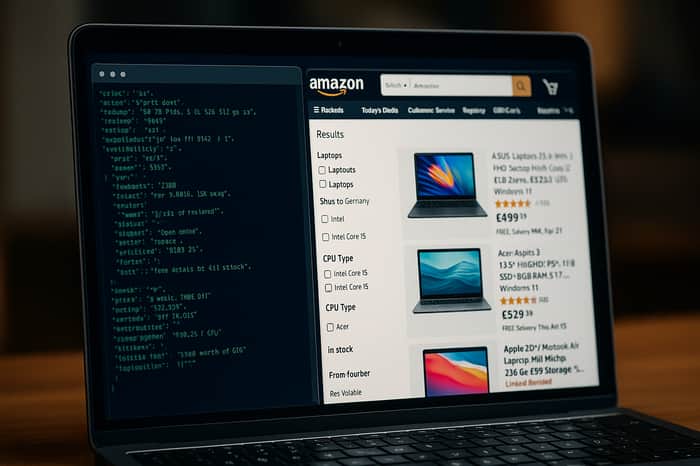
Let’s get real—scraping Amazon isn’t for the faint of heart.
You write a scraper, it works for a few hours, and then bam—you're blocked.
No more data, just CAPTCHAs, 403s, and timeouts. This is where most developers either rage quit or go down a rabbit hole of tools that barely help.
But what if I told you the answer isn’t more proxies or fancier headless browsers? It’s learning how to unblock Amazon with Crawlbase Smart Proxy.
When I switched to Crawlbase, everything changed. I stopped debugging scripts and started working with clean, reliable data.
This isn’t a product pitch—it’s a real-world guide to escaping the frustration of scraping Amazon.
Amazon’s Defenses Are Built to Stop You
Amazon has spent years building sophisticated bot protection systems:
-
IP rate limiting
-
Device and fingerprint tracking
-
Session validation
-
CAPTCHA walls
-
Page cloaking and redirects
Even well-crafted scrapers eventually hit the wall. I used residential proxies, headless browsers, rotated headers—still got blocked.
The turning point was when I decided to unblock Amazon with Crawlbase Smart Proxy.
What Makes Crawlbase Smart Proxy Different
Crawlbase Smart Proxy doesn’t just rotate IPs. It simulates behavior.
Here’s what it handles behind the scenes:
-
Smart IP selection and rotation
-
Realistic browser headers
-
Automatic CAPTCHA handling
-
Retry and recovery if blocked
-
Seamless integration with Crawlbase Crawling API, Crawler, and Storage API
All you need is a token and a URL. Crawlbase takes care of everything else.
That’s why I rely on it every time I need to unblock Amazon with Crawlbase Smart Proxy.
The One Line That Changed My Workflow
After hours of failure, this single request got me real HTML from Amazon:
params = {
  'token': 'YOUR_CRAWLBASE_TOKEN',
  'url': 'https://www.amazon.com/dp/B09XYZ1234',
  'smart': 'true'
}
The smart=true flag unlocks Crawlbase’s proxy intelligence.
From that moment on, I knew the game had changed.
No more CAPTCHA solvers. No more fake mouse movements. Just structured data—fast.
Scaling With the Crawler
Once I had single-page scraping working, I needed to scale. That’s where the Crawler came in.
The Crawler lets you:
-
Queue thousands of URLs
-
Set up callback webhooks
-
Scrape search results and product pages
-
Use Smart Proxy under the hood
Here’s an example:
payload = {
  'token': 'YOUR_CRAWLBASE_TOKEN',
  'url': 'https://www.amazon.com/s?k=wireless+earbuds',
  'callback': 'https://yourdomain.com/hook',
  'smart': 'true'
}
This allows me to unblock Amazon with Crawlbase Smart Proxy on a massive scale—without building and managing queues myself.
Why Storage API Completes the System
Once you scrape the data, what do you do with it?
Instead of building a database, I let Crawlbase’s Storage API handle everything. It allows me to:
Save scrape results securely
Tag and organize by project
Export JSON when needed
Re-process old results
This makes it simple to run long-term campaigns without worrying about infrastructure.
It’s the backend solution to pair with your effort to unblock Amazon with Crawlbase Smart Proxy.
What I Use It For Now
Here are some actual projects I run with Crawlbase:
-
Daily price monitoring on electronics, home goods, and trending products
-
Affiliate tracking and link health verification
-
Search result scraping to monitor Amazon SEO
-
Review analysis for customer sentiment
In every single case, I start with the same principle:
Unblock Amazon with Crawlbase Smart Proxy, then let the rest of the stack handle the business logic.
Best Practices I’ve Learned
To keep your scraping smooth and efficient, follow these tips:
Always include smart=true in every Amazon request
Use the Crawler for scaling—don’t reinvent the queue
Save your data using the Storage API
Monitor response status codes and retry if needed
Respect Crawlbase’s usage guidelines
Scraping Amazon is about consistency. If you unblock Amazon with Crawlbase Smart Proxy properly, you’ll spend less time fixing and more time building.
What to Do When Things Break
Even with smart proxies, things can go wrong. Here's how I handle common issues:
CAPTCHA returned → Ensure smart=true is enabled
Empty response → Check if page is geo-blocked or bot-filtered
403 error → Use Crawler or try Crawlbase premium routes
Slow loads → Adjust timeout or delay between tasks
Most of the time, these issues resolve automatically when you rely on Smart Proxy’s intelligence.
But it helps to log and track issues—Crawlbase’s dashboard makes that part easy too.
Why I No Longer Use Puppeteer or Headless Browsers
In the past, I spent days tweaking headless browsers. Chrome flags. Bot detection. Window size hacks.
It worked for a while. Then it didn’t.
Since switching to Crawlbase, I’ve let go of:
-
Chrome installations
-
Session spoofing
-
DevOps headaches
-
CAPTCHA solving extensions
Because when you can unblock Amazon with Crawlbase Smart Proxy, you don’t need a browser—you need results.
Final Thoughts: It’s Time to Stop Struggling
Scraping Amazon will always be a challenge—but it doesn’t have to be a battle.
If you’re spending more time patching broken scripts than analyzing your data, maybe it’s time to simplify.
Crawlbase gave me a reliable, production-ready system to extract Amazon data.
And that started with one decision: to unblock Amazon with Crawlbase Smart Proxy.
It’s not magic. It’s well-engineered infrastructure that saves hours of work and lets you focus on insights—not error logs.
One Last Resource You’ll Love
If you want to dig deeper into the topic and learn exactly how this works technically, I highly recommend this guide from Crawlbase:
How to Unblock Amazon with Smart Proxy
It covers the mechanics, edge cases, and best practices with examples.
It’s the guide I wish I had when I started—and now I’m passing it along to you.
