Understanding the USDT-INR P2P Market and How Transactions Work
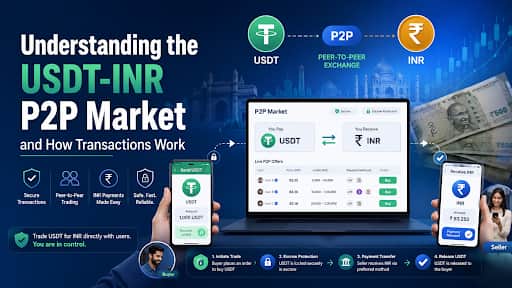
USDT has become one of the most commonly used digital assets for people who want to move between cryptocurrency and traditional currency. In India, this has created growing interest in USDT-INR P2P trading, where buyers and sellers interact through a digital marketplace and complete transactions using Indian rupees.
At first glance, the process may seem simple. A buyer wants USDT, a seller wants INR, and both sides agree on a trade. In practice, several factors influence the final transaction, including price, available liquidity, order size, payment preferences, and the conditions set by individual marketplace participants.
Understanding these elements can help users make more informed decisions instead of selecting an offer based only on the displayed rate. A P2P marketplace works best when users understand why prices differ, how orders are structured, and what to review before committing to a transaction.
What a USDT-INR Trading Pair Represents
A trading pair shows the relationship between two assets. In a USDT-INR P2P market, one side of the transaction involves USDT and the other involves Indian rupees.
A buyer is essentially using INR to acquire USDT, while a seller is exchanging USDT to receive INR.
The displayed rate tells users how much INR is being requested or offered for one unit of USDT. However, the final terms can vary from one participant to another.
For example, two sellers may both have USDT available, but each can quote a different INR price. They may also set different order limits and accept different payment methods.
This creates a marketplace where users can compare options instead of relying on one fixed offer.
Where P2P Prices Come From
One of the most important things to understand is that P2P prices are not always identical across the marketplace.
Individual traders can set their own rates according to market conditions, available inventory, demand, transaction size, and personal trading preferences.
If demand for USDT is high, some sellers may adjust their prices accordingly. If many sellers are competing for buyers, rates may become more competitive.
Broader crypto market activity can also influence how participants price their offers.
The rate shown in a P2P marketplace should therefore be viewed as part of a live market rather than a permanently fixed conversion value.
Users should compare multiple offers before deciding which one best fits their needs.
Why Different Sellers Can Quote Different Rates
Different prices are normal in a P2P environment.
One seller may prioritize completing transactions quickly and set a competitive rate. Another may prefer a higher margin and wait longer for a suitable buyer.
Transaction size can also make a difference.
A seller dealing with larger orders may offer different pricing from someone who specializes in smaller transactions. The preferred payment method may also affect the rate because different traders can have different settlement preferences.
Users should avoid assuming that the cheapest or most expensive offer is automatically the best one.
The complete transaction conditions should be reviewed, including:
Minimum order size
Maximum order size
Available USDT quantity
Accepted payment method
Counterparty information
Time allowed for payment
Any additional trade conditions
The most suitable offer is usually the one that matches both the desired rate and practical transaction requirements.
The Relationship Between Liquidity and Order Size
Liquidity refers to how easily an asset can be bought or sold without creating major difficulty in completing the transaction.
In a USDT P2P India marketplace, liquidity can be observed through the number of available offers, the amount of USDT available, and the range of order sizes participants are willing to handle.
For someone buying a small amount of USDT, finding an appropriate offer may be relatively straightforward when multiple sellers accept smaller orders.
Larger transactions may require more attention.
A buyer who wants a significant quantity of USDT must find a seller with enough available inventory and an order limit that supports the intended purchase.
The same applies to sellers. Someone planning to sell a large amount may need to compare buyers based on their maximum transaction limits.
Liquidity is therefore about more than the number of traders. It also concerns how well available offers match a specific order size.
How Payment Preferences Affect Marketplace Offers
Payment methods are an important part of P2P trading because the crypto and INR portions of the transaction are handled differently.
The digital asset is managed through the trading platform, while the INR payment generally follows the agreed settlement instructions.
Different participants may prefer different payment channels, depending on what the platform supports and what they are comfortable using.
This can influence the offers visible to users.
One seller may only accept a particular payment method, while another may provide more flexibility. A buyer should confirm that the required payment option is available before opening an order.
Similarly, sellers should make sure their receiving information is accurate.
Payment convenience can sometimes be more valuable than a small difference in price, especially when a user wants a straightforward transaction.
What Buyers Should Read Before Selecting an Order
A common beginner mistake is focusing on the USDT price while ignoring the rest of the listing.
Before selecting an offer, buyers should read the complete order information.
The first check should be whether the trade amount falls within the seller's minimum and maximum limits. A buyer should then review the payment method and make sure it can be used correctly.
Where the platform provides information about the counterparty, it can also be useful to review relevant verification or trading details.
Once an order is created, the buyer should follow the displayed payment instructions carefully.
Sending the wrong amount or ignoring the seller's stated conditions can create delays.
A well-chosen order is not simply the lowest available rate. It is an offer that fits the buyer's amount, payment method, and transaction requirements.
What Sellers Can Learn From Market Activity
Sellers can also benefit from observing the marketplace before creating or accepting a trade.
Looking at current buy and sell offers can provide a general sense of market activity.
If many participants are competing within a narrow price range, that information may help a seller understand current pricing conditions. If available offers are limited, the marketplace may behave differently.
Order sizes can provide another useful signal.
A seller can see whether buyers are mainly looking for smaller transactions or whether there is demand for larger quantities.
This does not guarantee that a particular trade will be completed, but it can help users understand the environment before setting their own expectations.
Market observation is especially useful for users who trade regularly rather than making a one-time transaction.
Why Platform Features Matter in P2P Trading
A P2P marketplace is not only about matching buyers and sellers. The platform around the marketplace also matters.
Account verification, security controls, wallet access, transaction management, and customer support can all influence the user experience.
For example, CoinYatra.com provides Indian users with access to P2P crypto trading alongside wallet management, deposits, withdrawals, swaps, and support for digital assets such as Bitcoin, USDT, Ethereum, SOL, and other supported cryptocurrencies.
The platform also includes KYC verification and 2-Factor Authentication as part of its account security features.
Having several crypto management tools available through one account can be convenient for users who want to move between holding, swapping, buying, and selling digital assets.
Users should still review platform terms, applicable fees, transaction limits, and eligibility requirements before completing any trade.
Looking Beyond the Lowest or Highest Advertised Price
Price attracts attention, but experienced marketplace users learn to look at the entire transaction.
A buyer may see an unusually low USDT price and assume it is the best deal. A seller may see a particularly high INR offer and reach the same conclusion from the opposite side.
However, rates should always be considered together with liquidity, order size, payment requirements, transaction history, and settlement conditions.
An offer that looks attractive may not support the user's intended amount. It may also involve payment terms that are inconvenient or unsuitable.
A better approach is to compare several listings and ask whether each one fits the actual purpose of the trade.
Understanding USDT-INR P2P trading is largely about understanding how marketplaces function. Prices respond to participants, liquidity affects available choices, order sizes shape which offers can be used, and payment preferences influence settlement.
Users who understand these factors are better prepared to evaluate the market rather than reacting only to the first number they see.
P2P trading gives individuals more control over how they buy and sell digital assets, but that control comes with responsibility. Reading order terms, checking payment details, reviewing available options, and following platform procedures can make every transaction easier to understand and manage.
For anyone exploring the USDT-INR market, careful comparison remains one of the most useful habits. A good transaction is not simply about getting an attractive rate. It is about finding an offer that makes sense as a complete package.

