Using Dehumidifiers in Industrial Warehouses: Best Practices
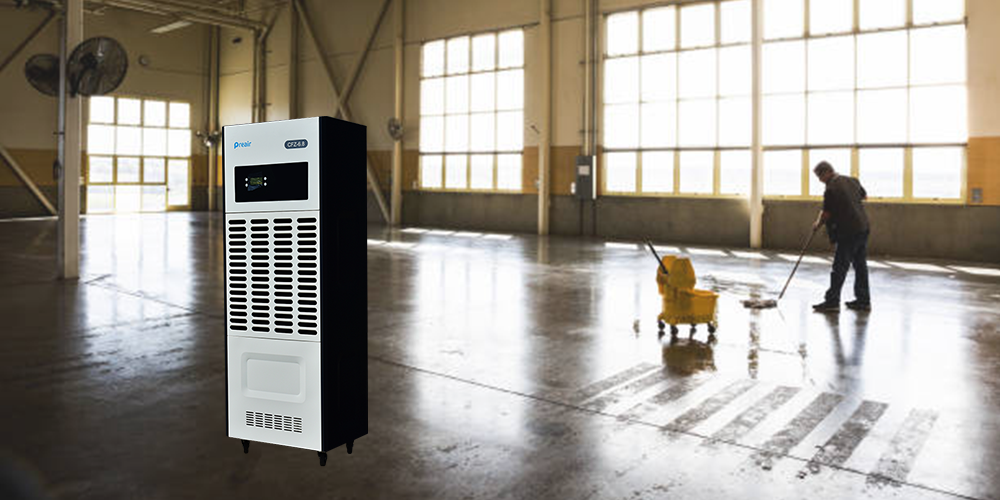
Humidity plays a critical role in industrial warehouses. Excess moisture harms the inventory and building materials. By installing the appropriate dehumidifiers, you can make a big difference.
Most industrial warehouses perform well when the relative humidity stays between 30% and 50%. Products may also spoil once the humidity is above this. You can avoid all these by using dehumidifiers properly.
Warehouses can also combine IoT with their dehumidifier systems. The system has the potential to increase operational efficiency by 20 percent. The following are practical best practices for using dehumidifiers in industrial warehouses.
Best Practices of Using Dehumidifiers in Industrial Warehouses
Select the Correct Dehumidification
Different warehouses require different dehumidification technologies.
Fridge or condensation dehumidifiers are best in buildings where temperatures remain above 15 °C (60F). And the target RH is higher than 45% RH.
Desiccant rotor dehumidifiers work well in colder climates. They are also capable of working under sub-zero temperatures. It helps to drop the humidity to less than 40% RH.
Dehumidifiers based on heat pumps are highly efficient. They reuse the heat generated during condensation to warm the dry air
Proper Sizing and Placement
Correct sizing is essential for effective dehumidification. The general industrial standard is to supply 1 pint of moisture removal ability.
Install dehumidifiers centrally with a 12 to 18 inches distance from the walls. This allows proper airflow. It also ensures the unit can circulate dry air throughout the facility.
For large warehouses, you should install multiple units. Each unit can provide about 60–70% of the required capacity. If one unit malfunctions, the other ones keep humidity in check.
Enhance Structural Sealing and Air Control
The most efficient dehumidifier cannot work well if outside air is always entering the building with moisture.
Install air curtains or strip doors in the loading docks. It will help to minimize outside air infiltration. Seal the cracks of the buildings and cover the open water tanks. So that you can avoid unwarranted entry of moisture in the space.
Storage layout is an issue as well. Load pallets without being overridden. Store in racks whose sides are open to allow air to flow. Adequate ventilation ensures that the humidity level does not vary throughout the warehouse.
Monitoring and Automation
Contemporary warehouses can use automated humidity control systems. Humidistats are capable of automatically controlling the dehumidifiers. This will eliminate over-drying and will save on energy.
Multiple sensors can also be installed in the facility. It is recommended to have a single humidity sensor per 40-50 square meters. This will enable the managers to identify moisture issues.
To operate easily, units with inbuilt pumps or gravity drainage are recommended. This will avoid tank emptying, which is done manually. It will prevent system shutdowns.
Case Study: Pharmaceutical Warehouse Humidity Control in Warehouse
Problem: A pharmaceutical warehouse in the UK was dealing with humidity issues during the winter months and transition seasons. Employees reported seeing condensation on shelving racks, boxes becoming soft, and equipment rusting when exposed to moisture for extended periods. They also needed to manage humidity levels to meet storage guidelines for temperature-sensitive medications.
Solution: Humidity loggers revealed average humidity inside the warehouse was above 65% RH during mornings and evenings.
They implemented a humidity control plan that included:
Purchase and installation of commercial grade desiccant dehumidifiers.
Integration of warehouse humidity sensors with their building management system (BMS).
Maintaining average humidity setpoints below 50% RH.
Sealing gaps around loading dock doors and upgrading air curtains.
Developing preventative maintenance schedules.
Results: After implementing industrial dehumidification, they were able to achieve:
Consistent humidity levels throughout the warehouse.
No condensation on racks or structural steel support members.
Better protection of humidity-sensitive inventory/products.
Reduced risk of spoilage and damaged packaging.
Increased confidence during warehouse audits for pharmaceutical storage compliance.
Learn more about how humidity control can help improve storage conditions for sensitive products in warehouses and distribution centers.
Industrial Warehouse Humidity FAQs
What is the ideal humidity level for an industrial warehouse?
It depends on the application and stored products, but for most warehouses, we recommend keeping RH between 30% and 50%. This provides a good balance of comfort for employees and protection for inventory, equipment, building structure, and packaging. Some industries like pharmaceuticals require much tighter humidity control.
Why is humidity control important in warehouses?
Relative humidity levels that are too high can cause many issues for warehouse operations such as:
Condensation on equipment
Rust & corrosion
Increased mould and mildew
Damaged cardboard boxes
Product spoilage
Loss of sensitive inventory
Closer temperature monitoring
Increased humidity also causes air handlers to work harder which can decrease equipment reliability lifespans. Keeping humidity in check helps protect inventory and reduces overall maintenance costs.
Which type of dehumidifier works best for industrial warehouses?
It depends on the specific building and climate:
Ref dehumidifiers work well in warmer warehouses or those operating above 65°F (18°C) with average humidity levels.
Desiccant dehumidifiers are ideal for cold storage warehouses and below freezing temperatures. Desiccants can also achieve much lower humidity levels than refrigerant based dehumidifiers.
Heat pump dehumidifiers can offer industry leading energy efficiency in the right conditions.
How do you size warehouse dehumidifiers?
Several factors influence how many dehumidifiers you need for optimum humidity control:
Warehouse size & ceiling height
Temperature
Existing humidity levels
Moisture load (water volume)
Loading dock openings
Outdoor climate
Air changes per hour (ACH)
A trained industrial technician can help properly size dehumidifiers for your warehouse using a free humidity assessment.
Where should warehouse dehumidifiers be placed?
Ideally, place dehumidifiers close to where moisture enters the warehouse near loading docks. Avoid placing them near blocked airflow or restricted areas.
Always leave space around the dehumidifier for proper air circulation and drainage. Dehumidifiers remove a lot of water so make sure they can drain freely.
Large warehouses may need multiple units spread throughout the facility for consistent humidity control.
Can warehouse dehumidifiers connect to automated humidity controls?
Yes. Smart dehumidifiers can be integrated with humidity sensors, IoT devices, and even a building management system (BMS). Modern systems use automatic humidistats that adjust runtime based on real-time humidity levels. This can dramatically reduce energy usage while keeping humidity levels steady.
How often should commercial dehumidifiers be serviced?
In general, you should:
Regularly clean or replace air filters
Inspect coils and fans for dust build-up
Ensure drainage functions properly
Confirm humidity sensors are calibrated correctly
Have units professionally serviced once per year
Commercial and industrial grade dehumidifiers are built for continuous runtime, but like any machinery they require regular maintenance to operate at peak efficiency.
What industries can benefit from dehumidifying a warehouse?
While proper humidity control can benefit any warehouse, facilities that commonly store:
Pharmaceuticals
Food & beverage
Electronics
Automotive parts
Paper products
Cold storages
Clothing/Fabrics
Will benefit most from dehumidifiers. Any inventory that is sensitive to moisture can be protected by controlling humidity levels.
Can dehumidifiers save money on energy in a warehouse?
Installing dehumidifiers can actually reduce energy costs. Lower humidity levels will minimize condensation which protects HVAC equipment and allows temperature control systems to operate more efficiently. Additionally, you could save money by preventing damage to inventory, building materials, and machinery.
Does humidity monitoring prevent warehouse inventory losses?
Definitely. Wireless humidity sensors allow you to monitor moisture levels across your entire warehouse. By spotting trends and identifying potential problems early, proactive humidity monitoring is the best tool for preventing inventory losses due to moisture.
Final words
Maintain the dehumidifier properly. You can use a dedicated electrical circuit to avoid voltage fluctuations. Besides, clean filters and coils every six months. You should also consider professional servicing once a year to ensure the system operates efficiently.

