Using Google's "Design Sprint" to design an MVP
I recently read about The Design Sprint, a five-day process for solving problems and testing new ideas, created at Google.
I wanted to see how I could adapt it to my situation as a solo, bootstrapped founder.
I've already spent around a month finding a problem worth solving. I've shared some posts on IH in the past documenting that process.
Today I'm sharing my six-step process to design my MVP. I'd love to get feedback on how I could improve it (as well as my end result)!
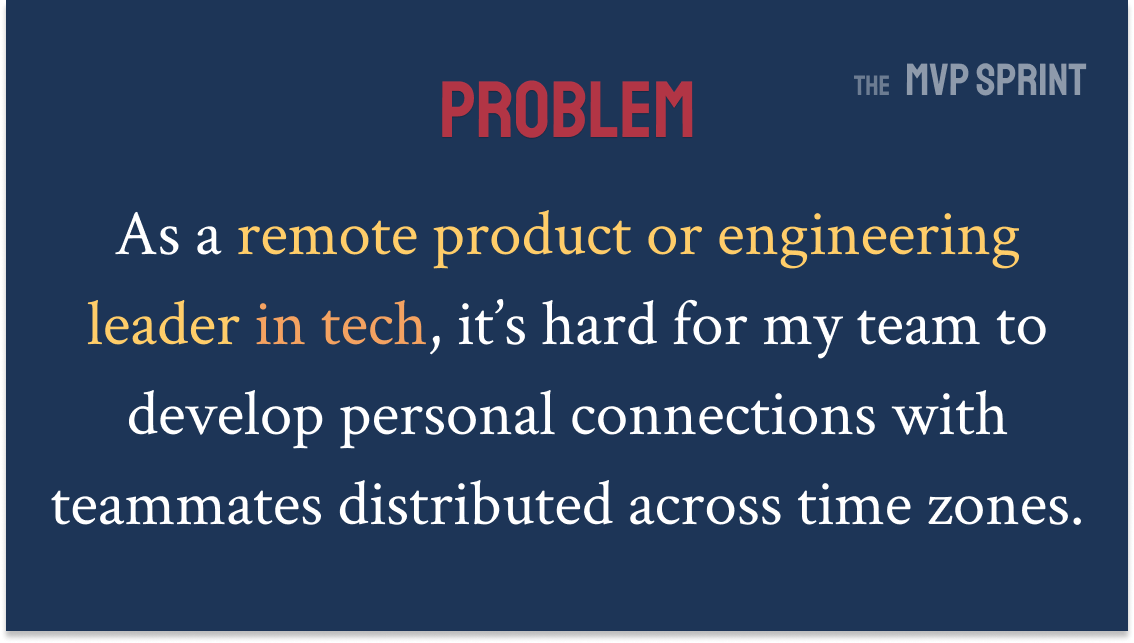
Here's the problem I decided to try and solve:
My solo MVP sprint
Here's my sprint from a birds-eye view:
-
👁️ Step 1 - Vision
-
💡 Step 2 - Inspiration
-
🤔 Step 3 - How might I...?
-
🧠 Step 4 - Solution brainstorming
-
❓ Step 5 - Core hypothesis
-
🏆 Step 6 - Spec my MVP
👁️ Step 1 - Vision
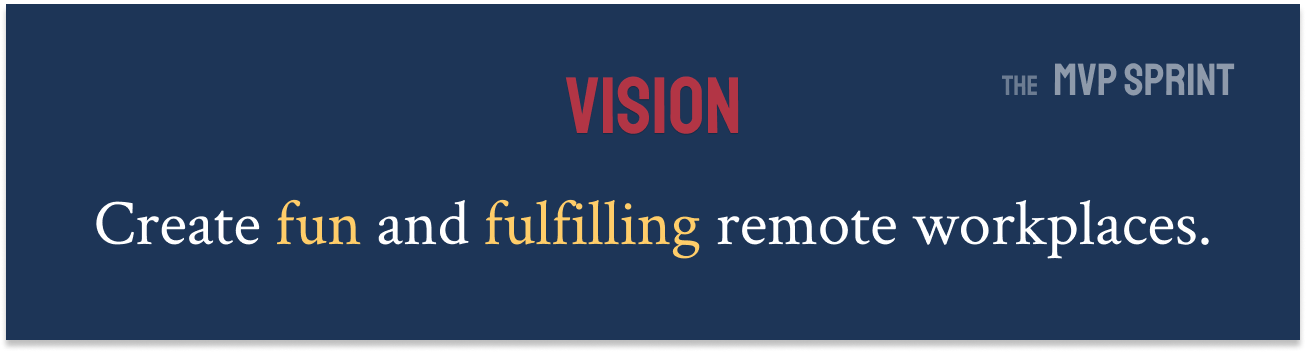
A vision is my destination - even if (when) my path is a windy one, full of U-turns and wrong directions...
Here's mine:
💡 Step 2 - Inspiration
I curated screenshots from 20 different products in Figma, grouping them by product or category. Then I added "stream-of-consciousness" style comments.
I wanted to get inspired not only by products that attempted to solve my problem, but also entirely different ones that I like.
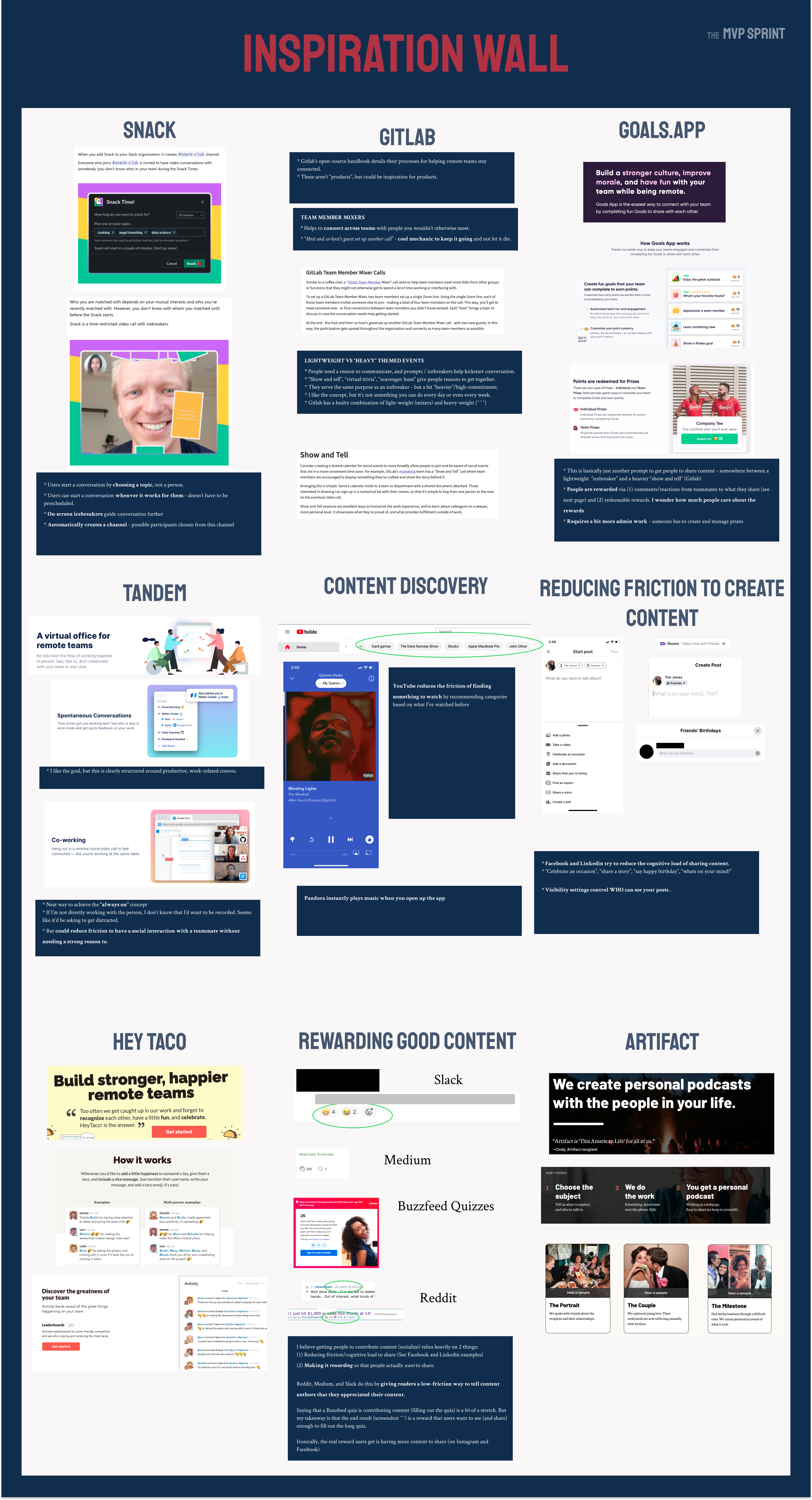
Check out the full "Inspiration Wall" here.
🤔 Step 3 - How might I...?
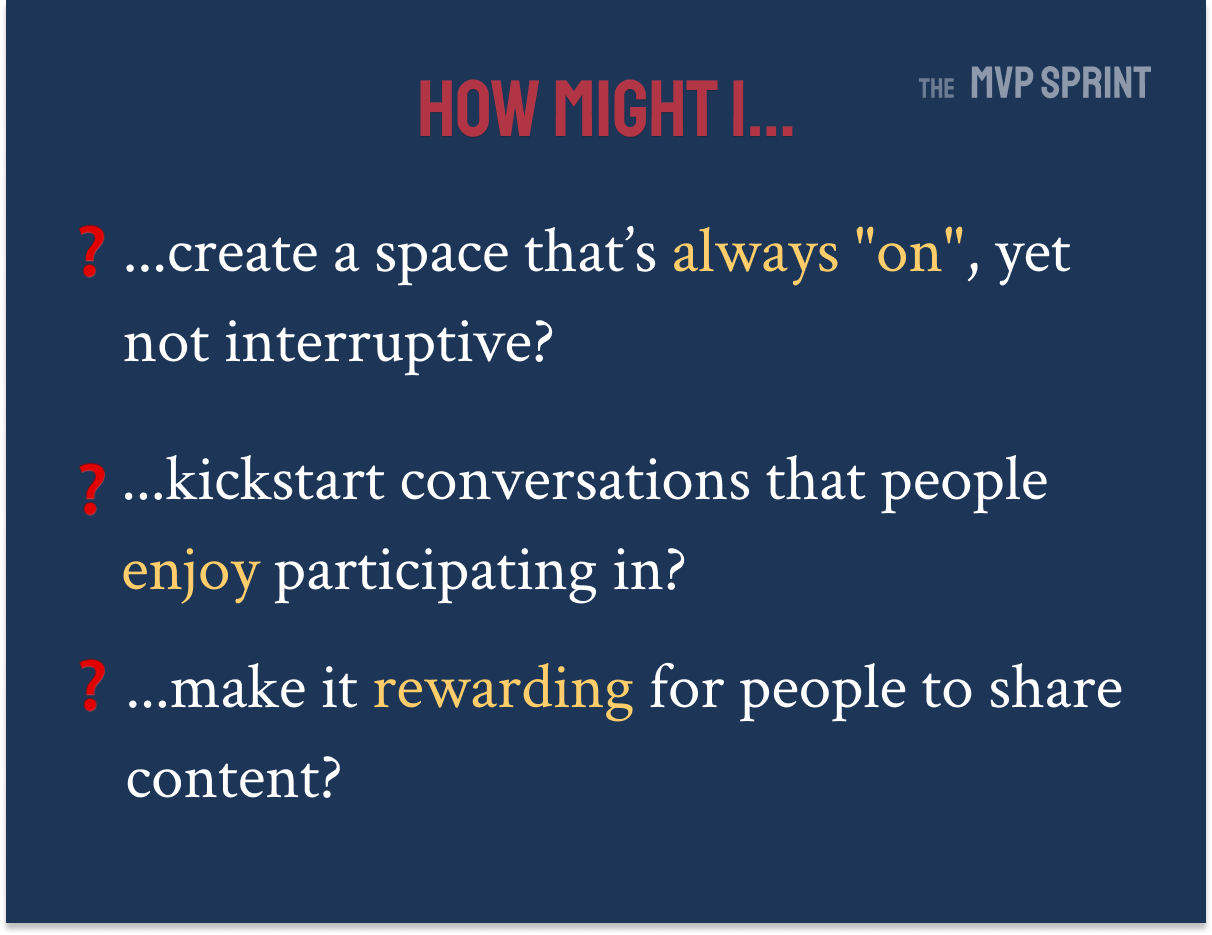
I turn user problems and product inspiration into opportunities using “How might I…” questions.
🧠 Step 4 - Solution brainstorming
This is where it all comes together. I brainstormed solutions that:
-
Answer my “How might I…” questions...
-
in ways that are inspired by other products...
-
and are true to my vision.
FYI - I started with a name (HelloHailey) and a landing page even before I knew what I was building. This is what "Hailey" refers to below.
Here's a quick summary of my top 3:
1.❓ Guess Who? - A question and answer game in Slack where teammates guess which answers belong to which person.
-
🎉 Slack Party - The Hailey bot acts as the perfect party host. She kickstarts conversation in a dedicated "social" channel in Slack.
-
🏡 Themed Rooms - Virtual spaces full of coworkers sharing similar interests.
The 🎉 Slack Party concept is my winning solution. Here's why:
-
Low complexity - I think I can build out a working prototype in 2-4 weeks.
-
High engagement (Hopefully...🤞) - This is my best answer so far to “How might I make conversation prompts that people actually enjoy talking about?”.
-
Always on - I want to replicate that in-office experience of bumping into coworkers at the coffee machine and just chatting about nothing in general.
You can read more about all three solutions here if you're curious.
❓ Step 5 - Core hypothesis
Slack Party relies on one critical hypothesis:
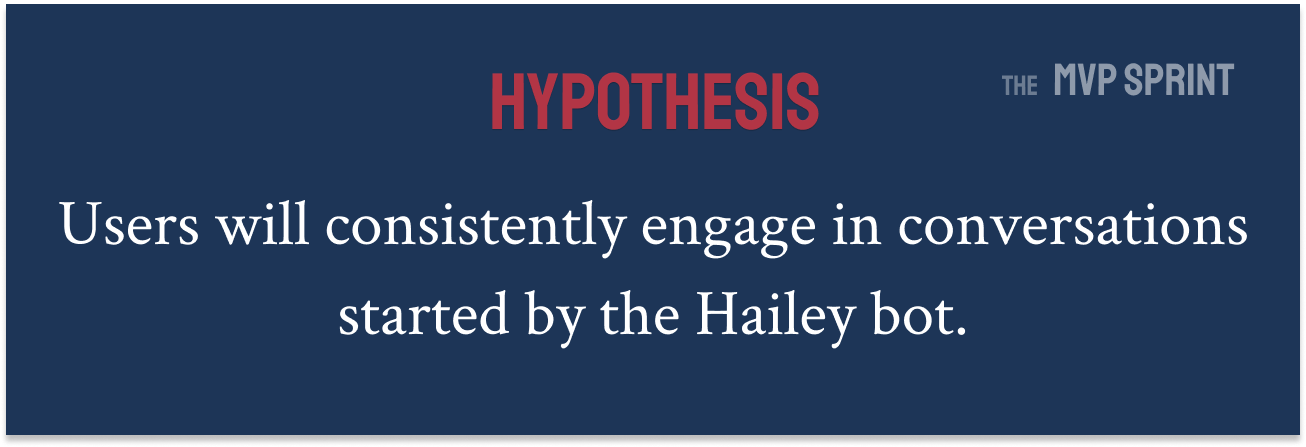
If it's proven wrong, the product will probably fail.
The goal of my MVP is to measurably prove or disprove this core hypothesis.
🏆 Step 6 - Spec my MVP
I won't go into too much detail here as far as specific product requirements. But you can read the whole spec here if you're curious.
I don't want to spend too much time building without getting feedback, so I'm setting a launch deadline of January 15. I'll cut features as needed to hit this deadline.
That's it! A design sprint is done best with a cross-functional team. I went through this solo, so it'd be great to get thoughts from other Indie Hackers on the process or the end result.

read through your website https://www.themvpsprint.com/ so far it's been really interesting to see what steps you've taken and what experiences you've made. I've certainly learned a bit from just reading. good luck with the project!
Oh that’s great! I’m glad you found it helpful.