Viral Loop: Let Your Customer Advertise for You
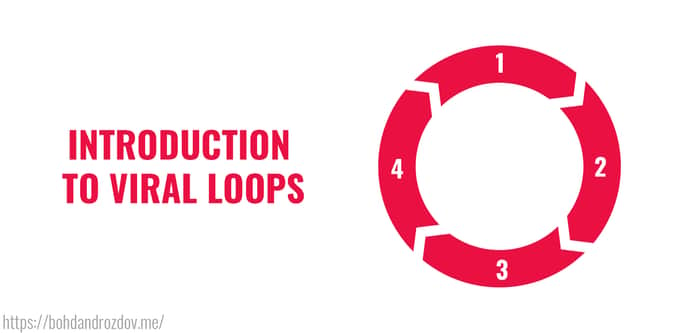
Do you want your product to be viral?
Of course, you do, I do too, everyone does.
Virality is not only about word of mouth. There are a lot of ways to make your product viral.
You might have seen content featuring Grumpy Cat. The owners of the unique-looking kitten posted her photo on Reddit and jostled the internet. It’s still one of the most recognizable feline faces on the web and the face of many memes.
Is the snowball effect of such popularity a pure coincidence or good timing? What if your product or service could also get shared by many, become viral, and bring you huge sales?
Well, the way users share, repurpose, and distribute a piece of content to other channels, making it viral, helps us understand that there are certain patterns you can replicate in your business to set up a viral moment for your creation.
Far better, you can create a sharing mechanism — a viral loop — with a tangible benefit that will encourage your clients to spread the word about your product, connect new users to the cycle, and keep the interest growing.
So, let’s touch on the business science of viral loops in more detail.
What Is a Viral Loop?
Keeping in mind that viral piece of content from the intro that people (users) like, share with friends, and repost to many social media platforms, imagine you can control it. That is, decide what content or information about your company will be distributed and to which platforms or on your channel. And users, on your behalf, perform the preferred action because you motivated them with a reward or incentive.
This process can be closed off into a viral loop, converting customers into a marketing asset that helps spread the word about your product or service to a broad audience.

When a viral loop is crafted appropriately, it enables maximum efficiency with the best capabilities that impact retention, acquisition, and monetization layers. This is because a loop encompasses your product, acquisition channels, and model, making it more defensible against competitors.
Unlike traditional funnels, you share the channels and customers with other businesses, so it’s easier to lose the competition.
But How Does Something Become Viral?
One word — dopamine.
The rational part of the human brain needs time to process and interpret information. The emotional part can cope with information much quicker.
The content itself can bring up positive (curiosity, delight, joy) and negative (anger, fear, sadness) emotions. If people feel it, they are likely to share the content with friends, family, and other connections on the internet because they will get a response from their audience as a reward.
This brings us back to dopamine — a pleasure hormone that gives people a sense of satisfaction triggered by a positive experience. People like to feel entertained, empathized with, and understood. A like, comment, or share of the content they reposted is a +1 coin into the piggy bank of their personal reward system that encourages them to find more relatable content to share.
And since emotions are contagious, word-of-mouth advertising works. Existing users can introduce new users to a business via referrals, link sharing, or any other method. The circle continues indefinitely as receipt users become members of the network and spread the word.
Viral Coefficient
The viral loop is calculated using a viral coefficient that shows the exponential referral cycle accelerating business growth. It estimates the number of new users generated by an average client. The formula is as follows:

Viral Time
The viral cycle time is the time it takes for a user to invite another user — that is, to complete a loop. The shorter this period is, the quicker you get a new client. But it’s more important for users to keep completing the cycle, so your audience grows.
General Steps of the Viral Loop
Given that we now understand what a viral loop is, let us review the broad stages it entails using the example of one of the most popular services — Dropbox — where users can invite friends to earn money and get more free storage space.
1) New user: The foremost step is ‘installing’ or ‘purchasing’ the product or service, whether it is Dropbox or another app or product. This means it enables new users to try out the platform.
2) Invite/action: After creating an account, users invite their friends to install Dropbox to get more storage space. Hence, advertising the referral program and sharing the product for free. As a result, the product gets free advertising with no additional effort and cost, saving both time and money.
3) Branch: When users share the Dropbox link with their friends, they expose the platform to new people. Thus, branch refers to invites per invite and how many people were exposed to the new application.
4) Channel: Users can share the Dropbox link through various social media or traditional channels. Some use messaging applications to invite their friends to Dropbox, while some use WhatsApp or Facebook Messenger to share the link. This is referred to as a channel.
5) Response rate: How many of your friends responded and downloaded the app after you sent the referral links? Response rate, also known as conversion rate, is the number of people exposed to the platform after downloading through the link.
With this example in mind, let’s examine the types of loops and where they fit.
Read the full article: https://bohdandrozdov.me/viral-loops/

Viral loops do not work for most start ups. Viral loops require large customer bases to work. As only 3% of your customers will get engaged enough to start the viral activity.
How do you have real case study in which we can find the loop effective?
Do you have a method that helps startups gain exposure somehow that costs only low budget?
Word of mouth is the best marketing method that has ever worked for most of businesses.
👍
"People like to feel entertained, empathized with, and understood. " - This, I tend to agree that this is quite normal in our human nature.
Agree!
Great read, but how effective are the conversion rates of this method?
I will share some thoughts about conversion rates and viral model in next posts!