Waste Management Software: Core Functions and Modern Features
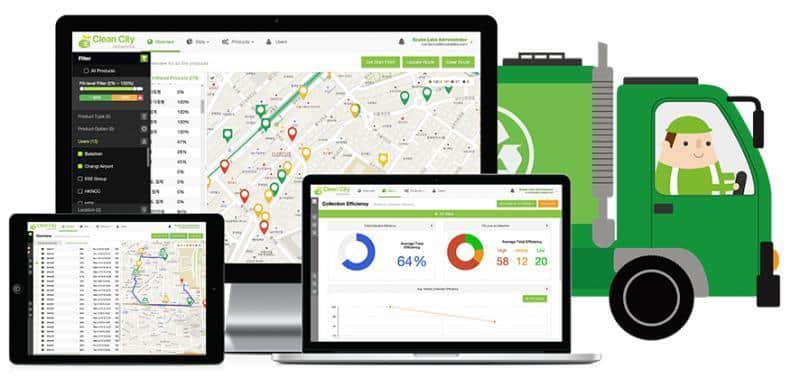
The waste management industry has quietly become one of the most data-heavy sectors in modern infrastructure. Behind every garbage truck route, recycling pickup, and landfill diversion report sits a growing stack of software designed to make waste collection, processing, and disposal more efficient, transparent, and environmentally responsible. What was once a largely manual, paper-based operation — dispatchers scribbling routes, drivers guessing at bin fill levels, billing done on spreadsheets — has evolved into a connected ecosystem of platforms, sensors, and automation tools.
Waste management software refers to any digital system built to plan, track, manage, and optimize the collection, transportation, processing, and disposal of waste. It serves municipalities, private hauling companies, recycling centers, construction firms, and industrial waste generators alike. The scope of these platforms varies widely: some are narrow point solutions focused purely on route optimization, while others are full enterprise resource planning (ERP) systems built specifically for the waste and recycling sector, covering everything from customer billing to regulatory compliance.
This guide breaks down what waste management software actually does at its core, and how modern features — driven by IoT, AI, and cloud computing — are reshaping the industry. Much of the current wave of innovation comes from specialized software vendors and development agencies; for instance, modern waste management software developed by agencies like Triple Minds tends to combine traditional operational tools with newer data-driven capabilities, reflecting the broader shift happening across the industry.
Why Waste Management Software Matters
Waste management is a logistics-heavy, margin-sensitive business. Fuel costs, labor, vehicle maintenance, and landfill tipping fees all eat into already thin margins for haulers, while municipalities face increasing pressure to hit recycling and diversion targets, reduce emissions, and respond to citizen complaints quickly. At the same time, environmental regulations are tightening in most regions, requiring more granular reporting on what gets collected, where it goes, and how it's processed.
Software addresses these pressures in several ways:
It reduces operational costs by optimizing routes, fuel use, and labor allocation.
It improves service reliability through real-time tracking and automated scheduling.
It supports regulatory compliance with automated reporting and audit trails.
It increases transparency for both customers and regulators.
It enables data-driven decision-making around fleet investment, staffing, and service areas.
For an industry historically slow to digitize, the shift toward software-driven operations represents a meaningful structural change rather than a marginal efficiency gain.
Core Functions of Waste Management Software
Regardless of the vendor or the specific market segment (municipal, commercial, industrial, or residential), most waste management platforms are built around a common set of core functions. These represent the operational backbone of the software — the features without which a platform wouldn't be considered fit for purpose in this industry.
1. Route Planning and Optimization
At the heart of nearly every waste management platform is route optimization. This function calculates the most efficient sequence of stops for collection vehicles based on variables like distance, traffic patterns, bin locations, vehicle capacity, and time windows. Rather than relying on static, manually drawn routes, modern systems recalculate routes dynamically as conditions change — a truck breaking down, a road closure, or an unusually full bin can all trigger a route adjustment.
Efficient routing directly affects fuel consumption, labor hours, and the number of vehicles needed to service an area, making it one of the highest-value functions in the entire software category.
2. Scheduling and Dispatch
Scheduling tools coordinate when and how often collections occur — daily, weekly, or on customized cycles — and assign specific vehicles and crews to specific routes. Dispatch functionality allows managers to make real-time adjustments, reassign drivers, or insert one-off pickups (such as a bulk item collection or a missed-service complaint) without disrupting the broader schedule.
3. Fleet Management
Waste collection relies heavily on specialized vehicles — compactors, roll-off trucks, recycling trucks — that require regular maintenance and represent a significant capital investment. Fleet management modules track vehicle location, fuel usage, maintenance schedules, and driver behavior (harsh braking, idling time, speeding). This helps operators extend vehicle lifespan, reduce breakdowns, and control fuel costs.
4. Billing and Invoicing
For commercial and residential waste haulers, accurate billing is essential. Billing modules handle everything from recurring subscription-based invoicing to usage-based billing (pay-per-pickup or pay-per-weight models), late fee automation, and integration with payment gateways. Many platforms also support customer account management, allowing service changes, pauses, or cancellations to flow directly into the billing system without manual intervention.
5. Customer Relationship and Service Requests
Customer-facing functionality typically includes a portal or app where residential and commercial customers can request services, report missed pickups, schedule bulk item removal, or update account details. This reduces the burden on call centers and creates a documented record of every customer interaction, which is useful both for service quality tracking and for resolving disputes.
6. Regulatory Compliance and Reporting
Waste management is subject to a patchwork of local, regional, and national regulations covering everything from landfill diversion rates to hazardous waste handling. Compliance modules generate the documentation regulators require — manifests, weight tickets, diversion reports, and chain-of-custody records for hazardous or medical waste. Automated compliance reporting reduces the administrative burden on operations staff and lowers the risk of fines or violations.
7. Inventory and Asset Tracking
For companies managing containers, dumpsters, and bins across many customer sites, asset tracking keeps records of where each unit is located, its condition, and its maintenance history. This is particularly important for roll-off and commercial dumpster businesses, where containers are frequently moved between customer locations.
8. Reporting and Analytics
Most platforms include dashboards summarizing key operational metrics: tonnage collected, route efficiency, fuel costs, customer complaints, and diversion rates. These reports support both day-to-day operational decisions and longer-term strategic planning, such as evaluating whether to expand a service area or invest in additional vehicles.
Modern Features Reshaping the Industry
While the core functions above have existed in some form for over a decade, a newer generation of features — enabled by advances in IoT, artificial intelligence, and cloud infrastructure — is changing what's possible in waste management software. These features move the industry from reactive, schedule-based operations toward predictive, data-driven ones.
IoT-Enabled Smart Bins and Sensors
One of the most visible modern innovations is the use of IoT sensors installed in bins and containers to measure fill levels in real time. Instead of collecting waste on a fixed schedule regardless of actual need, haulers can shift to on-demand or dynamic collection, sending trucks only when bins reach a certain capacity threshold. This reduces unnecessary trips, lowers fuel consumption, and prevents overflow issues in high-traffic areas.
Smart bin sensors can also detect anomalies like fires (via temperature spikes) or unauthorized dumping, adding a safety and compliance layer beyond simple fill-level monitoring.
AI-Driven Route and Demand Forecasting
Artificial intelligence has moved route optimization beyond static algorithms into predictive territory. Machine learning models can analyze historical collection data, seasonal patterns, weather, and even local events to forecast waste volumes and adjust routes proactively rather than reactively. Some platforms use AI to identify which customers are likely to generate service requests or complaints, allowing operators to intervene before an issue escalates.
Real-Time GPS Tracking and Telematics
While basic GPS tracking has been standard for years, modern telematics integrations go further — combining location data with vehicle diagnostics, driver behavior scoring, and automated geofencing alerts. Dispatchers get a live map view of the entire fleet, with the ability to see exactly which stops have been completed, which are pending, and where any delays are occurring.
Mobile Driver Applications
Modern platforms typically include a mobile app for drivers that replaces paper route sheets and radio communication. Drivers can view their assigned route, mark stops complete, capture photos of issues (contaminated recycling, blocked access, overfilled containers), and receive real-time updates from dispatch — all from an in-cab tablet or smartphone.
Automated Billing and Revenue Management
Newer billing modules go beyond basic invoicing to include automated proration, dynamic pricing based on weight or volume data captured on-truck, and integrations with accounting software. Some systems now use weight-based billing enabled by on-board scales, which is particularly relevant for commercial and industrial waste customers where volume varies significantly month to month.
Sustainability and ESG Reporting
As environmental, social, and governance (ESG) reporting becomes more important to municipalities, corporations, and investors, waste management software increasingly includes dedicated sustainability dashboards. These track metrics like landfill diversion rate, carbon emissions from collection vehicles, recycling contamination rates, and progress toward zero-waste targets. This is a rapidly growing feature area, as more organizations face external pressure to demonstrate measurable environmental performance.
Cloud-Based, SaaS Delivery Models
Most modern waste management platforms are delivered as cloud-based software-as-a-service (SaaS) rather than on-premise installations. This lowers the upfront cost of adoption, simplifies updates and maintenance, and allows smaller haulers and municipalities to access enterprise-grade tools without significant IT infrastructure investment. Cloud delivery also makes it easier to scale the software as an operation grows or expands into new service areas.
Integration with Third-Party Systems
Modern platforms are increasingly built with open APIs, allowing integration with accounting software, ERP systems, GIS mapping tools, and municipal 311 service request systems. This interoperability reduces duplicate data entry and allows waste management operations to fit into a broader digital infrastructure rather than functioning as an isolated system.
Digital Ticketing and Manifest Management
Especially relevant for hazardous, medical, and industrial waste, digital ticketing systems replace paper manifests with electronic records that track waste from generation through transport to final disposal. This creates a verifiable chain of custody, which is often a regulatory requirement, and significantly reduces the administrative overhead compared to paper-based systems.
Customer Self-Service Portals and Apps
Beyond basic service requests, modern customer portals often include features like real-time collection notifications, digital payment options, recycling education content, and the ability to track a household or business's own waste and recycling volumes over time. Some municipalities use these portals to encourage behavioral change, such as reducing contamination in recycling streams.
How These Features Work Together
It's worth noting that these modern features rarely function in isolation — their real value comes from integration. A smart bin sensor is most useful when it feeds directly into a dynamic routing engine. A mobile driver app is most effective when it syncs in real time with dispatch and billing systems. Weight-based billing depends on accurate on-truck sensor data flowing seamlessly into the invoicing module. The platforms that deliver the most operational value tend to be the ones where core functions and modern features are tightly integrated rather than bolted together as separate tools.
This integration is also where custom development often comes into play. Off-the-shelf platforms cover common use cases well, but organizations with specific workflows, legacy system dependencies, or unusual reporting requirements frequently work with software development partners to build or customize solutions that fit their exact operational needs.
Who Uses Waste Management Software
Waste management software serves a broad range of users, each with somewhat different priorities:
Municipalities prioritize compliance reporting, citizen service requests, and diversion/recycling metrics, often under public scrutiny and budget constraints.
Private commercial haulers focus heavily on route efficiency, billing accuracy, and fleet cost control, since these directly affect profitability.
Recycling and material recovery facilities need inventory and processing tracking, along with contamination monitoring and material sorting analytics.
Construction and demolition waste companies rely on container/asset tracking, since roll-off dumpsters move frequently between job sites.
Industrial and hazardous waste generators need rigorous manifest and chain-of-custody tracking to meet strict regulatory requirements.
Because these use cases differ so much, many vendors specialize in a particular segment rather than trying to serve the entire industry with one generic product.
Evaluating Waste Management Software
Organizations evaluating a platform typically weigh a few key factors:
Scalability — can the platform handle growth in fleet size, service area, or customer base without requiring a full system replacement?
Integration capability — does it connect with existing accounting, GIS, or municipal systems?
Mobile functionality — is there a reliable, easy-to-use driver app that works in low-connectivity areas?
Reporting depth — can it generate the specific compliance and sustainability reports required by regulators or stakeholders?
Total cost of ownership — beyond licensing fees, what are the costs of implementation, training, hardware (sensors, in-truck devices), and ongoing support?
Given the operational complexity of waste management, many organizations opt for a phased implementation — starting with core functions like routing and billing before layering in modern features like IoT sensors or AI-driven forecasting once the foundational system is stable.
The Direction of the Industry
The overall trajectory of waste management software is toward greater automation, tighter integration between physical infrastructure (bins, trucks, sensors) and digital systems, and a stronger emphasis on environmental accountability. As regulatory pressure around emissions and recycling increases in many jurisdictions, software that can produce clear, auditable sustainability data is likely to become less of a differentiator and more of a baseline requirement.
At the same time, the fragmentation of the industry — with everything from small regional haulers to large multinational waste companies to public municipal departments — means there's unlikely to be a single dominant platform. Instead, the market will likely continue to support a mix of specialized point solutions, mid-market SaaS platforms, and custom-built systems tailored to the specific operational and regulatory needs of individual organizations.
Conclusion
Waste management software has moved well beyond simple route mapping and dispatch logs. Today's platforms combine core operational functions — routing, scheduling, billing, fleet management, and compliance reporting — with modern, data-driven features like IoT sensors, AI forecasting, real-time telematics, and sustainability reporting. For organizations across the waste and recycling value chain, from municipalities to private haulers to industrial waste generators, the right combination of these tools can meaningfully reduce costs, improve service reliability, and support the growing demand for environmental accountability. As the technology continues to mature, the gap between basic scheduling tools and fully integrated, intelligent waste management platforms is likely to keep widening.

