Wastewater turned into lithium, a mobile fish farm mega boat, an autonomous deepwater wind turbine builder & more. The week's visionaries.
X-Laboratory
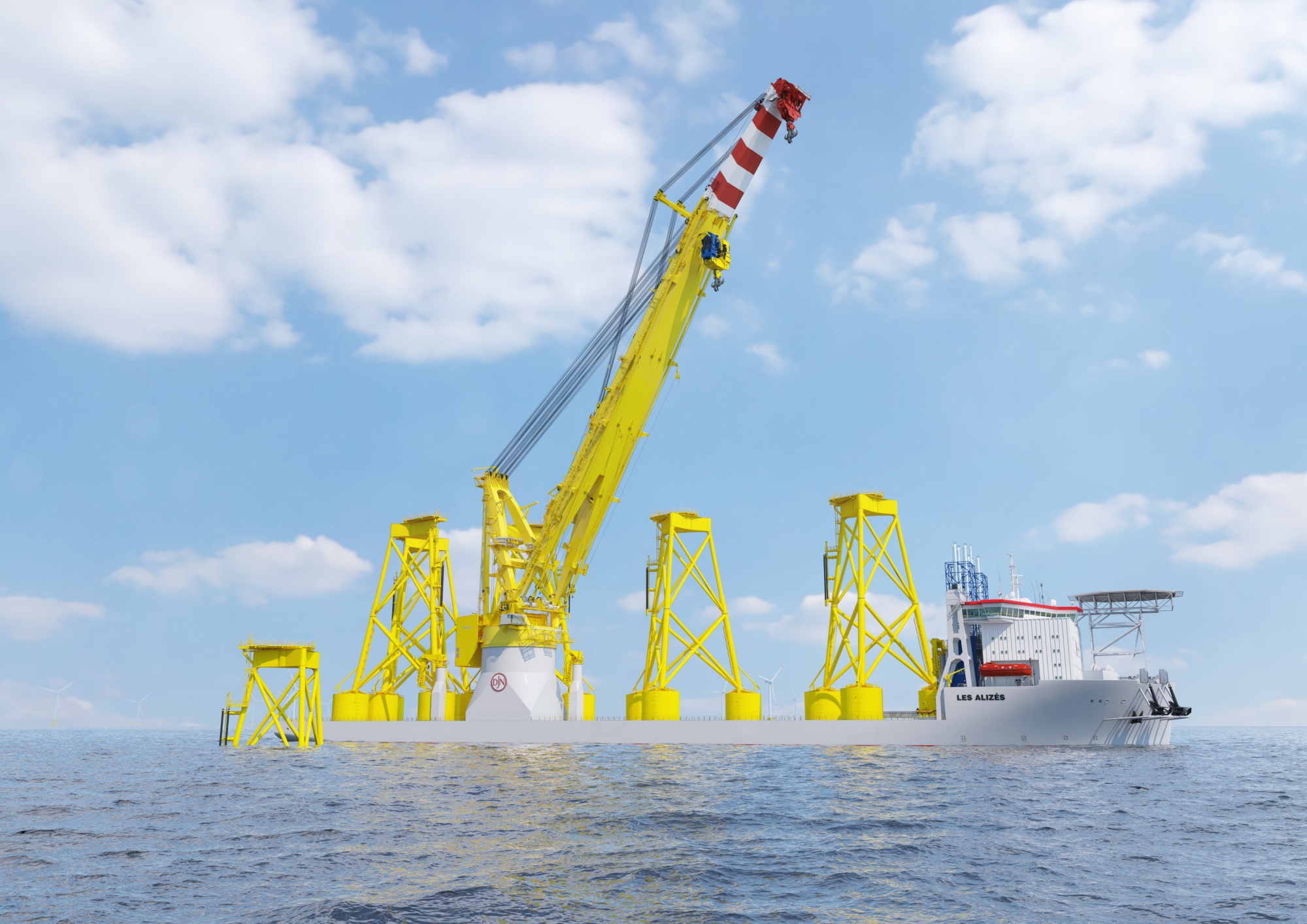
X-Laboratory sells software and robotics systems to wind turbine construction companies that allow the giant cranes on their ships to be controlled remotely. Initially, the technology was intended to help conduct research on other planets from Earth. It may shave years off the time needed to put up a wind farm in the ocean. One of the world’s biggest installers of offshore wind, Jan De Nul Group, is adopting the technology.
School of Photovoltaic and Renewable Energy Engineering

UNSW researchers have made a major breakthrough in renewable energy technology by producing electricity from so-called ‘night-time’ solar power. The team generated electricity from heat radiated as infrared light, in the same way as the Earth cools by radiating into space at night. A semiconductor device called a thermoradiative diode, composed of materials found in night-vision goggles, was used to generate power from the emission of infrared light. The amount of power generated at this stage is very small – around 100,000 times less than that supplied by a solar panel but the researchers believe the result can be improved in the future.
https://pubs.acs.org/doi/10.1021/acsphotonics.2c00223
Qingdao Conson Development Group

The vessel, which is 250 metres long and 45 metres wide is expected to enter service in April,it is equipped with underwater cameras, sensors, and automatic feeding facilities, along with a water exchange system and a deep-water intake device. It has 15 aquaculture tanks with a total volume of 80,000 cubic metres and has the capacity to produce 4,000 tonnes of fish. The company plans to test the cultivation of local fish species yellow croaker, as well as Atlantic salmon, aboard the vessel. The company’s long-term ambition is to build an open sea aquaculture fleet of 50 ships with an annual output of more than 200,000 tonnes of fish by 2035.
youtube.com/watch?v=LqS6Y9HRGcs
Flow Hive
:extract_focal()/https%3A%2F%2Fmindbodygreen-res.cloudinary.com%2Fimages%2Fw_767%2Cq_auto%3Aeco%2Cf_auto%2Cfl_lossy%2Forg%2Fjq22tf8g7l3ad8jbk%2Fhoney-harvest-with-flow-hive.jpg)
To get honey out of a conventional beehive, you need to remove one of the hive's frames at a time, brush off the bees, and carry the frame to a device called a centrifuge, which extracts honey from the honeycombs. From there, you sieve and filter your honey and put the frame back where you found it. Can't we just tap the honey straight out of the hive and leave the bees be? The result is the Flow Hive, which allows beekeepers to simply twist a handle and watch honey flow directly out, no centrifuge or disassembly is required.
Lalo

Lalo is an app to memorize your loved ones. It functions like a digital scrapbook where you can create a "space" to share memories, then invite friends and family to collaborate, too. You can upload pictures, video, voice and text. The app also offers prompts, which were developed with a psychology professor at the University of Memphis who is an expert on grief. These prompts include things like sharing recipes or telling the story of how your grandparents met.
The U.S. Department of Energy’s Pacific Northwest National Laboratory
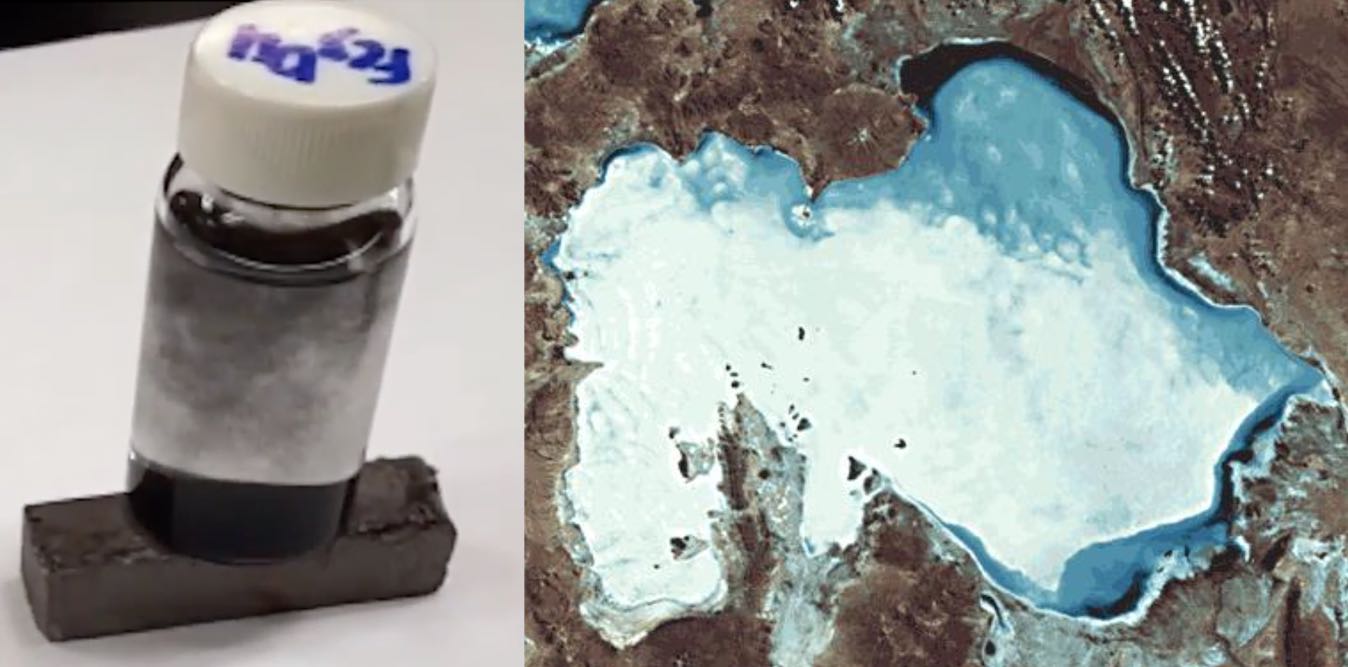
The researchers are working on magnetic nanoparticles to capture lithium from wastewater sources. The technology provides an opportunity to produce it faster and at a lower cost. At the heart of the process are magnetic nanoparticles surrounded by an adsorbent shell that latches onto the lithium and other metals found in water that is used in industrial processes (power plants, oil production). If just 25 percent of the lithium in such water were collected today, it would equal the current annual worldwide production.
Astroforge

The company say they have developed an innovative technique that requires a high-rated vacuum and to be in zero-G to refine materials in-space. All without involving a landing on an asteroid, as Astroforge is targeting bodies in the 20 meter to 1.5 kilometer in diameter range, meaning that some will be so small that they won’t even have gravitational fields. With a payload less than 200 kilograms they might use affordable rideshare (SpaceX Falcon 9 rideshare mission) launches to geosynchronous and lunar trajectories. A number of candidate asteroids have already been identified.
Humble Bee Bio

The team is using a synthetic biology approach that involves going into the bee’s genetic code and identifying the genes and proteins responsible for the nesting material. Humble Bee has extracted the code and is trying to recreate it in the laboratory. Next, the company will attempt to synthesize plastic-like materials, focusing on four different types of biomaterials that can be turned into fibers and finishing for fabrics.
Also for those on instagram I launched the page @newgd__
I'll be posting there on a daily basis.

These are cool reads, thank you
Thanks man!
Some awesome updates again Nic!
Thanks! I'll keep posting them every week.
These impressive initiatives give me hope for a better humanity.
It does! So many crazy innovations coming our way.