We almost canceled a launch when Notion Cal launched. Turns out, their efforts were the boost we needed.
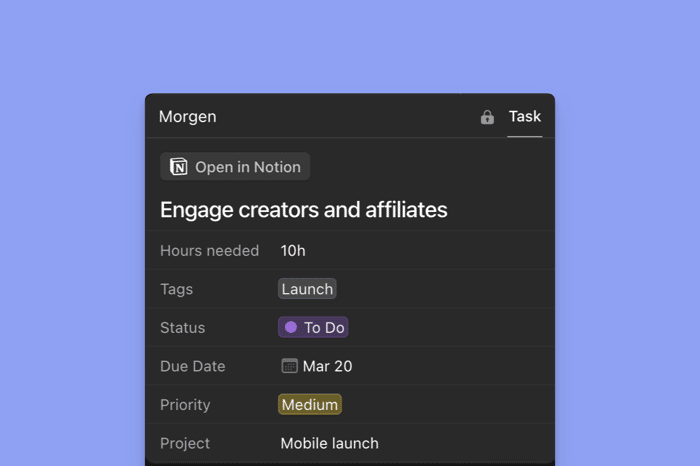
Late in 2023, we set a clear Q1 focus for Morgen: Integrate with the top 4 most requested task and project managers. It had been over a year since we integrated with four popular task managers like Todoist, and we knew that those users who used one of those integrations to time block in Morgen were the stickiest and most loyal.
First on tap was Notion, for which users had voted 6x more than any other integration. Notion is not a pure to-do app, but given its flexibility, a massive number of users plan tasks and projects there. Yet a common complaint was its lack of calendaring and time-blocking options.
We were confident we could create an amazing compliment to Notion. We talked with multiple creators who were excited to help us promote it. In shirt, we were pumped. The countdown was on.
Then, on January 1, Notion dropped a countdown of their own, with a not-so-subtle hint on their Instagram account.
Yes, that’s right, a calendar that promised to be exciting was dropping soon. Over two weeks, they ran a daily countdown across their social channels. The hype was building for their fans, all while chipping away at our conviction that we were starting 2024 with the big bang we had anticipated.
Morgen, is tiny compared to Notion. Notion users are incredibly loyal and for many, they run their lives daily on the tool. This promise of what was coming was mounting, and we started to ask ourselves whether there would be room for this integration as a key opening to a richer Morgen experience.
We considered swallowing the sunk cost and not releasing the integration. The work was 90% done and we were about to release it to our Insiders for testing. We were so close, and without knowing exactly what Notion was launching, it seemed ridiculous to drop it.
So we reframed the launch, downgraded our expectations, and then proceeded.
When Notion Calendar dropped, as expected, it was met with incredible fanfare. X and YouTube were flooded with reviews, it made headlines in all the tech publications, and suddenly everyone was talking about it.
But after 24 hours, the reviews were coming back mixed. Some people loved it and it was exactly what they had been looking for. But for others, it was a massive disappointment. Perhaps they used something other than Google for their calendar, they had an Android phone, or they wanted more flexibility in choosing what tasks and information would be imported in their calendar.
Whatever the reasons, it was clear that a portion of users felt let down and left out. We were suggested as an alternative in multiple threads on Reddit.
We rushed to create a landing page and a lead form for those who wanted to be notified when the integration launched.
I’m so glad we didn’t shy away from our launch. Notion amplified the conversation about calendars, it created an idea of how much better Notion could be if it coexisted with a calendar, and for those for whom the hype didn’t live up, Morgen became a compelling alternative.
In marketing for their own launch, they gave us a massive boost. Our launch, which followed shortly after, led to our largest single day of downloads ever.
I wouldn’t suggest building a business on tool integrations. Bigger tools have the resources to quickly make improvements and add new features in ways we can’t. But as they move to satisfy large numbers of people, there will always be those who feel left out and disappointed and who will seek alternatives.
On January 1, I may have been cursing Notion. Two months later, we owe them a thanks.
